Population
51.68m[1]
2025 population in Korea's official Social Indicators 2025 release.

Market · National
South Korea is a highly connected national games and esports market with globally influential competitive infrastructure, major publishers and a dense Seoul-centered commercial ecosystem.
Population
51.68m[1]
2025 population in Korea's official Social Indicators 2025 release.
Nominal GDP
KRW 2,663.3tn[1]
2025 nominal GDP in the official Social Indicators 2025 release.
Real GDP growth
1.1%[2]
2025 real GDP growth reported by the Bank of Korea.
Games-industry evidence
2025 white paper[3]
KOCCA's 2025 Game Industry White Paper covers the domestic market, companies, exports and esports ecosystem; the page does not convert its separate measures into one composite total.
A sourced operational overview, not legal advice. Requirements should be rechecked before launch.
Topic
Institutional industry support
Current position
KOCCA's remit includes production, distribution, overseas expansion, talent development and research for Korean content industries, including games.[3]
Commercial implication
International partners should map the relevant publisher, studio, association and public-industry counterparty rather than treating the market as a single route to entry.
Topic
Competitive infrastructure
Current position
South Korea has a dedicated national esports association and established title-specific leagues, including League of Legends Champions Korea.[3]
Commercial implication
Competition, sponsorship and media plans should account for league calendars, club structures and local rights relationships before committing inventory.
South Korea's market combines domestic publishers, public cultural-industry support and dedicated esports governance.
Korean clubs remain central to the country's global competitive identity, especially in League of Legends and VALORANT.
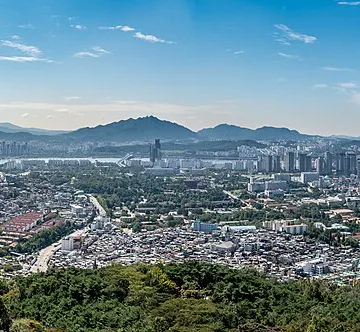
Seoul is the market's principal operating hub, with Korean competitive culture extending through global game ecosystems.
Teams with a structured location relationship to this market.
In South Korea, Busan is both an esports programme partner and a live-event location. The city lists 3.3 million residents and an area of 771.33 km² as of 2025.
Daejeon is a science and technology-oriented metropolitan city in South Korea, with a tracked convention venue suited to esports and other large-format events.
Goyang, South Korea, combines exhibition infrastructure at KINTEX with city-backed content-IP development for webtoons, broadcasting and games.
Gwangju, South Korea, hosted the semifinals of the 2018 League of Legends World Championship.
Incheon, South Korea, hosted the final of the 2018 League of Legends World Championship at Incheon Munhak Stadium.
Seoul is South Korea's publisher, league, and club-operations capital, with a mature esports venue network, city-backed games policy, and flagship organizations such as T1 and Gen.G.
Yongin is a city in Gyeonggi Province, South Korea, south of Seoul.
Work with Press The Game
Looking for media reach, industry insight or the right esports partner? Bring us your brief—we’ll help move it forward.
Related coverage

Nongshim Esports has received A3 ratings for commercial paper and electronic short-term bonds, with a reported KRW 5 billion issuance limit for the latter.
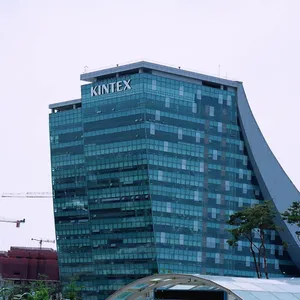
Goyang will assess demand, operating feasibility and facility options in an eight-month study, aiming to finalize its 2027–2031 esports and games plan in the first half of 2027.
Kakao Games says its investment in AI backend startup BackendX will help it identify small studios for future publishing or acquisition deals and support existing publishing partners.
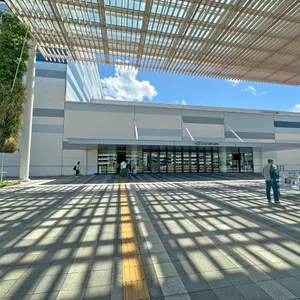
Japan's 11-year-old Yuki Kurihara beat South Korea's Kang Dong-shin 10–2 in the Puyo Puyo final at Aichi-Nagoya 2026, becoming the Asian Games' youngest medalist.
Vietnamese PUBG creators, teams and fans have escalated pressure on KRAFTON after the PUBG Asia Stars fairness dispute, with the organizer’s apology failing to settle the conflict.
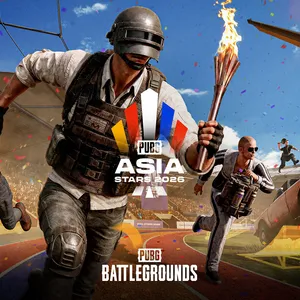
Baek Eok Coffee has begun temporarily suspending advertising, co-branded menu and event activations tied to PUBG Asia Stars 2026 while it reviews the tournament's fairness dispute and the organizer's response; the sponsorship contract has not been terminated.
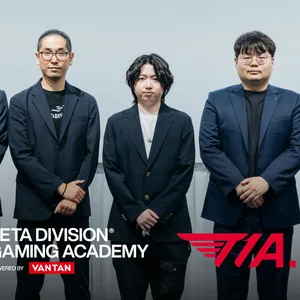
Vantan, GANYMEDE and T1 Esports Academy agreed on Sept. 17 to cooperate on esports talent development, with a first phase focused on localizing T1 methods for Japanese courses and planning a special intensive course for ZETA DIVISION Gaming Academy students.
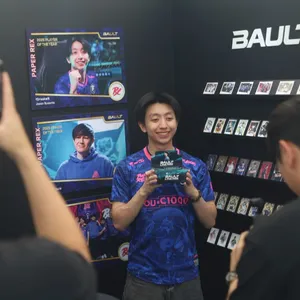
Bault’s VCT Pacific player cards sell for 9,000 won a pack, while sought-after base and autograph cards have reached hundreds or thousands of baht in fan communities.
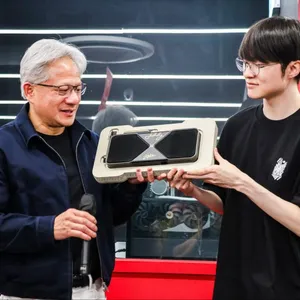
Daily eSports alleges failed T1 share talks and a struggle for influence between SK Square and Comcast. Its board and causation claims remain unverified.
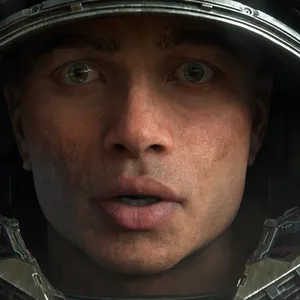
Blizzard announced a new StarCraft project at BlizzCon 2026, defining it as a story-driven open-world shooter targeted for 2030 and led by Dan Hay.
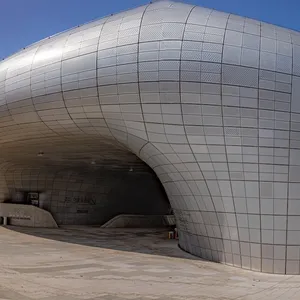
Seoul's GES 2026 will bring 70 game and esports companies to DDP, with Hyundai sim-racing activations and a KRAFTON-partnered PUBG Weekly Series Phase 2 programme.

KRAFTON's record second-quarter revenue moved above Nexon's for the first time, a quarterly shift that points to a loosening Korean publisher hierarchy rather than a settled reversal.
Disney+ will exclusively stream South Korea's August 25 esports national team send-off ceremony and the September League of Legends evaluation match ahead of the 2026 Asian Games.
Record MapleStory revenue and ARC Raiders' growing contribution show Nexon's global publishing strategy beginning to reshape its revenue mix.

From WCG and the FIFA Interactive World Cup to FC Pro, FIFAe, eFootball, Rocket League and Football Manager, football esports has split into multiple paths.
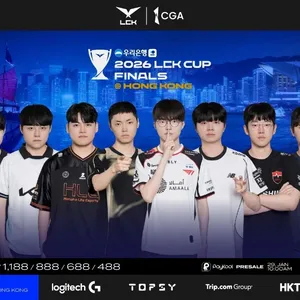
LCK's first official competition outside South Korea raises questions about its financial pressure, global audience and overseas ambitions.
MY's Overwatch results failed to create sustainable revenue. Its 2017 partial pivot exposed how weak tournament and streaming economics constrained a small club.
Andrew “Sir Cloud” Cheong applies the 1-3-1 framework to esports’ economic challenge, weighing optimization, consolidation and community-led business models before recommending stronger direct relationships with fans.