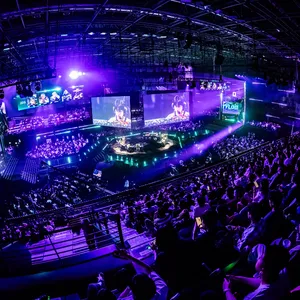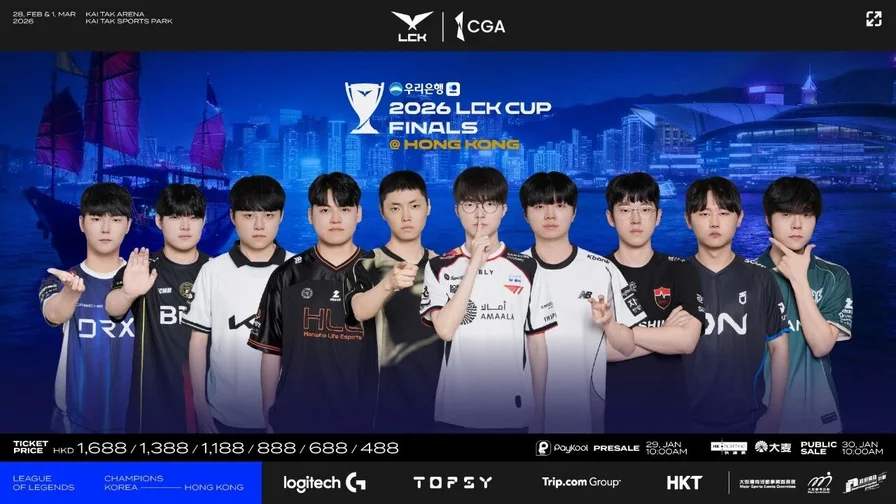
From February 28 to March 1, the LCK Cup Finals will be held at Kai Tak Sports Park in Hong Kong. It will be the first time in LCK history that an official competition has moved to a city outside South Korea, attracting broad attention from the esports industry.
This is not only a major competitive event. It is also an experiment in how a professional league can break geographical boundaries and achieve commercial growth. Ahead of the final, we examine the logic behind LCK’s overseas move.
From “South Korea” to “global monetisation”
The core reason for LCK’s overseas strategy is the financial pressure and growth ceiling in its home market.
South Korea has exceptionally high esports penetration, but a population of around 50 million places a ceiling on domestic sponsorship and ticket revenue. Figures disclosed in 2025 put LCK’s projected net losses at 8.1 billion won in 2022, 13.2 billion won in 2023 and 28.5 billion won in 2024. The three-year cumulative loss reached 42.7 billion won, approximately RMB 20.16 million. The 2024 loss more than doubled from the previous year.
Riot Korea told media that the figure included additional costs from the 2024 VALORANT Champions event in Seoul. Even so, rising operating costs and falling broadcast-rights revenue mean that LCK must look toward a wider market.
Internationally, LCK has leading audience figures. Esports Charts reported 161 million hours watched for the 2025 LCK season on overseas streaming platforms, ranking first among esports events. Much of this traffic previously remained online. Taking the final to Hong Kong is an attempt to convert it into tickets, merchandise consumption and regional sponsorship rights.
The long preparation behind LCK’s outward-looking strategy
LCK’s overseas move is not a short-term rescue plan. It follows a long-standing outward-looking development strategy.
As one of the top regional leagues in the global League of Legends esports system, LCK teams have won international events repeatedly for more than a decade. Their World Championship title count is the highest among the major regions, giving the league a large and loyal international following.
Korean League of Legends esports also invested in overseas broadcast production from the OGN era, cultivating internationally recognised commentators such as MonteCristo and continuing to produce high-quality global content. This long-term cultural investment has made LCK’s content logic similar to K-pop: even viewers who do not understand Korean can connect with its polished competitive presentation, player narratives and industrial-scale broadcasts.
According to Hong Kong ticketing partners, the final sold out quickly after public sales began on January 30. That demand shows that LCK’s accumulated cultural influence has become offline spending power. “Content first” and “offline monetisation” form its distinctive commercial loop.
Why Hong Kong?
First, the choice brings together a top venue and a city brand.
To support world-class international sports events and strengthen Hong Kong’s position as a destination for major occasions, the government provides venue and financial support through the M Mark system. Depending on an event’s assessment, total support can range from HK$6 million to HK$15 million. The Hong Kong government says the updated ceiling combines direct grants and matching funds.
The final will take place at the new Kai Tak Sports Park and has received M Mark recognition. For a league seeking to build a globally significant cultural product, appearing in a high-specification new venue in an international city is itself a strong endorsement.
Second, Hong Kong provides a gateway to the Asia-Pacific region. It is an international financial centre and a key node connecting the mainland Chinese fan base with the wider region. For fans in the Greater Bay Area and across Asia-Pacific, travelling to Hong Kong offers convenience and immersion that online viewing cannot match. Its role as an international logistics and cultural-exchange centre also supports merchandise sales and cross-border sponsor benefits.
The LCK Cup Hong Kong final is a portrait of global esports entering an era of competition for existing audience and spending. LCK is going overseas both to offset financial risk and seek new growth, and to test the value of its long-term outward-looking strategy.
For the final, the winner will be decided on stage. For LCK, however, the real contest is whether this move can create a commercial model that does not depend on one market and can convert attention into value around the world. The experiment that began in Hong Kong is only just beginning.