The 2026 Bault Lineage VCT Pacific Series 1 VALORANT player cards immediately brought excitement to fan communities in several countries after their first presale during the VCT Pacific Stage 2 Finals in Busan.
Because there were far fewer people who had the chance to open packs themselves than fans who wanted a card of a favorite player, those who got the first cards had a slight head start. A pack cost 9,000 won, or about 230 baht, and contained 10 randomized cards. Some collectors were able to sell a base card—an ordinary card—of certain players for 200–300 baht, almost recovering the cost of the pack.
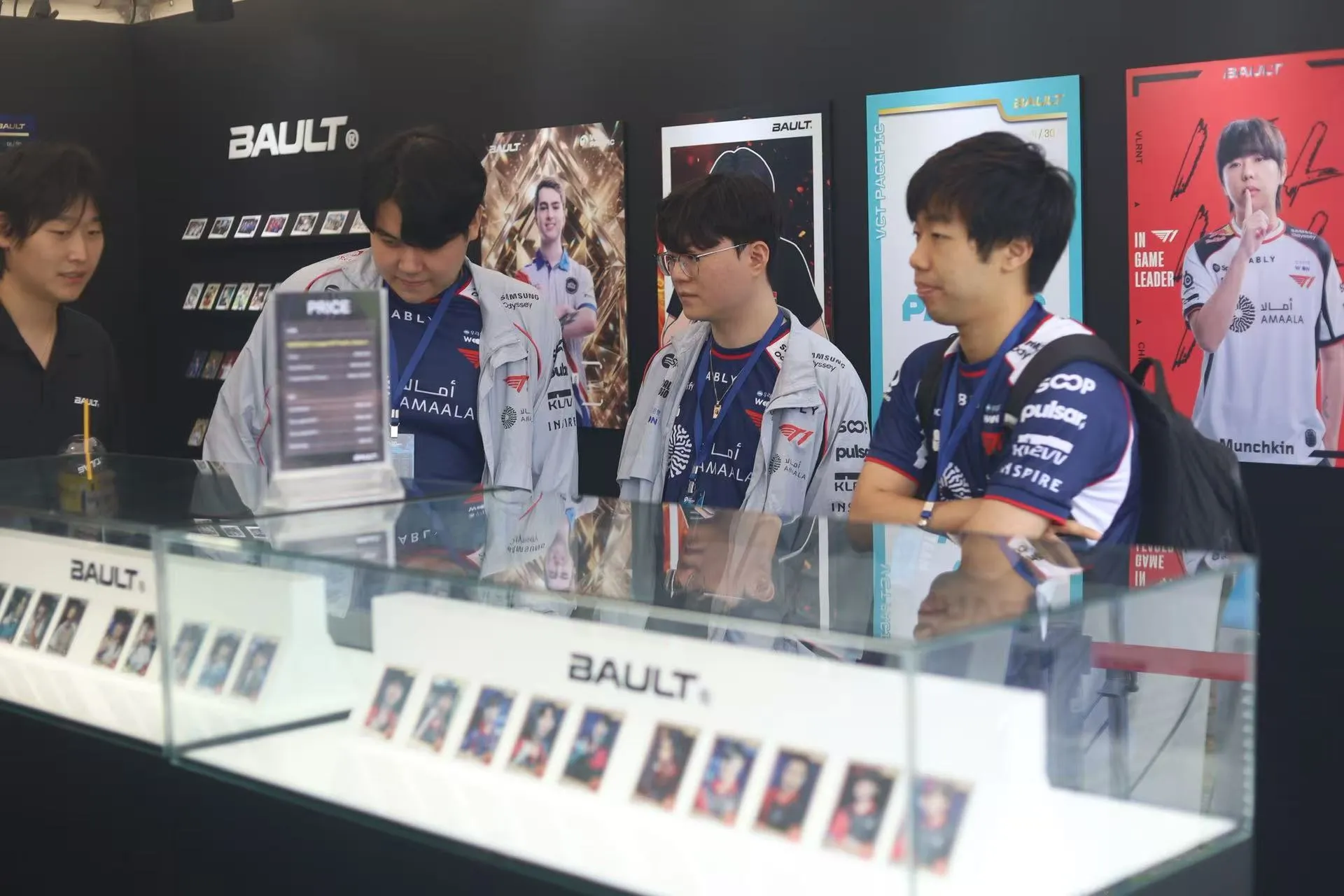
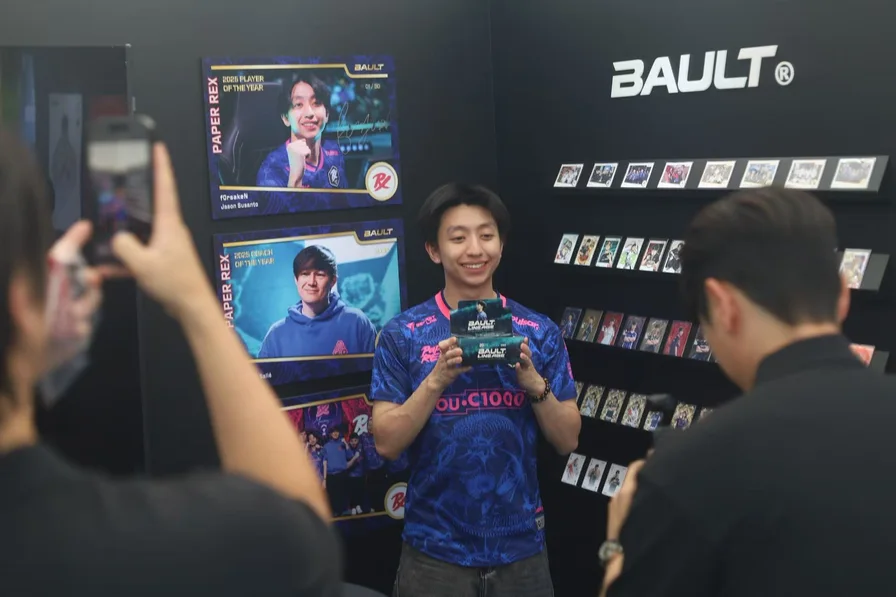
The booth brought cards from across the league together for fans to browse.
Rare cards, such as numbered cards, cards with pieces of match-worn jerseys or player autograph cards, can reach thousands of baht each.
Prices naturally differ from country to country because fan demand varies by market. But what has happened so far suggests these cards could be more than collectibles. Can people really make money from them?
As more cards are opened, some people may get cards they do not want, while someone else may be looking for that very player. Trading and sales among fan communities follow.
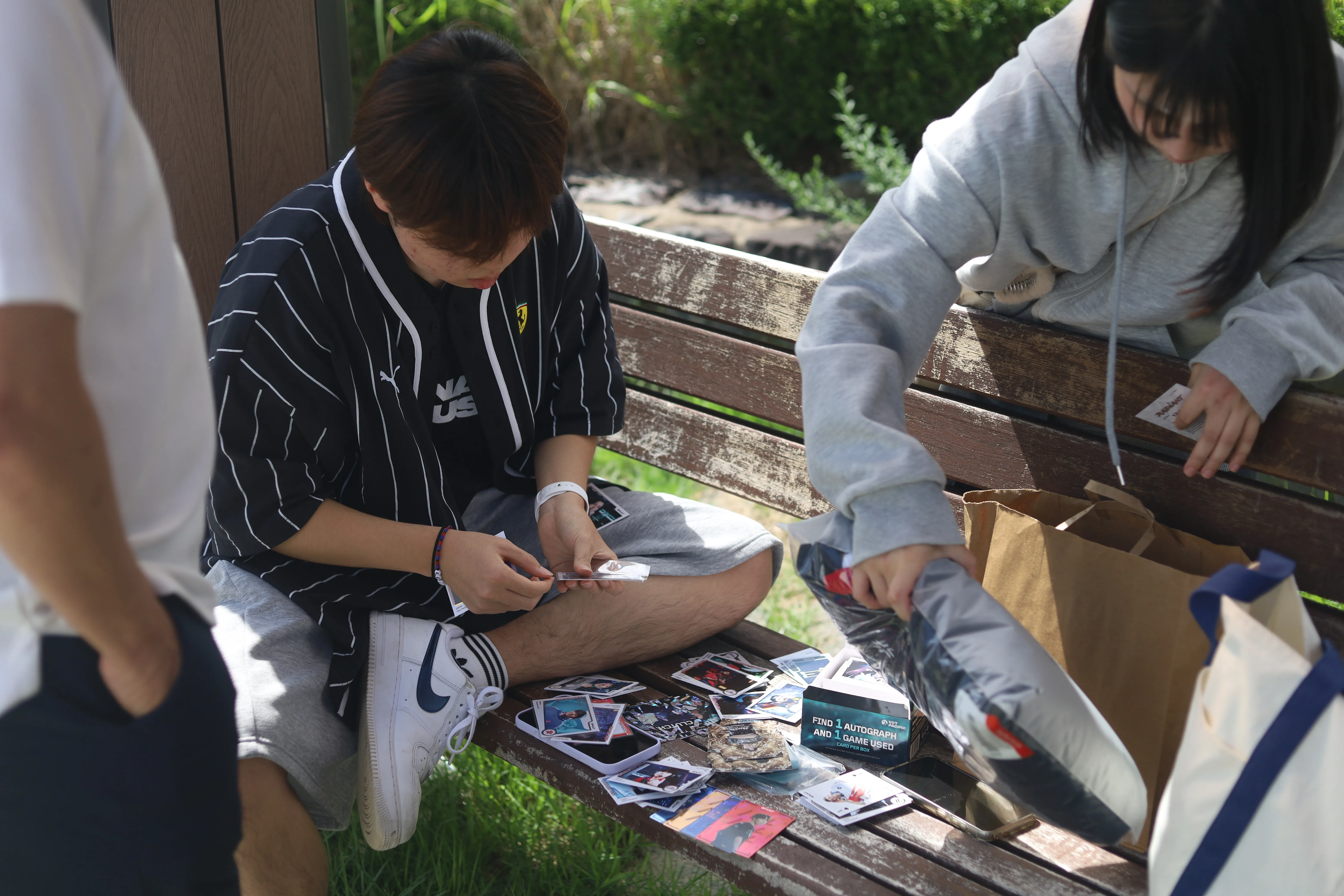
Fans compare their player cards together.
In the Thai community, cards of Primmie and members of FULL SENSE have drawn particular interest. Some players’ ordinary base cards have been sold for 200–300 baht. Cards from well-known teams such as Paper Rex and the Korean teams T1, Gen.G, KRX and Nongshim RedForce have also attracted fans.
Primmie autograph cards have reached the thousands of baht. This shows that some fans do not simply want to complete a set; they especially want “the card of the player they like.”
The Japanese community has its own market. Meiy, the handsome and highly skilled player from DetonatioN FocusMe, is one of the most popular cards there. One collector has shared that people have sought his autograph card for around 5,000 baht. His ordinary base card has also sold readily for 2,500 yen, or about 530 baht—enough to buy two new packs.
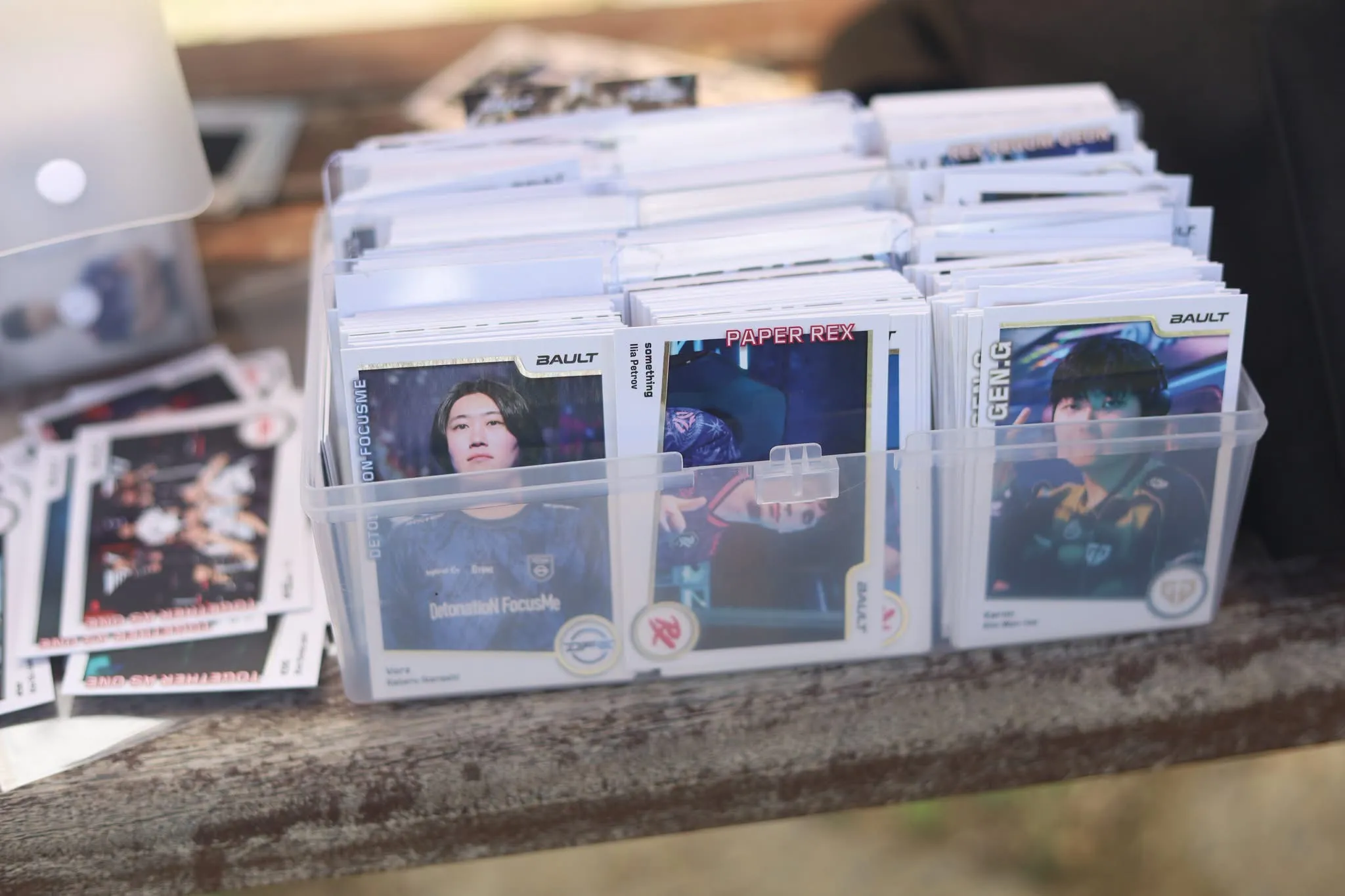
Collectors could look for cards of the teams and players they follow.
This illustrates one thing: even for the same card, demand does not have to be the same in every country.
VALORANT player cards are beginning to have a small market of their own, no longer limited to tournament venues or the stores that sell them, but reaching collector and fan communities.
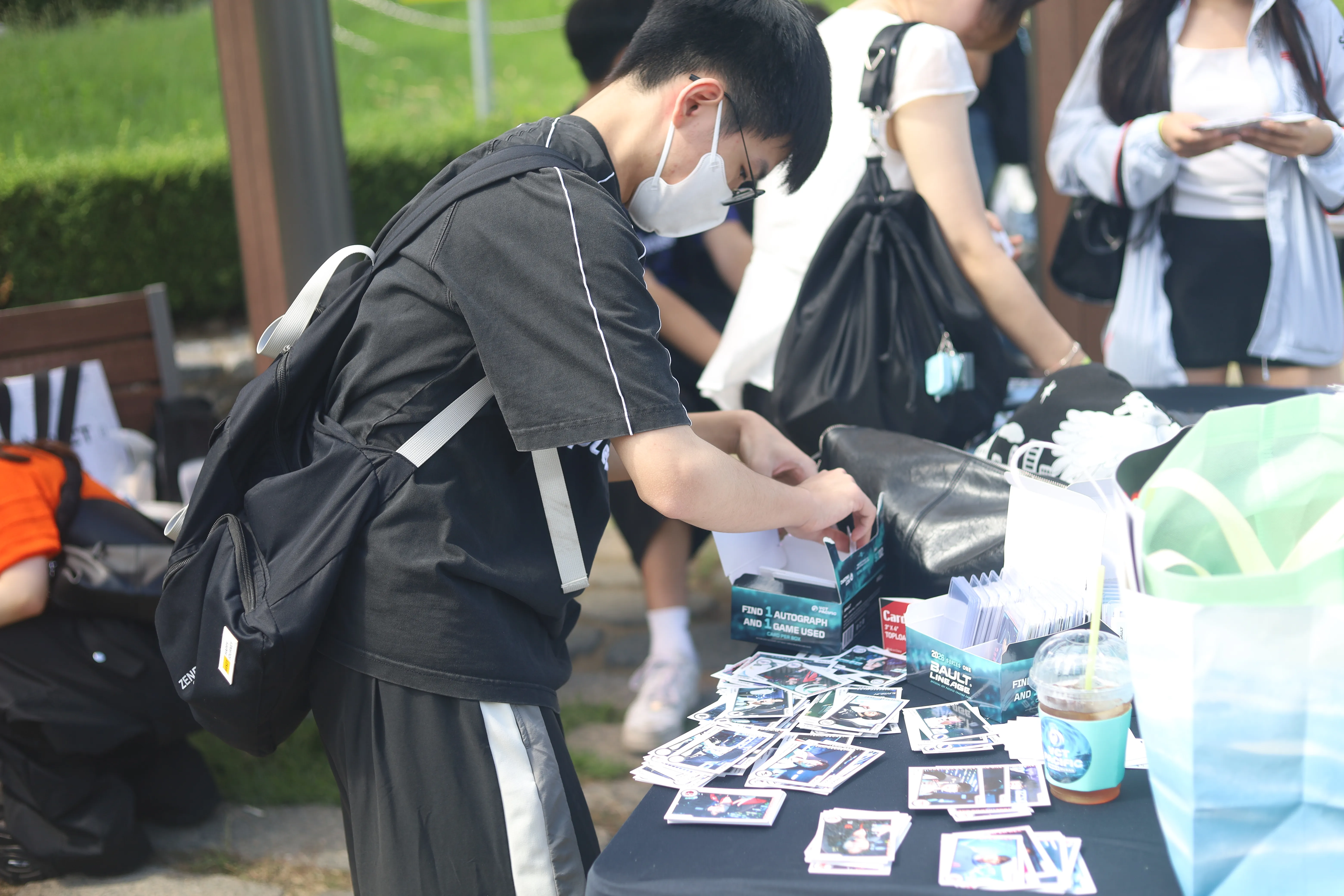
Fans browse the Bault card selection at a display table.
So how much can someone who takes this seriously make from player cards?
Looking at the prices in the market now, there appears to be a gap: a card may come from a randomized pack, but someone may be willing to pay more for it if it is exactly the card they are looking for.
At the same time, that does not mean every card will sell for a good price or that the value of every card will keep rising. The most important factor may be “popularity.”
Today, Thai fans may be looking for Primmie’s cards, while Meiy has fans in Japan willing to pay for his. In the long run, this demand may change with players’ performances, team success and the popularity of VALORANT itself.
But if the game continues to have competitions that attract interest, viewers keep following VCT, and players continue to build new fan bases, collectors may still want the cards in their hands—and some cards may be worth more than they are now.
The opposite is also possible. If the game loses popularity, the question will be how many people are still willing to pay for these cards. A player card’s value does not come only from the paper or the image printed on it; it is tied to the stories of players and teams, and fans’ connection to the game.
These factors have affected many kinds of cards before, especially sports cards in football, basketball and baseball, where card prices are directly affected by each athlete’s performance.
In the end, whether VALORANT player cards rise or fall in value, the most important thing may not be the number on the resale market, but what the card means to its owner.
Today, one player’s card may be worth hundreds or thousands of baht, or more. But over time, the game’s popularity, player performances and trends in the scene can all change.
For anyone entering the world of player-card collecting, it may be important to collect mindfully, buy only what they can afford, and choose cards that make them happy rather than seeing every card as a chance to profit.
After all, monetary value can change more easily than the feelings we have for a card.
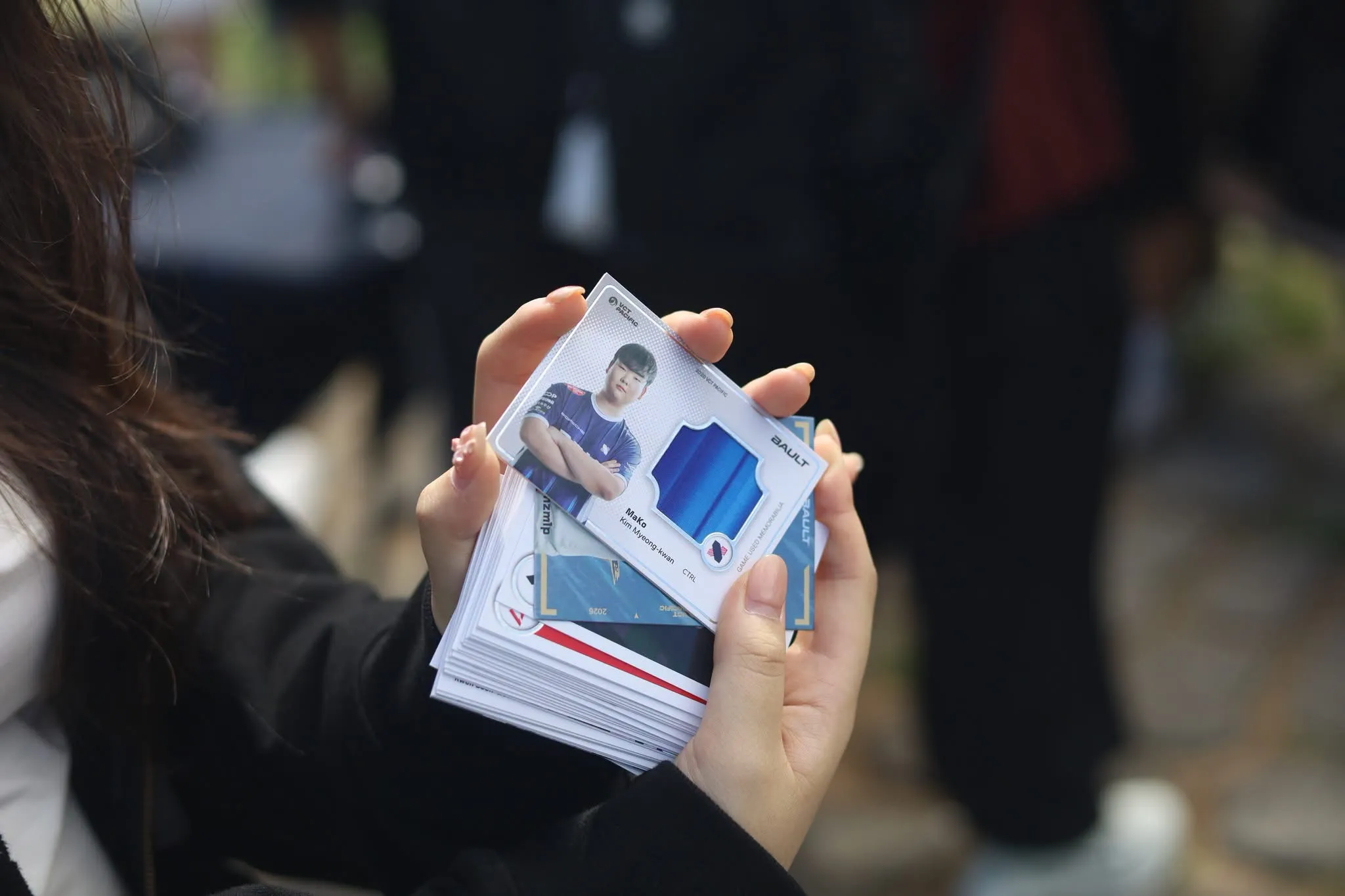
A collector holds a Mako card among other cards from the VCT Pacific set.
Keeping a card of a favorite player, owning one from a team you support, or looking back at a card and remembering a match you watched together may have a value that cannot be measured in money. And perhaps that is the best reason to collect cards of the esports athletes you like.