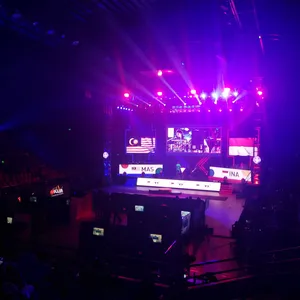
The Korea e-Sports Association (KeSPA) is the governing body for esports in South Korea. Founded in 2000 after approval from the Ministry of Culture, Sports and Tourism, it oversees, regulates, and promotes competitive gaming across the country. KeSPA is a member of the Korean Sport & Olympic Committee and the International e-Sports Federation. As of 2012, it managed 25 esports games including League of Legends, Dota 2, and Counter-Strike: Global Offensive, and was the driving force behind StarCraft professional competition before the ProLeague was discontinued in 2016.
History
Early Years
KeSPA was established in 2000 with the official goal of making esports an officially recognized sporting event and solidifying its commercial position across all sectors. The organization manages broadcasting of esports, formation of new events, working conditions for pro gamers, and encourages video game participation by the general population. In 2008, SK Telecom took the leading position on its board, making Seo Jin-woo the organization’s president.
KeSPA regulates broadcasting by esports television channels including Ongamenet, MBC Game, GOMtv, and Pandora TV, as well as overseeing over a dozen professional esports teams and a rankings system. On May 11, 2012, KeSPA partnered with Major League Gaming to send KeSPA players to MLG events.
On October 27, 2014, KeSPA alongside Riot Games and Ongamenet introduced new player welfare policies, including a minimum salary for professional esports players competitive with traditional sports and a one-year minimum contract requirement starting in the 2016 season. In 2016, KeSPA announced the discontinuation of the StarCraft ProLeague after 14 years due to declining participation, sponsorship difficulties, and match-fixing problems.
2008 Blizzard IP Dispute
In 2008, a dispute arose when Blizzard Entertainment demanded royalties from KeSPA for broadcasting StarCraft: Brood War, leading to fears of a slump in esports media distribution. In 2010, Blizzard announced it would only allow GOMtv to broadcast its games. KeSPA challenged Blizzard’s intellectual property claims, and the dispute was settled in May 2011, allowing Ongamenet and MBC to officially broadcast Brood War games.
Match-Fixing Scandals
In April 2010, eleven StarCraft players were implicated in match-fixing during the 2009 season. KeSPA’s Sanction Subcommittee issued lifetime bans, and players along with illegal gambling website operators faced criminal charges.
In 2015, two KeSPA players — Lee “Life” Seung-hyun and Jung “Bbyong” Woo-yong — were indicted for match-fixing. Life, a former StarCraft II world champion, was charged with receiving 70 million won (~US$62,000) for intentionally losing two KeSPA Cup matches.
2026 Esports Nations Cup Controversy
In April 2026, KeSPA was appointed as South Korea’s “National Team Partner” for the Esports Nations Cup, giving it rights to select coaches and rosters. However, the Esports Foundation attempted to influence roster selections, leading KeSPA to argue the moves were “incompatible” with established selection processes used for the Asian Games. The Korean Sport & Olympic Committee supported KeSPA, stating national representatives could only be selected through official means. Ultimately, the Esports Foundation withdrew KeSPA as South Korea’s National Team Partner.
National Team Selection
KeSPA is responsible for selecting South Korea’s national esports teams for multi-sport events. For the 2026 Asian Games, KeSPA assembled a League of Legends roster featuring Faker, Gumayusi, Keria, and Zeus alongside Canyon and Zeka.