When a company that makes gaming mice sponsors a professional VALORANT team, the logic is easy to understand. But what about a bank, a carmaker, an insurer or even an ice-cream brand?
The 2026 VALORANT Champions Tour (VCT) partner lists show plenty of cross-industry combinations.
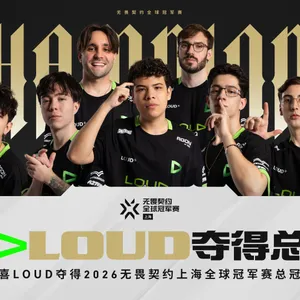
North American club 100 Thieves works with Lexus, AT&T and US insurer State Farm. Brazilian team LOUD has attracted Itaú bank, Snickers and Mentos, while French club Team Vitality has partnerships with supermarket chain E.Leclerc, Crédit Agricole and Magnum ice cream, among others.
For gaming-hardware makers, the connection between professional competition and their products is direct.
These companies sell very different products, yet all are willing to invest in professional esports. What do brands look for when they choose a team? What commercial differences show up in the sponsorship lists from one region to another?
This article reviews 148 sponsor-brand records across the 16 teams from VCT CN, Americas, EMEA and Pacific that qualified for VALORANT Champions Shanghai 2026. It looks at the sponsorship landscape in VALORANT esports through industry mix, regional markets and partnership formats.
Who is entering the VCT?
Among the 16 teams in the sample, CN had 25 sponsor-brand records, Americas had 28, EMEA had 34 and Pacific had 61.
Despite differences in their brand mix, gaming hardware is a common partnership category across all four regions.
CN teams work with ROG, ZOWIE, LAMZU and MCHOSE. The Americas list includes Logitech, Razer and AGON. EMEA features Alienware, ROG and Philips EVNIA, while Pacific has brands such as SteelSeries, Pulsar and Secretlab.
ROG, Razer and ZOWIE have partnerships spanning multiple regions.
That cross-regional presence is closely tied to VALORANT’s identity as an FPS. Mice, keyboards and monitors affect how players perform, and professional competition gives hardware makers a specialist setting to demonstrate product performance and reach competitive players.
For gaming-device makers, professional teams are both real-world product users and an important channel for reaching competitive players.
Traditional commercial brands are also appearing on regional partner lists alongside gaming hardware.
The Americas has Lexus, State Farm and Itaú; EMEA has E.Leclerc, Crédit Agricole and Orange; Pacific includes Woori Bank, Spotify and Daewoong Pharmaceutical.
These companies span automotive, finance, retail, telecommunications, food and entertainment, creating sponsorship mixes distinct from those of gaming-hardware makers.
The commercial reasons brands choose professional teams, and the differences between regional sponsor mixes, offer one way to examine the VCT ecosystem.
To understand which clubs brands choose and what marketing activities they can run, the analysis needs to take each region’s commercial market into account.
Four regions, four sponsorship playbooks
Americas: Traditional brands move in. What do banks and carmakers see?
If gaming hardware has a direct product connection to professional competition, the Americas sponsor list shows another route for traditional brands to enter esports.
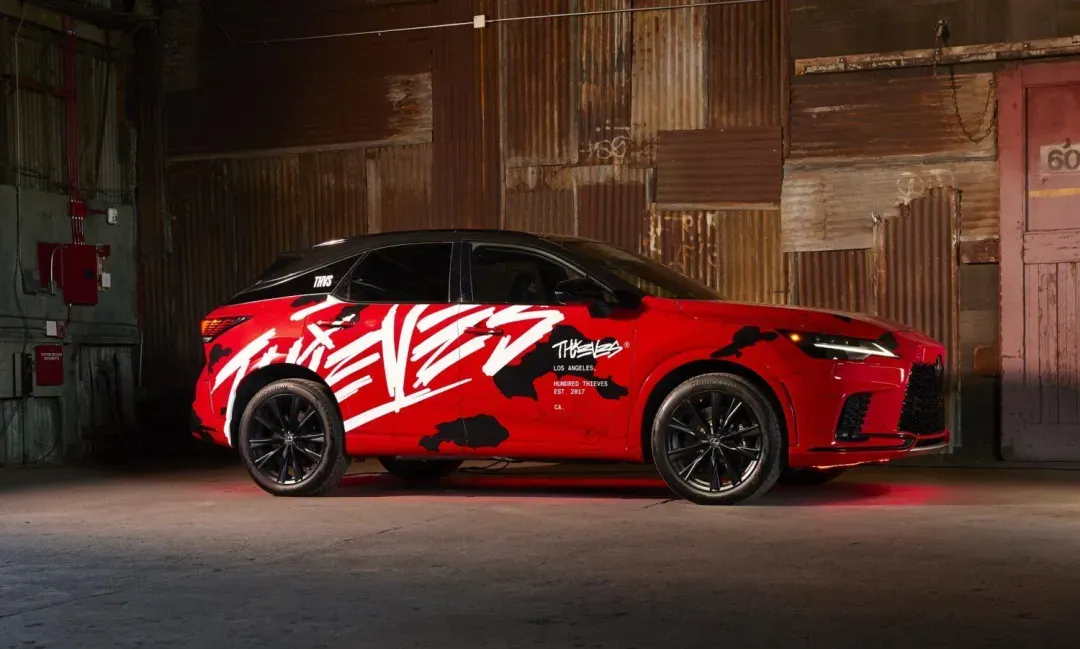
100 Thieves works with Lexus, AT&T, State Farm, adidas and Oakley, among others, across automotive, telecommunications, insurance, apparel and accessories.
In March 2026, Lexus and 100 Thieves released a limited-edition collection themed around the LFA sports car, including jackets, T-shirts and scarves. The collaboration translated details from the LFA into club apparel. Lexus used 100 Thieves’ apparel business to reach esports fans as consumers, while the club gained a commercial collaboration with an automotive brand. Compared with a conventional logo on a jersey, the co-branded merchandise gave the partnership a more tangible form.
LOUD has attracted Brazilian bank Itaú, as well as consumer and entertainment brands such as Snickers, Mentos and Netflix. Sponsoring an esports club gives brands recurring visibility in competition, player content and club-related media, helping build brand recognition over time.
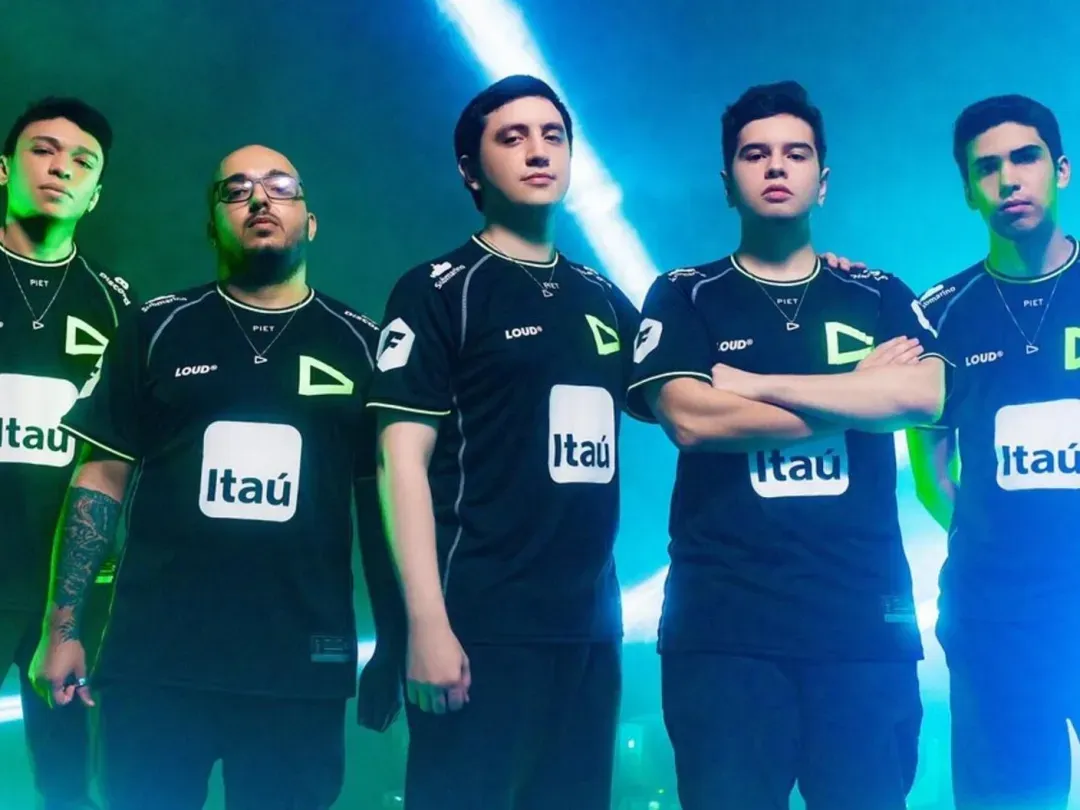
As one of Brazil’s major financial institutions, Itaú is closely connected to the local consumer market. LOUD’s profile in Brazilian esports gives the bank a commercial context for reaching local consumers through esports.
Food brands such as Snickers and Mentos have very different price points, purchase frequency and consumption occasions from cars and financial services. Competition content, fan activities and player-related promotion are easier to connect with everyday consumer products.
Within the same region, 100 Thieves and LOUD attract different kinds of brands. Partnership direction depends not only on a team’s profile, but also on sponsors’ business models, markets and the commercial resources clubs have built locally.
EMEA: French companies make their choice
Compared with the cross-industry mix in the Americas, EMEA’s sponsorship list also shows a strong regional-market pattern, with French companies making up a substantial share.
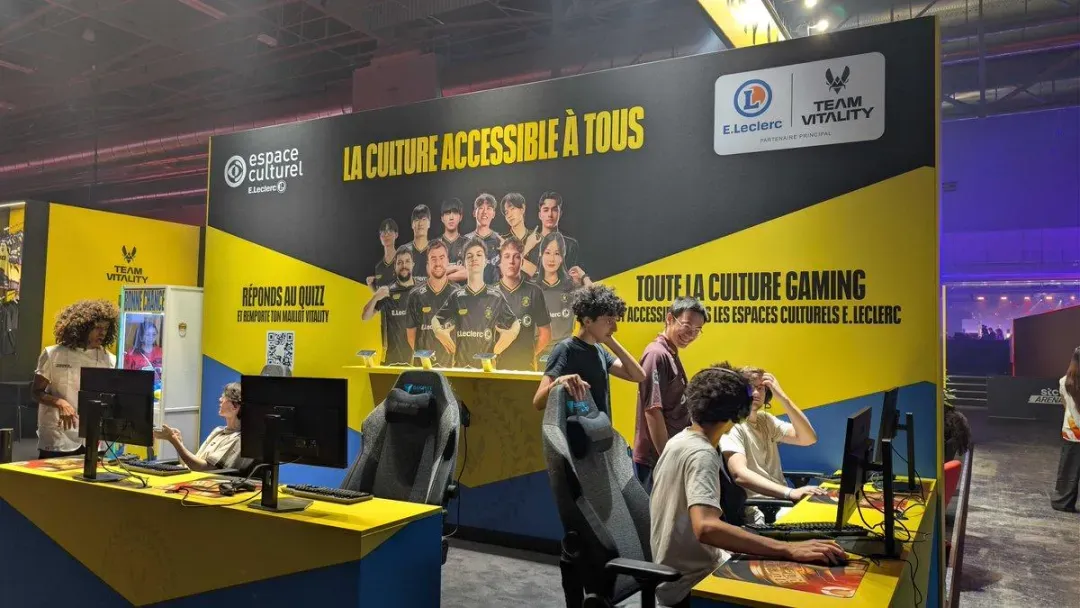
French club Team Vitality’s sponsors include supermarket chain E.Leclerc, Crédit Agricole, Magnum ice cream and Nescafé Latte.
Karmine Corp’s partners include French telecom operator Orange, CIC bank, meat producer Charal and clothing brand Celio.
E.Leclerc is a major French retail brand operating supermarkets and other retail businesses. Charal is a French beef and meat-products brand whose products include steaks and patties.
From supermarkets and banks to beef products, Team Vitality and Karmine Corp’s partner lists carry a distinctly French-market character.
For retail, finance and telecommunications companies that mainly serve domestic consumers, marketing has to account for service areas and potential customers. Local esports clubs’ name recognition can therefore be an important factor in a company’s choice of partner.
E.Leclerc and Charal both serve France’s mass consumer market: the former operates large-scale retail, while the latter mainly produces beef and meat products.
Their presence on Team Vitality and Karmine Corp’s partner lists gives the clubs’ local commercial resources a more concrete form. For retailers and food companies, a club’s French audience can provide a channel for regional promotion.
Other EMEA teams have different partnership structures. FUT Esports works with adidas, Red Bull and Vodafone FreeZone, while Team Liquid has partnerships with SAP, Visa and Monster Energy. The local companies associated with Team Vitality and Karmine Corp, alongside international brands at FUT and Team Liquid, show the differences in commercial partnerships between EMEA clubs.
Pacific: One group, multiple brands?
Pacific has the most sponsor-brand records in the sample, but 32 of its 61 records come from Global Esports. The overall picture combines group-owned brands, partnerships across multiple industries and international brands.
Paper Rex partners with YOU•C1000, ZOWIE, Pulsar and Secretlab. T1’s list includes Korean companies SK Telecom and Woori Bank alongside international brands Spotify, Red Bull and Samsung Odyssey.
The Nongshim RedForce sponsor list features a notable combination: Nongshim, Shin Ramyun and Baeksansu.
Nongshim is a Korean food company best known for its Shin Ramyun instant noodles; Baeksansu is its bottled-water brand.
For a corporate group with several consumer brands, an esports club can promote both the group identity and specific products.
During the Pacific regional final in Busan in September 2026, Nongshim gave eligible fans Shin Ramyun and PC-café time vouchers at RedForce PC Arena, and organized a watch party in Seoul.
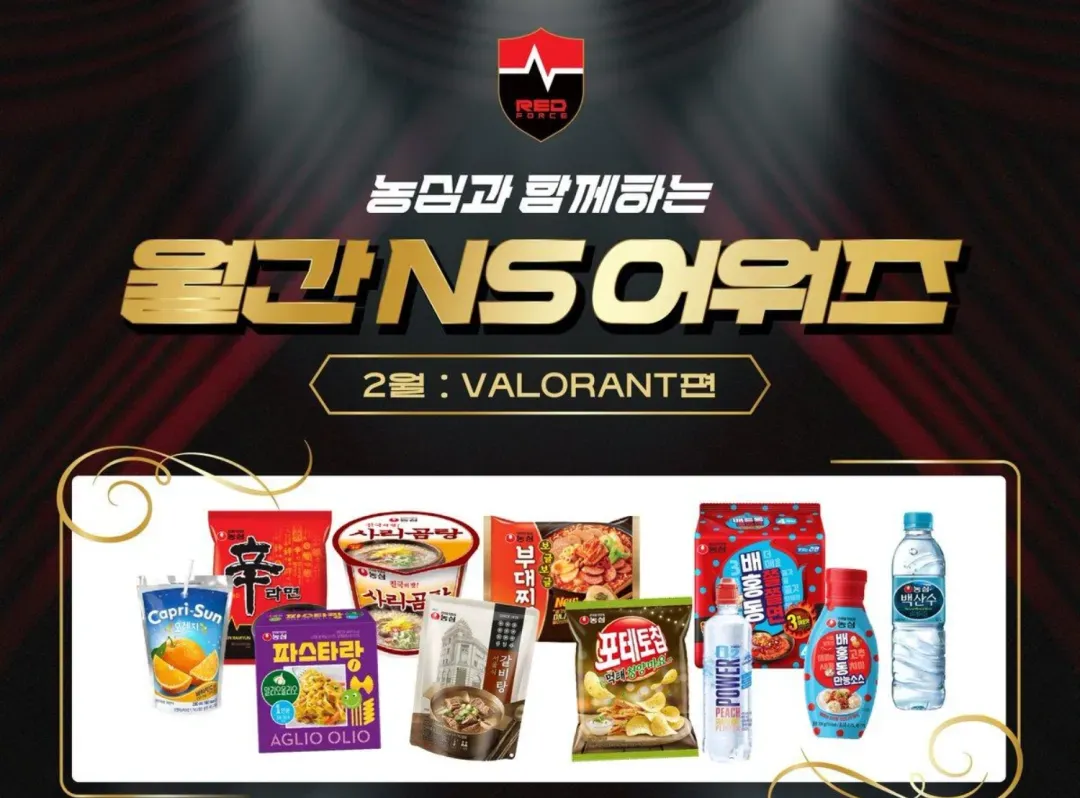
The activation connected the competition, a PC café and instant-noodle consumption. Fans gathered at an offline venue for the matches, while Nongshim brought its food products into the viewing experience.
Compared with standard logo placement, Nongshim can use the connections between a professional team, consumer products and offline venues to organize more participatory marketing activities.
T1, by contrast, has partners from a wider range of industries. Korean companies such as SK Telecom and Woori Bank appear alongside international brands such as Spotify and Red Bull, showing interest in the club from both local and multinational businesses.
Global Esports’ 32 brand records span hardware, internet, entertainment and consumer goods. It has the most partner-brand records of any team in the sample, raising Pacific’s overall total.
Pacific’s sponsorship profile is therefore more about structural differences between clubs. Group ownership, multinational partners and regional commercial resources are closely tied to the business backgrounds of individual clubs.
CN: Domestic peripherals compete for the professional stage
CN’s sponsor mix is more concentrated in gaming hardware, particularly the participation of domestic peripherals makers.
Among the four CN teams, EDward Gaming has the most concentrated set of gaming-hardware partners.
LAMZU, IQUNIX, MCHOSE, ZOWIE and AutoFull cover mice, keyboards, monitors and gaming furniture. TYLOO works with companies including CHERRY, Razer and AMD.
International manufacturers and domestic gaming-peripheral brands now occupy a substantial share of CN’s sponsor lists. For Chinese brands seeking recognition among competitive players, professional teams are a direct marketing channel to the player market.
In the mouse market, for example, manufacturers compete on weight, shape design, sensor performance and price. As players gain more products to choose from, attracting potential consumers’ attention matters alongside a product’s specifications.
Professional players’ equipment is a frequent topic of discussion among FPS players.
High or low sensitivity? A fast or controlled mousepad? Has a keyboard been modified? Can someone share that player’s crosshair? Players’ setups naturally become a showcase for esports brands.
After a match, a player’s standout plays may circulate in highlight clips, and some fans look up the player’s equipment settings. If a brand and team collaborate on related content, they can use those topics to explain product features.
The equipment choices of professional players can draw attention to products, but that attention ultimately has to lead back to the products themselves. A pro’s setup can introduce consumers to a product; grip, performance and price determine whether it can win over buyers in a competitive peripherals market.
Although CN also has consumer businesses such as JD.com Delivery, Ninebot and TATA Wood Door, the concentrated involvement of domestic peripherals makers remains the region’s most distinctive feature.
As domestic manufacturers compete in product categories such as mice and keyboards, professional teams’ commercial value increasingly includes product promotion and brand competition.
What sponsorship delivers
What specific rights can brands obtain by entering the VCT?
From jersey logos and broadcast placements to social-media content, clubs and event organizers can offer different commercial assets. For clubs, player appearances, official promotional content and in-person fan events can all form part of a sponsorship.
Official event partnerships offer another content-marketing approach. In 2025, Samsung SSD took part in VCT Americas broadcast opening and recap segments, while Pulsar featured its brand in highlight plays and set up an on-site product-experience area.
Both were official event sponsorships, with rights provided by the event organizer rather than developed separately by a club. The examples show how brands can be integrated into event content. Pulsar connected the brand with professional players’ performances through highlight clips, then used an on-site experience area to let viewers try its products. That gave brand visibility a practical use setting.
Different sponsor categories also have different needs from these commercial assets. Peripheral makers can build campaigns around players’ equipment, match performance and product experience. For automotive and financial companies, where consumer decisions take longer, event exposure serves more as brand communication. Food and beverage companies can reach consumers through watch parties, fan interaction and in-person experiences.
Developing these partnerships also takes operational resources from clubs. Player appearances for commercial shoots have to be coordinated with training and competition schedules. Content teams need to plan campaigns around brand requirements, while in-person events require venues, staff and execution costs. The more extensive the rights package, the more coordination a club has to handle.
Jersey sponsorship is another commercial asset worth watching.
Research published by esports data firm Esports Charts in March 2026 found that, in the first half of that year, fewer than 30% of top teams across the VCT’s four international leagues had a commercial main sponsor on the front of their jerseys.
The front of a jersey is usually a prominent place for a brand. When players wear it in competition, interviews or promotional photos, sponsor marks enter the event’s media coverage. But jerseys also carry a club’s own visual identity, so clubs have to manage the number, placement and size of sponsor marks.
Developing jersey inventory also involves fan identification with a team’s image and the sales of merchandise. For clubs, balancing sponsors’ display needs with distinctive jersey design and merchandise branding is another challenge in developing commercial rights.
Looking back at the 2026 VCT sponsorship lists, gaming hardware has become a stable commercial presence, while traditional sectors such as automotive, finance, retail and food and beverage have also found ways to enter professional esports.
For VCT clubs, developing a wider range of partnerships around different brand needs, beyond event exposure alone, will be important to strengthening their commercial capabilities.
The growing diversity of sponsors also places higher demands on clubs’ commercial operations. Designing rights packages, scheduling player appearances and maintaining partnerships through changes in team performance and rosters will remain long-term commercial challenges for clubs.