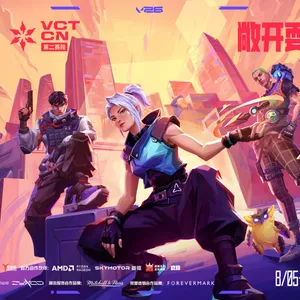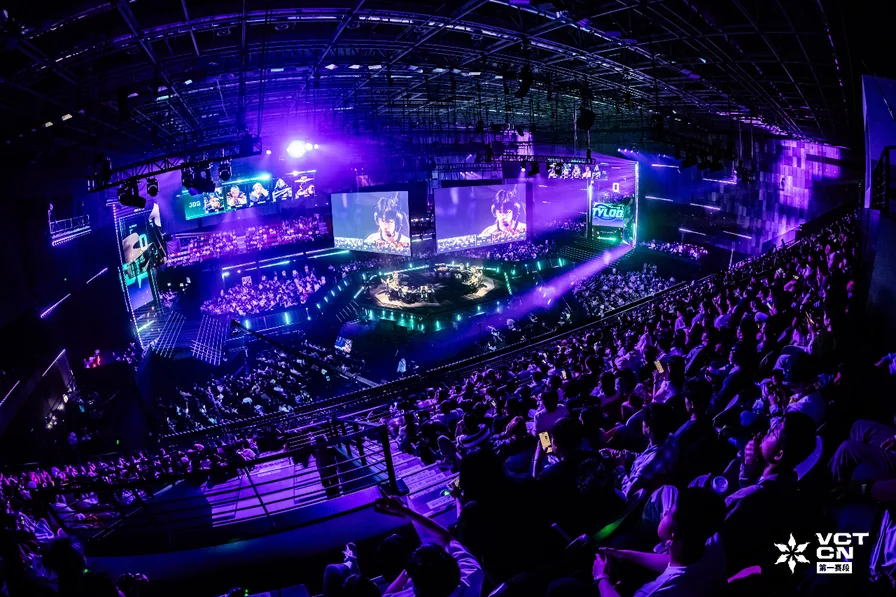
Following VCT CN from Guangzhou to Hangzhou and then Beijing left one increasingly clear impression: the national tour is doing more than moving an esports tournament between cities.
Over three years, Chinese VALORANT passed several defining milestones. VCT CN became an official league; the VALORANT Arena opened beside the Huangpu River; Shanghai hosted the game’s first international event in China; EDward Gaming lifted the Champions trophy; and cities including Chengdu, Chongqing, Beijing and Fuzhou hosted different forms of competition.
By 2026, the more revealing question was no longer which city came next. It was how a global game and esports IP was reorganizing the Chinese industry around it. Competition, publishing, cities, clubs, players, media, platforms, commercial spaces, live spectators and online users now sit inside one touring system.
Guangzhou, Hangzhou and Beijing are only the beginning. Whether the model lasts will depend on competitive results, commercial returns, operating costs and each city’s ability to execute.
Competition, publishing and the city
VALORANT esports has possessed a distinctive live identity since its first global events. The cage-like stage, augmented reality, electronic music and forceful visual language of Masters Reykjavík 2021 made it clear that VCT was not a copy of an older esport. Former ESPN reporter Tyler Erzberger compared it to a combination of Mortal Kombat and a German nightclub.
As VCT CN matured, Chinese audiences became familiar with its electronic sound, close stage, rapid rhythm and expressive players. Touring posed a new question: could that identity leave a permanent home and acquire a different flavor in each city?
Guangzhou answered decisively. Canton Tower appeared across the stage; dim sum became pixel art; XLG entered with a lion dance; Cantonese snacks filled the public area; Dongshankou hosted a city “passport”; and the campaign used a memorable Cantonese slogan. The event did not merely happen in Guangzhou—it was interpreted by Guangzhou.
Local spectators particularly approved of a promotional collaboration between Wolves player SiuFatBB and a recognizable Cantonese presenter. “They didn’t just pick anyone,” they said. That distinction mattered. Local identity came through cultural interfaces younger residents genuinely recognized, not generic symbols attached to the outside of the tournament.
One Guangzhou resident had often traveled to Shanghai’s VALORANT Arena at considerable expense. With the tour at home, she bought tickets to 12 matches and attended every stage from the initial meet-and-greet. Another spectator, who worked in Japan, fitted eight days of tickets into a visit home to Shenzhen. The stop released demand that had long existed in southern China without a top-level offline outlet.
The tour also reached people outside esports. A local journalist who had known little about the sector attended repeatedly, interviewed participants and spoke with fans. The interlocking presence of players, supporters, city culture, content and youth emotion explained esports more directly than any abstract definition. A long-running top-tier IP can also show local officials and companies what professional production looks like and expose young people to careers in operations, media and content.
Core followers moved with the tournament as well. One fan from Hebei, previously a regular in Shanghai, began making vlogs in Guangzhou, volunteered for AG and drew fan art. He appeared again on the first day in Hangzhou. Such spectators do not only watch; they document, create, participate and distribute. For them, VCT CN has become a route they can physically follow.
Hangzhou offered a different expression: local robotics, a large naked-eye 3D Sage installation, Hubin in77, Tianmuli, a giant Viper display and urban check-in points created a route through the city. Guangzhou drew on Cantonese street culture; Hangzhou on technology and cultural-tourism spaces; Beijing developed its own language. The host was no longer a backdrop but part of the content.
Competition remained the foundation. Guangzhou was the kickoff leading AG, XLG and EDG toward Masters Santiago; Hangzhou affected qualification for the Beijing playoffs; Beijing carried the pressure of the route to Masters London. Without clear competitive stakes and player stories, city activations would not sustain attention for weeks.
Publishing extended that sporting line through music, fashion, streamers, cosplay, campuses, internet cafés and shopping districts. For core viewers these were extensions of the matches; for ordinary young residents they could be a first encounter with VCT CN.
That is the practical meaning of “1+1+PLUS”: esports provides the central emotion and narrative, publishing reaches more players, and the city gives the same IP a different local expression. The problem is no longer how to bring VCT CN to more cities, but how each stop can generate a distinct VALORANT experience.
Clubs, players and the public move closer
VCT’s product identity reduces distance. Player entrances sit close to spectators; fans can exchange high-fives; emotion travels easily from the stage. The tour amplified this courtside feeling. Guangzhou placed the analysis desk in a public zone, while Hangzhou brought program segments into open areas. Content once confined to broadcasts and backstage production moved within reach of ordinary spectators.
Communication became more open as well. Post-match interviews now take place where fans can watch players, coaches and reporters. That openness relies on confidence accumulated across the ecosystem: media must ask questions with respect, players must answer honestly, and leagues and clubs must manage uncertainty by investing in education rather than simply isolating competitors.
ZmjjKK remains the obvious symbol of VCT CN’s expressive generation. He arrived internationally in 2022 with his own gesture and slogan, then won Champions 2024 with EDG. But his significance extends beyond one personality. Every young esport resembles a start-up, with players and production staff collectively shaping its DNA.
Today the notable change is the average level of communication across the region. More young players can clearly discuss form, judgment and emotion in interviews, group sessions, fan interactions and content shoots. That ability was trained through repeated media coaching, cameras and direct contact with supporters.
The content formats have deepened too. A late-2025 video podcast allowed players and coaches to discuss criticism and declining results candidly. In 2026, the head of each club’s VALORANT operation began appearing publicly as a Team Principal. In Hangzhou, principals joined players at a pre-event press conference; in Beijing, the eight playoff principals took part in roundtables and answered sharp fan questions.
Results, training gaps, roster building, substitutions, tour costs and commercial opportunity became legitimate subjects. As clubs enter more cities, questions about transfers, academies, business and group strategy cannot be answered only by players and coaches. The principal becomes a public representative as well as a backstage manager.
Openness still requires professional boundaries. Public interviews need order and serious questions. Principals must explain actual operating logic rather than become another source of scripted language. VCT CN increasingly resembles a sports league willing to expose its internal workings to public debate.
Its youthfulness therefore comes not only from visual design, music or player age, but from direct relationships: players closer to fans, clubs closer to the public, media closer to real questions, cities closer to competition and users closer to content production.
China and the world
VALORANT is first a global system. Without Masters, Champions, four international leagues and a unified career path, VCT CN could not have connected so quickly.
At first, China primarily learned from and joined that structure. During the national-tour phase, the relationship began to change. VCT still supplies the skeleton, but China adds city resources, platform distribution, audience habits and organizational capacity.
The important point is not the number of activations but their institutionalization. Host cities, live experiences, Team Principals and fan participation are no longer isolated experiments. They belong to a single operating logic that advances professional competition toward a city-scale IP system.
“Sportainment,” a term used at the press conference, summarizes the direction. It is not simple entertainment but a combination of sport and entertainment designed as a cultural product for a new generation.
China offers particularly fertile conditions: one large market, dense urban commercial spaces, mature platforms, strong publishing and event organizations, young users willing to spend offline and share content, and cities increasingly interested in esports and tourism. International industry figures have begun using the tour as a window into Chinese esports.
But a leading model does not mean every problem has been solved. The 2026 tour planned stops in Guangzhou, Hangzhou, Beijing, Changsha, Chengdu, Shanghai and an undisclosed coastal city. Every stop requires new coordination of venues, local resources and commercial partners. Clubs carry higher travel, operations, training and personnel costs. Players face disruption to practice, stamina and concentration.
AG principal Cheng Zihan argued in Guangzhou that if esports is a sport, physical demands are not inherently negative and clubs should train for them. The comment captured the other side of touring: esports cannot enjoy the benefits of city exposure without accepting higher standards for fitness, focus, training organization and management.
The decisive next question is whether VCT CN can improve competitively while carrying those additional demands. The tour can show the world China’s organizational ability, urban imagination and content production. Lasting respect, however, still comes from international results.
EDG proved that VCT CN can reach the summit. The next test is whether more teams can compete consistently at Masters and Champions. Only if the tour keeps cities, users and partners involved while strengthening leagues, clubs, operations, media and player development will it earn durable support.