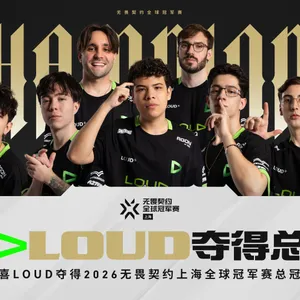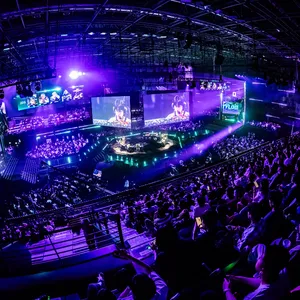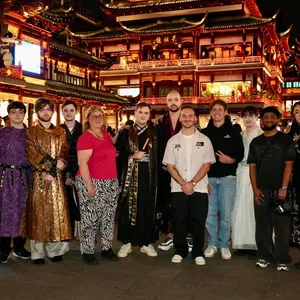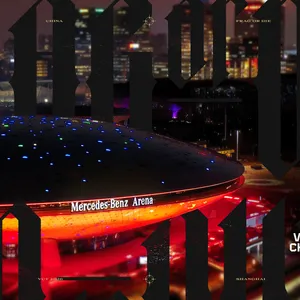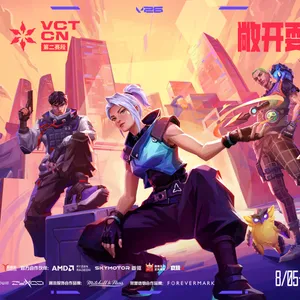
After hosting VALORANT Masters Shanghai 2024, Shanghai welcomed the VALORANT Champions Shanghai 2026, the VALORANT Champions Tour’s global championship, from September 24 to October 18. Sixteen teams from around the world competed, and LOUD won the title. From the arena matches to brand collaborations, merchandise and fan activities around the city, the event gave players from different regions a chance to gather and experience Shanghai.
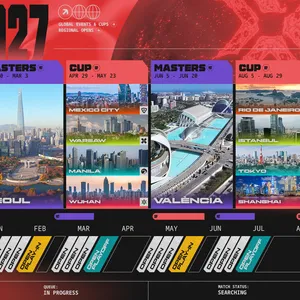
At the same time, Riot Games’s VALORANT esports programme is preparing for a major change. In 2027, the VCT will move toward a tournament-first structure, with open qualifiers creating more routes onto the international stage and more events planned in cities around the world. How Riot balances wider access with stability for partner teams is a central question for the new system.
During Champions Shanghai, Leo Faria, Riot’s Global Head of VALORANT Esports, discussed the host city, the VCT’s next phase, the esports ecosystem and technical problems that drew attention during the event.
Interviewer: From Masters Shanghai in 2024 to Champions this year, Shanghai has now hosted two of the VCT’s biggest events. What impressed or surprised you most about Shanghai this time?
Leo Faria: We love the city. Riot has a big office here, so we have many opportunities to come. It’s one of those cities with so much to offer. When we choose a city for an event, we ask whether it has a large VALORANT community and the necessary infrastructure and venues. In Shanghai, the answer to both is absolutely yes.
People come from all over the world for an event like Champions, and everyone is dazzled by Shanghai. They say, “This city is incredible. It feels like a destination.” This time was no different. At Champions, we went big and put on a lot of activities around the city. It felt right.
Interviewer: This Champions event was more than the competition inside the arena. There were brand collaborations and fans all around the city. Is there anything you would like future host cities to learn from it?
Leo Faria: Absolutely. There is a lot to learn from this event. For a few years now, we have been trying to make these moments about more than just the sport. Competition will still be at the centre of Masters and Champions, but we want each to be a moment for every VALORANT player.
If you love the sport, the players and the competition, you’ll come. If you love music, there is something for you. If you love the agents and VALORANT’s story, there is something for you. If you just want to hang out with friends you play with online, there is something for you. This idea of doing more is special. It lets us experiment with music, fashion, collaborations and merchandise, and it worked phenomenally in Shanghai.
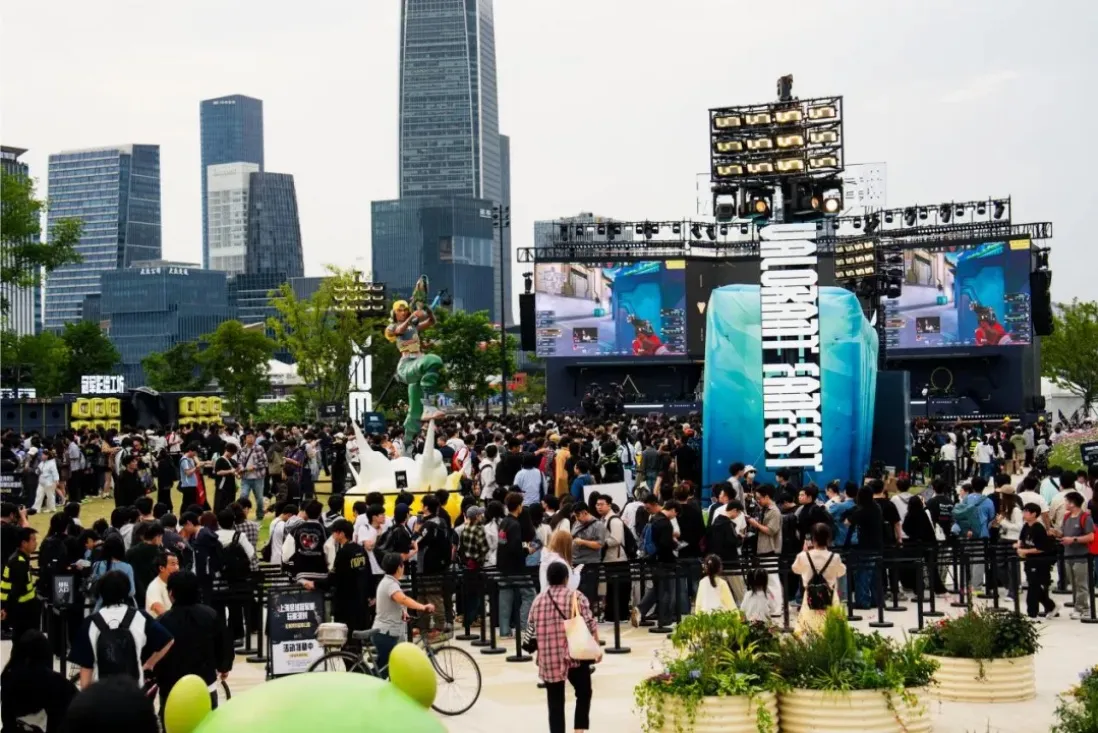
An outdoor fan area brought the event beyond the competition venue.
Interviewer: Riot has announced several changes to VALORANT esports for next year. What limitations in the current VCT system is the new plan intended to address?
Leo Faria: Whenever we design a sport, we ask ourselves what our goals are and what we are optimising for. In the first era of the VCT, the priority was growth. We were creating something from zero to one, and we believed stability was the goal. We wanted to help the world’s best esports organisations invest in a VALORANT programme, build a team, build a community and build a fan base.
Now that we have established that foundation, the next step is to open up and expand the sport, creating opportunities for more people to be part of it and for more teams to compete.
The other side is travel. This year, VCT CN started its tour across many cities in China. For most of the past four years, though, we have stayed in hub cities such as Los Angeles, Berlin, Seoul and Shanghai. Now we can travel. This year, the tour went to places such as Guangzhou and Hangzhou, and ended in Chengdu. We want to do the same in other parts of the world. Giving more people opportunities and taking the tour to more places are the two reasons we are evolving the VCT.
I’ve travelled to every city. The food and the crowds are different, and it has been great to see audiences react differently in each place.
Interviewer: You once said “quality over quantity.” The next phase will have more tournaments. What has the VCT team learned over the past few years that shaped this change?
Leo Faria: I think the problem with that statement is that quality does not always mean polish. A tournament does not always need a grand stage and an opening ceremony. A match can be incredibly exciting without all the bells and whistles. We are not giving up on quality; we are being more deliberate about where we invest in spectacle.
In the new VCT, a team’s journey might start with an online Open Qualifier. There is no big venue or stage at that point. As the season progresses, teams reach later stages of the qualifier, then a Cup and then Masters. The scale of the event grows with the competition. Quality is there throughout, while the polish and spectacle grow as teams advance. That’s a big bet, and we hope to bring it to life.
Interviewer: Fans have heard “everything is a tournament” many times. Why does Riot believe a tournament-first structure is a better fit for the future of VALORANT esports?
Leo Faria: There is no right answer for every sport. Many traditional sports and esports use leagues successfully. League of Legends, for example, has very successful leagues such as the LPL and LCK.
For VALORANT and our community, though, we think tournaments fit better with people’s lives. One challenge with a long league is that it can be hard to stay invested for a long time before getting a payoff. When you watch week four of a league, it can be difficult to understand what is at stake and where the match is leading. With a tournament, the stakes are clearer from the start: a winner is crowned at the end. Tournaments are usually shorter and punchier, so we think they are more fun and exciting.
You give up some of the stability of a league: you know how many games a team will play, and you can plan matchups and round robins. We lose that, but get something that feels more exciting. The cycles are shorter, and teams and fans have more chances to re-enter during the season. The hope is for more hype and more fun.
Interviewer: Does this have anything to do with the attention span of younger audiences, who watch short videos instead of reading articles?
Leo Faria: I think that’s part of it, but not all of it. When you tune into a broadcast, you are still watching hours of gameplay. The point is to give people a payoff sooner. Instead of asking them to follow a league for six months before learning who the winner is, we can say, “Watch this tournament; we’ll crown a winner in two weeks.”
There is something appealing about that: tell me who is the best, and then we do it again. That’s the idea. We get to run many of those cycles throughout the season, with multiple stories instead of one big story.
Interviewer: Is that also the thinking behind the change for Tier 2 teams? They can reach Tier 1 within the same year, and next year there will no longer be a Tier 2. Is that part of the same idea?
Leo Faria: There are so many incredible players outside VCT CN, VCT EMEA, Americas and Pacific who want a chance. The Tier 1 and Tier 2 distinction unintentionally created a system of haves and have-nots. If you are a partner, things are great; if you are outside the system, it is rough. It is hard to find opportunities to play, get paid, secure sponsorships or earn prize money.
The VCT is a large ecosystem. Last year, our digital goods generated nearly USD 90 million for teams. There is a lot there, and we want more people to have the opportunity to play on the big stages and access the money and rewards.
We think the best way to do that is to have one tier rather than taking some of the money and putting it into a separate Tier 2. There is a pool of rewards and a pool of opportunities, and anyone can compete for them. If you want to make it to Champions, get good and win matches. If you want to earn from the USD 7 million prize pool, play well and win matches. We want to make those opportunities available and accessible.
Interviewer: Partner teams still have some advantages and guaranteed revenue. How does Riot see the future relationship between partner teams, open teams and the wider ecosystem?
Leo Faria: Partnership is about giving teams stability. This new system is trying to find a balance between opportunity and stability. In the past, we had a lot of stability and very little opportunity. Ascension offered a path, but it was limited. We also did not want to go to the other extreme, with no partnership and everything completely open.
We are being open and honest: being a partner team will still be better. You get a guaranteed place at Kickoff, a fixed stipend that gives you predictable revenue during the year, and team capsules. It is definitely a better deal. But an open team that performs well enough can do better than a partner team near the bottom. If you perform well enough, you can not only survive but thrive as an open team. Partnership remains important.
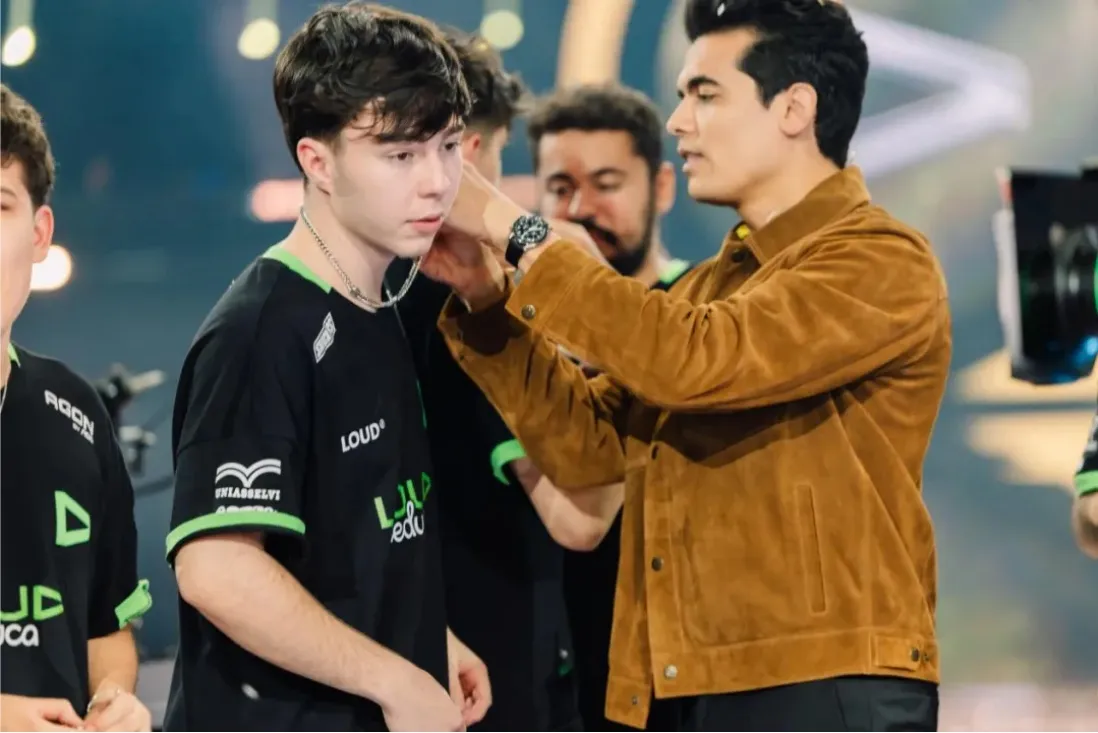
The interview discussed balancing predictable support with open competition.
Interviewer: As more teams get access to top-tier competition, how can the resources support a more open, accessible and sustainable ecosystem?
Leo Faria: We are careful not to spread resources too thin. The VCT is great for a number of teams today, and we do not want to make it mediocre for a larger number. We still want it to be great.
The trade-off is that we are reducing the number of partners in each league from 12 to eight, while creating more opportunities. Overall, teams should still receive strong rewards. We designed the economy to give teams a good base as well as uncapped revenue potential. If a team’s capsule is very popular, it can make a lot of money through the VCT. We do not want to take that possibility away.
Giving a little money to a much larger number of teams would not necessarily help anyone. It is about finding a balance, and we have a lot of conviction in the plan.
Interviewer: We are here at Champions Shanghai, where there have been several technical pauses and onstage issues. As the VCT expands to more tournaments and cities, how will Riot make sure competitive, technical and production standards keep pace?
Leo Faria: First of all, we are not proud of what happened. It was disheartening to see the biggest moment of the year affected by so many technical problems. Players and fans deserved better. The team was sad, but worked incredibly hard to find solutions.
It was a perfect storm of issues. Early in the tournament, we had challenges with wireless interference. The team investigated and found that metal surfaces on desks were reflecting signals. Once we worked that out, things returned to normal.
Then on Friday, the opening day of our biggest moment, we ran into new problems. Some were completely preventable, and those are the ones that disappointed me. Twice that day, a monitor’s power cable came loose when players adjusted the monitor, as they normally do. It was not their fault; the cables had not been secured well enough. The same thing had happened once at Jing’an, so it was extra frustrating to see it happen again when we knew about the problem.
We also faced network lag that took time to diagnose, and an unknown in-game bug. When we rolled back a round with Chamber in the game, he could not retrieve his Rendezvous anchor from the ground after the rollback. The team had to recreate the lobby manually, which is why one pause lasted 30 minutes. It was a very unfortunate combination of problems.
We will take a lot of lessons from this event into future tournaments. We have a capable team, and everyone is taking what happened seriously. We will learn from it and work hard to make sure it does not happen again.
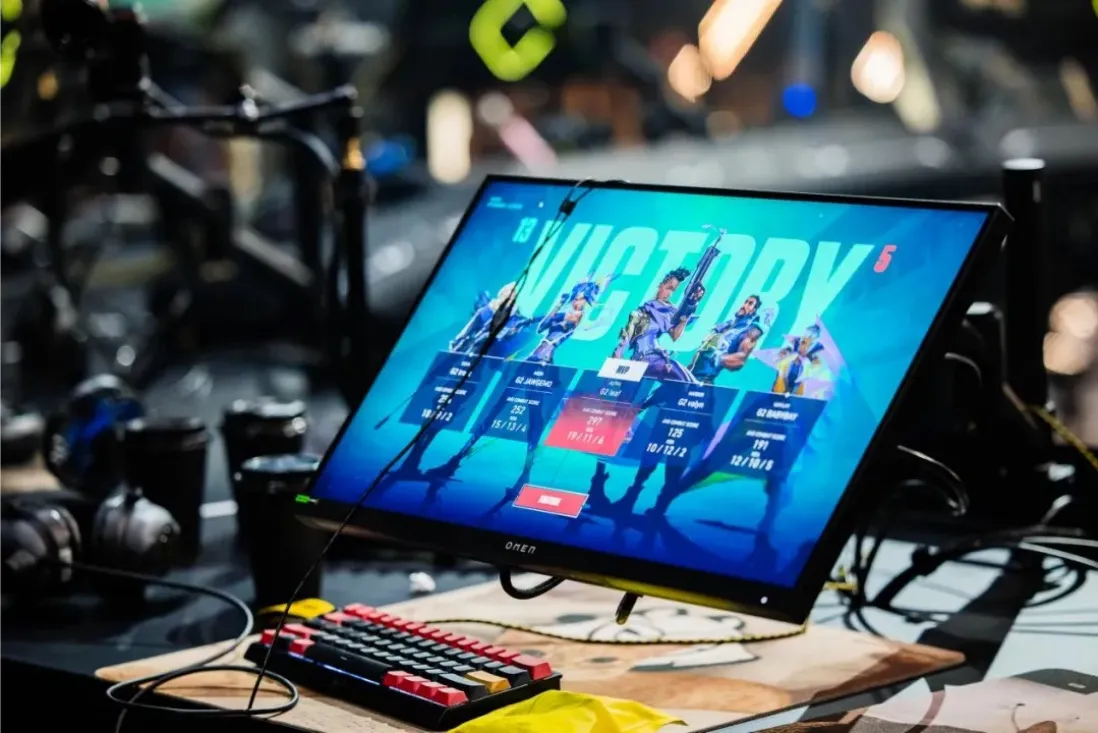
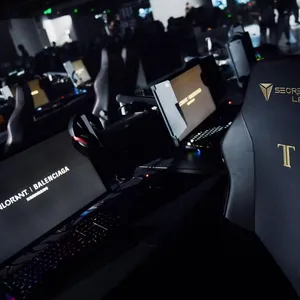
The source article pictured the competition setup while discussing technical problems at the event.
Interviewer: The problems also affected the audience’s experience and disappointed Chinese fans. How can Riot improve while maintaining the quality fans expect?
Leo Faria: That’s our goal. We have been doing esports for 15 years, and these problems should not be happening. We run competitions every week. The League of Legends World Championship is taking place now, and next we will go to Barclays Center in New York. We have held events in some of the world’s biggest arenas. We know how to run esports, so we are as disappointed as the fans. These problems should not happen. Riot Games is better than this.
The key is to learn from these issues, put protocols in place and keep improving. Problems will always happen. Technology keeps changing: pros now use glass mousepads, new mice keep appearing with higher polling rates, and we have to adapt and learn. I cannot promise a sport without technical pauses; they will always be part of esports. But what happened was unacceptable. We will work to prevent a repeat, regain people’s trust and deliver the competition they deserve.
Interviewer: Riot has experience balancing local ecosystems with global competition across different games. As VCT regions get more room to develop in locally relevant ways, how do you define truly global esports?
Leo Faria: One of the beautiful things about VALORANT is that the game is popular in every corner of the world. We often say the sport reflects the game. If there are players and people who aspire to go pro, they put together teams. If there are enough teams, there are tournaments.
That’s the beauty of VALORANT: before a tournament starts, no one knows who will win. That unpredictability is exciting for fans, and it also shows how global the sport is. Of course, some regions are stronger than others, but we have seen every VCT region show what it can do. We do not take that for granted.
I still believe VALORANT is the most globally competitive esport out there. Most games have one or two regions that dominate. That is not true of VALORANT. It is incredibly global and competitive, and I think that’s one of the things that makes the sport good: anyone can win.
Interviewer: Looking back at Champions in 2027, one year from now, what would tell you that the ecosystem is moving in the direction you intended?
Leo Faria: I want to go back to the main reason behind these changes: to reignite the dream. When we launched VALORANT outside China in 2020, everything felt possible. Everyone was excited. People were at home during the global pandemic, and many were saying, “A new game—I’ll give it a try.” A lot of young players said they wanted to go pro in it.
Five years later, things started to stabilise. Some players began to say it was hard to move up and there were not many opportunities. Everything we are doing is about reigniting that dream. We want to give people another reason to choose VALORANT, believe in their dream and take a chance.
If I look back a year from now and see more teams giving it a try, and young players putting together rosters and making it to Masters and Champions, that would be a very good sign that the system is working.