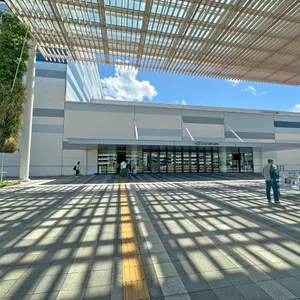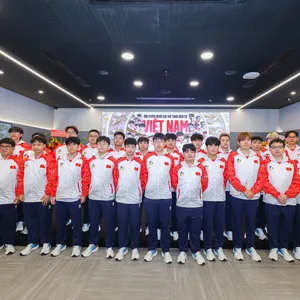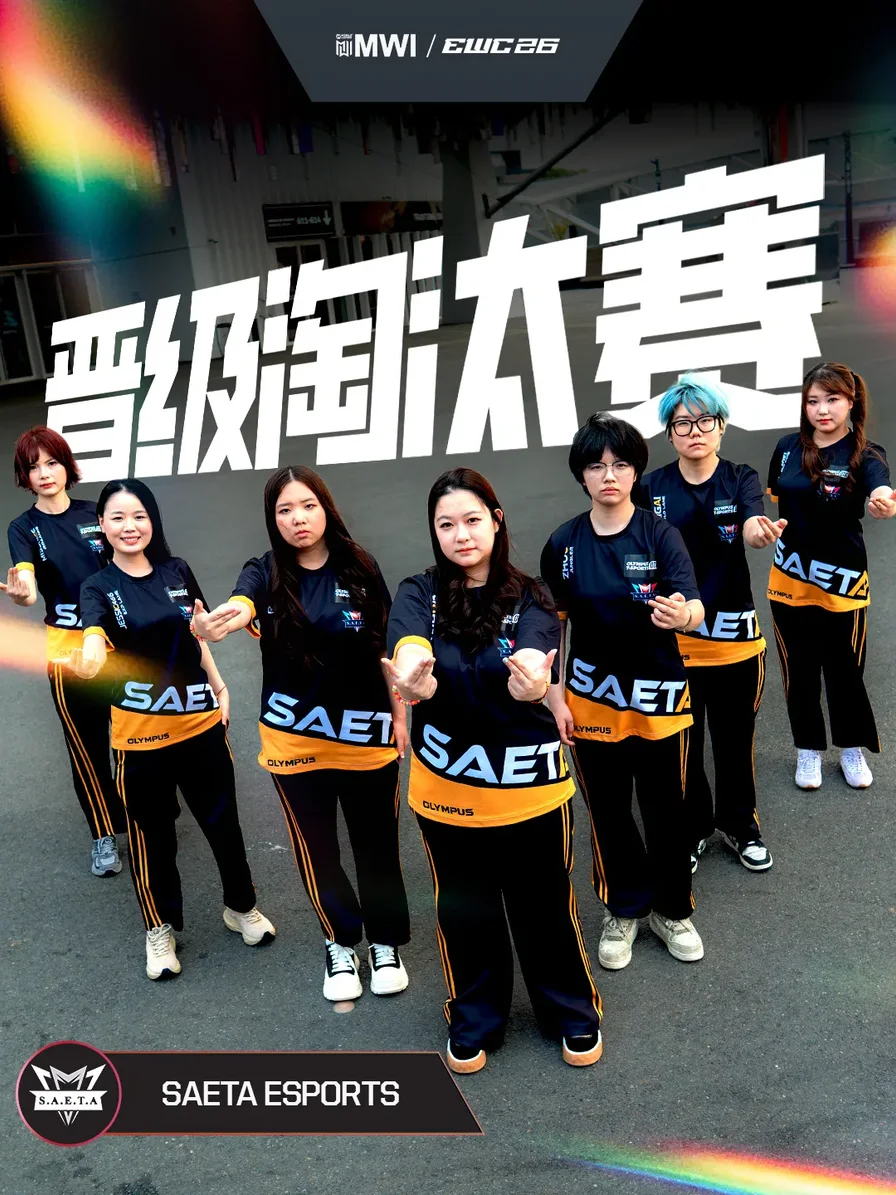
When the victory graphic filled the screens at Paris Expo Porte de Versailles on July 14, SAETA removed their headsets and let the moment land. The all-Chinese women’s roster from Tianjin had beaten Indonesian contender FLCN 2-0 in its opening match at the 2026 Esports World Cup. A second 2-0 win over VP followed, making SAETA the first Chinese women’s team to reach the knockout stage of the Mobile Legends: Bang Bang Women’s Invitational.
The result was historic, but it was not the product of a system built to make history routine. It was the product of players holding together through long stretches without elite competition, then trying to compress a year’s ambition into one month of preparation.
SAETA manager and player Li Zhenglin, known in-game as FanHuA, described the achievement as dreamlike. Before the tournament, the team’s private goal was simply to lose with dignity. Indonesia is one of the strongest regions in Mobile Legends: Bang Bang, and FLCN arrived as its second seed behind defending champion Team Vitality. On paper, SAETA was not supposed to control the series.
A Year of Waiting for One Month
SAETA’s path to Paris began after the 2025 Chinese regional final and continued through the May 2026 qualifier that secured its MWI place. Yet once qualification was confirmed, the roster had only a month to prepare for the global finals.
Li did not present the opening victory as proof that the competitive gap had disappeared. She credited fortune, the possibility that FLCN had not yet found its rhythm, and the force of SAETA’s early momentum. More importantly, she pointed to trust. Teams that remain together for years develop a shared language that cannot be recreated in a short boot camp. SAETA’s players had built enough of that trust to outperform expectations when their opportunity finally arrived.
Their run ended in the quarterfinals. Against TRY, SAETA could stay level through the first ten minutes, but impatience and mistakes grew as the match continued. Li saw experience and composure, rather than raw mechanics, as the decisive difference. Every opponent SAETA met had spent more than three years accumulating match situations together. Talent can shorten a learning curve, but it cannot fully simulate the pressure of repeated high-level competition.
That is the central contradiction facing women’s esports. Players are judged against mature international teams while being denied the schedule required to mature. Between one MWI and the next, SAETA had no comparable international event. North American roster GG finished second at MWI 2025, then most of its players went close to a year without another publicly announced competitive appearance. Across regions, the pattern is similar: a large annual stage surrounded by months of silence.
Passion Is Not a Career Model
Li’s advice to aspiring players sounds unusual in an industry that has long celebrated dropping everything to chase a professional career: finish your education first. Her own background explains the position. A graduate of RMIT University in Australia and a medalist in international mathematics competitions, she combines playing with commercial and managerial work at SAETA. At 24, she is already planning for life after competition.
For women, keeping an exit route is not merely cautious career planning. It is a response to an ecosystem in which even competitive success may not produce a living wage. Many players say they would compete without salary. Teams often depend on coaching work, streaming and other side income to keep operating. Few tournaments produce limited prize money and attention; limited attention makes sponsorship harder; weak commercial support then leaves fewer tournaments. Each problem reinforces the others.
The development pipeline is equally narrow. By the end of 2024, more than 90% of China’s 195 professional esports clubs were reportedly built specifically for men. Mainstream academy systems rarely offer women an entry route, and some club facilities are not designed to support mixed-gender training environments.
The cost is cultural as well as financial. Women’s matches attract commentary about voices, appearance, hero choices and usernames that would be irrelevant to the competitive performance of men’s teams. When a career offers neither stable income nor routine recognition, simply remaining visible becomes labor.
The Early Shape of an Ecosystem
MOONTON Games has spent five years trying to turn the Women’s Invitational from an occasional event into the center of a broader professional structure. Its women’s program now combines national-team competition with club tournaments. MWI has grown from a primarily Southeast Asian online invitational into a global event covering more than 60 countries and regions, while the 2026 edition added a Western European qualification path and staged its main event in Paris.
The audience has followed. According to Esports Charts, MWI 2026 reached 566,000 peak concurrent viewers, a new tournament record. MOONTON esports executive Ray Ng said the company is seeking partners to address the competitive gap later in the year. Its strategy relies on co-investment and licensed operations rather than asking the publisher to subsidize every layer indefinitely. In mature markets such as Indonesia, local women’s leagues have begun to sustain themselves.
This progress matters because a stage changes what players can imagine. But a global final cannot carry an ecosystem alone. Women’s divisions need regional schedules, reliable development routes, coaching, facilities, salaries and club commitments long enough for rosters to build the trust Li described.
Vitality offers one model. The French club has treated its women’s MLBB division as a long-term program, retained a stable core and won MWI again on home soil. Chief international officer Danny Engels argued that Europe’s mobile esports market remains early, but that clubs can help create demand by building competition and community before expecting immediate returns. The Paris title was therefore more than a trophy: it gave MLBB a club with local roots in a market the game is still trying to develop.
Beyond the Spotlight
Li hopes to build a women’s esports pathway beginning in Tianjin, expanding through northern China and eventually across the country. That ambition reflects the lesson of SAETA’s quarterfinal more clearly than the result itself. One successful run can inspire players, but inspiration must lead somewhere.
The next phase of women’s esports will not be measured only by record viewership or the number of teams invited to one global event. It will be measured by whether players can compete again before another year passes; whether a teenager can enter a real academy rather than search for an informal roster; whether clubs can plan beyond a campaign; and whether education remains a choice rather than an emergency escape route.
SAETA’s players said women who receive only two or three visible days a year learn to seize those days with everything they have. Their resilience made history in Paris. A healthy ecosystem would ensure that resilience is no longer the price of admission.