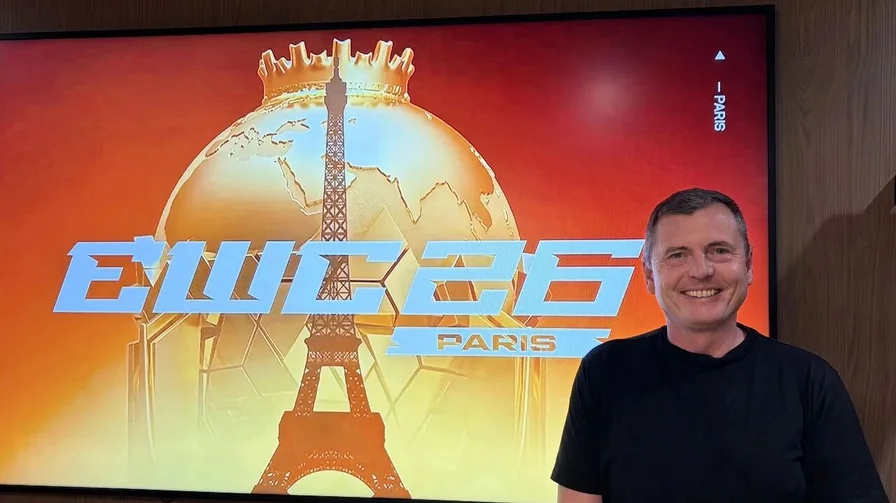
The 2026 Esports World Cup was not originally supposed to take place in Paris.
From the decision to move the event from Riyadh to the opening ceremony, the Esports Foundation had only eight weeks. For its COO and Deputy CEO, Mike McCabe, the move was both an extreme operational challenge and the most direct test yet of EWC’s global ambitions.
If year one proved the concept and year two expanded the scale, McCabe describes year three with one word: integration. The aim is to embed EWC more deeply within game publishers, clubs and regional esports ecosystems.
From Riyadh to Paris
Q: This year’s move to Paris is a major departure from the previous two editions. What was the biggest challenge?
Mike McCabe: The biggest challenge—and the biggest change—was obviously the location. We had to move the event, and everything that supports EWC, from Riyadh to Paris in a very short time.
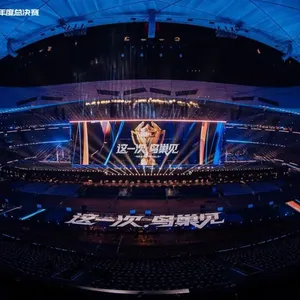
There were only eight weeks between the formal decision and the opening ceremony. Within that compressed schedule, we had to secure a venue, design every stage, assemble the equipment, complete the build and deliver a world-class event from day one.
It was an enormous challenge and an extraordinary achievement. The team put in a tremendous amount of work. We knew players were excited to compete here and reach a new audience in Paris, and that kept everyone moving forward.
Q: What did you have to compromise on?
McCabe: The clearest compromise was the festival. In Riyadh, a very large gaming festival runs alongside the competition. It requires a great deal of preparation, so we could not reproduce it at the same scale in Paris.
There are still fan activities, and we brought the most important elements with us, but not everything. Those choices also allowed us to make the competition stages larger and better, with room for more spectators.
Q: What was the most important lesson from the eight-week move?
McCabe: Honestly, teamwork. The foundation itself is quite small relative to the scale of EWC—about 130 people organizing something enormous.
Our team worked closely with partners and suppliers, as well as the French government and the City of Paris. The goal was not just to relocate the event, but to make sure players, spectators and everyone traveling to Paris could participate smoothly. People in the French government even told me, “We didn’t know we could work this fast.”
I hope the legacy is not only an esports event, but also an example of how different teams can work together.
Q: What did government support look like in practice?
McCabe: Schengen visas are a good example. For people in many parts of the world, securing one can be difficult. Appointments, interviews and final approval can take weeks or months.
In this case, players, fans and media were ultimately able to get to Paris. That reflects commitment at the highest levels of government. The event also brings inbound tourism and gives young people something new during the summer, so we were very encouraged by the support.
Q: You have said Riyadh will always be EWC’s home. Is Paris a one-off experiment or the start of a broader tour?
McCabe: Riyadh will always be the foundation’s home, and ultimately the home of EWC and the future ENC. But Paris accelerated a plan we already had. We have always wanted EWC to visit other cities, and we will do this again.
Paris proved the model can work. The city has a deep esports history, a strong fan base and the “muscle memory” that comes from hosting major global events. The process would be different in a country with no previous esports experience.
We hope Paris becomes a blueprint—a template we can use again—and that we can take the event elsewhere in the not-too-distant future.
Q: Was there a moment in French esports culture that surprised you?
McCabe: Once Paris was confirmed, we made two calls. The first was to the French government about visas and the infrastructure required to run the event. The second was to French esports clubs. We contacted Karmine Corp, Vitality and Gentle Mates and sat down with their CEOs and general managers to understand Paris esports and how to build the event together.
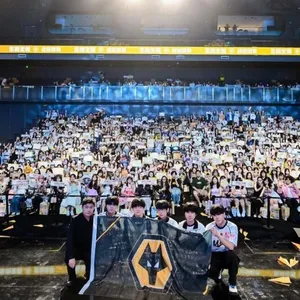
You can now see dedicated spaces for those clubs at the fan activities. Karmine Corp versus T1 may be one of my favorite League of Legends matches I have watched; the crowd was incredible. We saw something similar when Gentle Mates played Call of Duty. The passion and organization reminded me of a Brazilian football match.
Year three: from proof to integration
McCabe says he personally gravitates toward shooters, racing games and battle royales. Having worked on Fortnite for years, he still plays it and follows PUBG, Apex Legends and Call of Duty: Warzone. He is also a chess fan and has enjoyed seeing chess at EWC.
Asked how games are selected, he points to three tests: global representation, platform balance across mobile, PC and console, and—most importantly—the maturity of the competitive ecosystem. Honor of Kings and chess look very different, but both have large communities competing every day.
Q: What is EWC’s most important task in its third year?
McCabe: I have two answers. First, we proved EWC is a truly global IP. We changed host cities, filled the stands in Paris and delivered a global event under an extreme deadline.
Second, integration. The first year proved the concept; the second delivered growth at scale; the third is about working more deeply with developers and publishers—not only on the tournament, but on what happens inside the game and across its ecosystem.
We want EWC to become part of each game’s ecosystem rather than remain a standalone event. The same applies to clubs: we keep asking what matters to them and how we can support long-term sustainability. We also want players to become global superstars who are recognized in public like traditional sports stars.
His primary success metric remains viewership and reach, with particular attention to expanding audiences in China and emerging markets. China, he says, is already a mature Tier 1 esports market, while less developed regions may offer double-digit audience growth. Attendance and fan sentiment matter as well: spectators should feel safe, receive value for money and recommend the experience to friends.
What the Club Championship changes
The Club Championship has also matured. In year one, even EWC had not fully determined what kind of ceremony and narrative should sit above 25 individual tournaments. By year three, the organization is investing heavily in telling the overall standings story.
The objective is to encourage fans to look beyond a single title. A Call of Duty supporter may begin following Honor of Kings because the same club has something at stake. Clubs that seriously want to win will naturally enter more games, though EWC is still studying how many games and qualifying events make sense—and what the championship should look like five years from now.
McCabe believes the structure improves sustainability by giving clubs more continuity and allowing them to spread risk across several rosters. Some Chinese clubs are already signing teams in other regions, creating new competitive stories.
Publishers benefit from a stable annual platform as well. McCabe recalls the recurring choice from his own publishing career: invest in esports, or build a feature that benefits every ordinary player? EWC can now be planned into annual road maps and calendars. More of this year’s 25 tournaments are being co-produced with publishers, a model the foundation intends to expand.
“We are still very early in China”
Q: How would you define EWC’s current stage in China?
McCabe: Honestly, relative to my ambitions and expectations for EWC in China, we are still at a very early stage.
China is the largest esports market in the world, without question. I visit every year and attend different events. The passion, loyalty and audience scale of Chinese fans are difficult to match anywhere else.
There is much more we can do with Chinese clubs and publishers. We are building a team and bringing in more people who can help us understand the market, design the right products and choose the right path. It remains a work in progress, but the early results give us confidence that we are moving in the right direction and should continue investing.
The next phase again comes back to integration: becoming more deeply embedded in China and building stronger connections with Chinese fans. McCabe also hopes that an opportunity like Paris may eventually arise in China, whether for EWC or ENC.