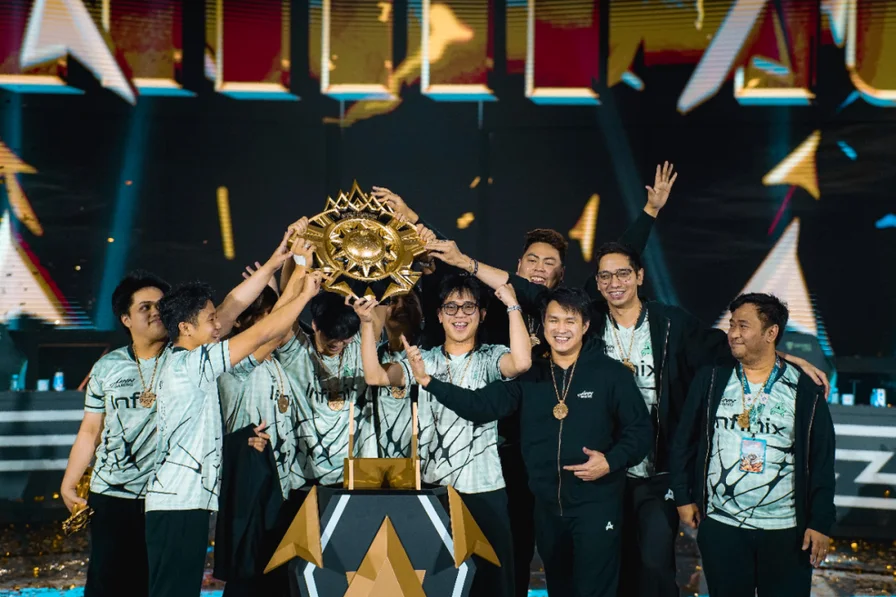
In 2018, esports made its Asian Games debut as a demonstration event at the 18th Asian Games in Jakarta and Palembang. It was the first time esports had appeared at a continental multi-sport event, and a milestone in the industry’s entry into mainstream international sport.
Eight years later, esports had moved from demonstration status to official competition. At the 2022 Asian Games in Hangzhou, it became a medal event for the first time, with seven gold medals included in the overall table. At the forthcoming 20th Asian Games, athletes will compete for medals in 11 titles, including League of Legends, Mobile Legends: Bang Bang and Naraka: Bladepoint.
Over those eight years, the global esports industry grew quickly. Audiences, competition systems and commercial ecosystems matured, and records continued to fall. At the start of 2026, People’s Esports returned to Jakarta with the seventh MLBB M Series World Championship. M7 reached 5.68 million peak concurrent viewers, setting a record for an overseas mobile esports event. The reporting also saw a Chinese-developed esports property taking an established Chinese model into more countries and regions and encouraging cooperation across the global scene.
ONIC: An esports powerhouse built around MLBB
“In Indonesia, mobile esports has long gone beyond the competition itself. It is deeply woven into people’s cultural and social lives and has become a mainstream way of life. Many young people even see esports as an important career path.” That is how Justin Widjaja, founder and CEO of ONIC Esports, describes the local ecosystem.
Justin founded ONIC’s MLBB team in 2018, the year the Jakarta Asian Games took place. The team has since grown into an esports powerhouse with 3.6 million TikTok followers. Justin attributes MLBB’s rise in Indonesia to three factors: accessible design, broad appeal and deep cultural integration.
On the product side, MLBB runs smoothly on ordinary smartphones with modest specifications. Its controls are approachable while retaining enough competitive depth for players at different levels. From its arrival in Indonesia, the game positioned itself for a broad audience and matched the entertainment and social needs of local young people.
Culturally, MLBB has become part of everyday life in Indonesia. Game terminology has entered ordinary conversation, and “let’s play a match” has become a common way to socialize. Mobile esports is no longer just online entertainment; it is gradually becoming part of social life.
That integration is also visible in competition data. According to Esports Charts, the 15th and 16th seasons of the Indonesian MPL each generated more than 100 million hours watched on overseas streaming platforms last year. Only the LCK and the 2025 League of Legends World Championship ranked higher. MPL Indonesia Season 15 peaked above 4.13 million viewers, again trailing only the 2025 League of Legends World Championship.
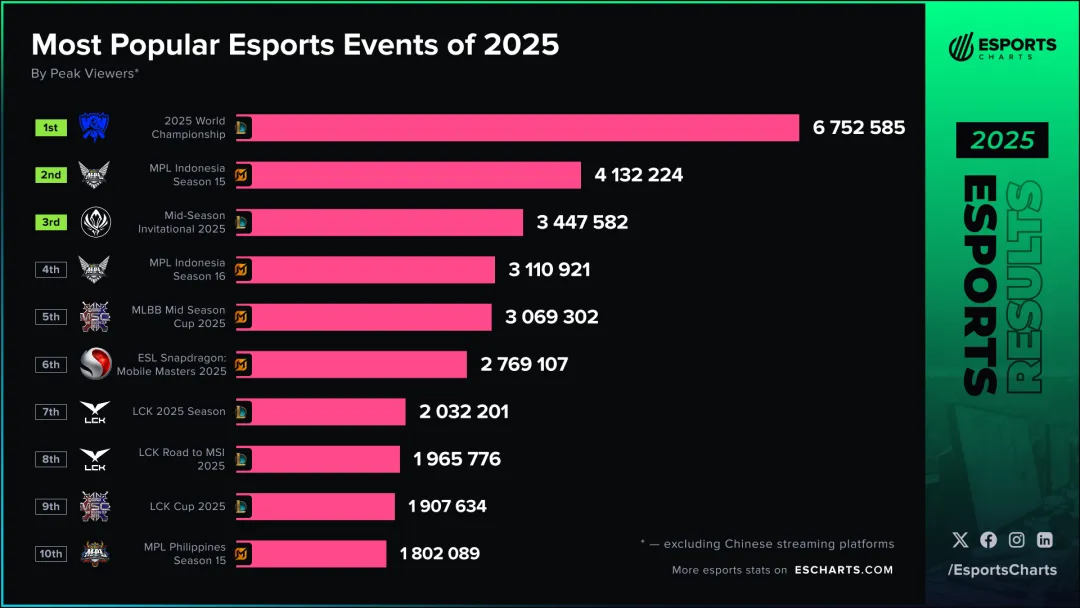
Esports Charts’ ranking compares 2025 peak viewership across esports events.
Justin says Indonesia’s high level of attention is the result of long-term growth, not a short-term surge. “Mobile esports in Indonesia has formed a complete ecosystem, with a large player base and broad social recognition.”
He sees Indonesia as an important early mover and leading mobile esports market in the Asia-Pacific. Building on its Indonesian base, ONIC also established a division in the Philippines, linking results and market development across the region.
Competitive results remain ONIC’s core asset. Championships bring attention and influence that support the club’s commercial development. For talent development, ONIC has built its own academy system. It uses the common abilities of successful active players as a benchmark, then recruits and develops prospects through open applications, in-person trials and structured assessment.
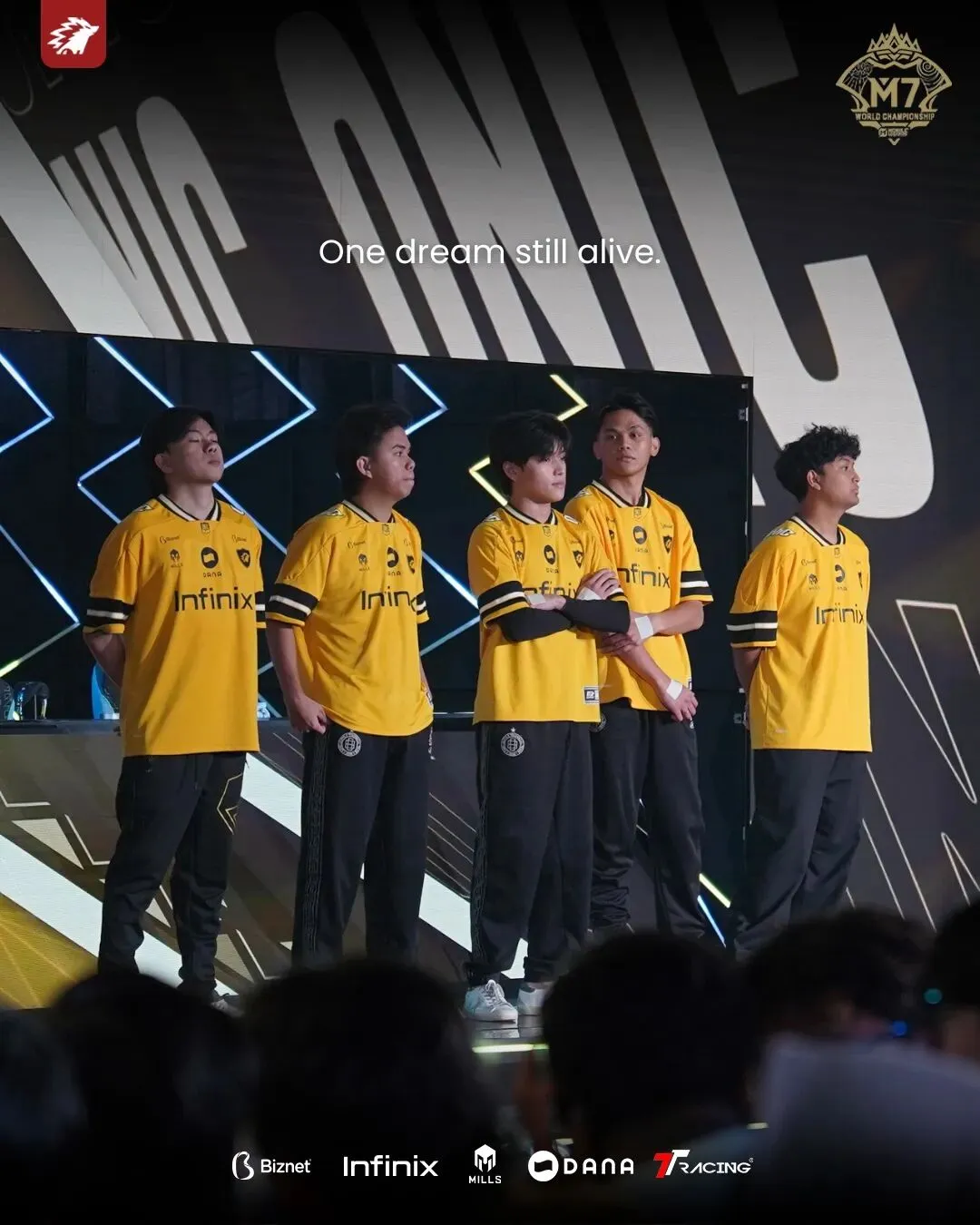
ONIC’s players appear together at the M7 event.
ONIC is also diversifying beyond competitive results. Alongside traditional sponsorships and brand partnerships, the club develops player and streamer brands with independent commercial value that can support the wider organization. That model has gradually become an important source of stable income.
“Choosing the right people is essential to a club’s long-term competitiveness,” Justin says. From players and coaches to management, he sees a well-matched organization as the foundation of ONIC’s continued growth. The club plans to keep competition at its core while improving its academy and commercial systems to help Indonesia’s mobile esports ecosystem mature.
RRQ: A local Indonesian club brand
Founded in 2013, RRQ is one of the most representative long-running clubs in Indonesia. It is backed by the property-focused MidPlaza Group and has remained among the country’s leading esports organizations.
RRQ CEO Andrian Pauline Husen, known as AP, says Indonesia’s esports ecosystem has changed substantially compared with three to five years ago. “Take the M Series as an example: the format and production continue to improve, and the professionalism and competitive level of events have risen noticeably.”
In his view, MLBB has stayed strong in Indonesia for nearly a decade because of “speed” and “localization.” The game entered the market early and quickly built out distribution, competition and community. Its development and operations teams also took local network conditions and devices into account, using smaller updates and lighter downloads to reduce barriers and keep the game stable for ordinary users.
The rise of mobile esports, with MLBB among its leading titles, has given an archipelago as geographically dispersed as Indonesia an effective way to connect people. Esports culture can cross distances and reach a wider population.
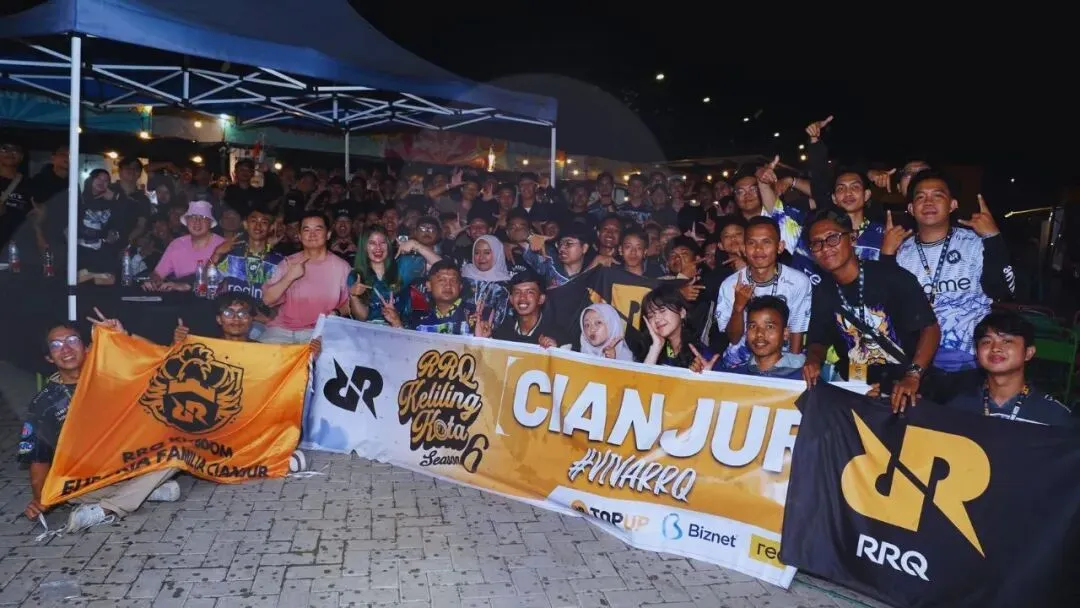
RRQ’s community activity brings supporters together around the club.
At the club level, RRQ puts considerable weight on fan communities. Each year it invests in meet-and-greets and watch parties across the country, reaching major cities and many smaller ones. The club has continued this approach despite the cost of travel between islands.
“Matches have winners and losers, sponsorships have cycles, but the fan community is the most stable foundation,” AP says. RRQ’s TikTok following has reached 5.9 million, forming a highly active core audience.
With the backing of MidPlaza’s broader business portfolio, RRQ has also pursued a more resilient operating model. AP does not want the club to depend too heavily on sponsorship income that can fluctuate with competitive results, so it has been changing its business structure in recent years.
RRQ now has three main business lines. It runs a top-up platform for game credits and utility payments; it has an esports talent agency that connects players and creators with commercial opportunities; and it operates RRQ Arena, a network of esports venues for gaming, events and venue operations.
“RRQ has become a brand that young people trust. Even many who do not follow our matches are willing to spend through our platforms,” AP says.
On esports cooperation between China and Indonesia, AP says second- and third-tier Indonesian cities still have significant room to develop. China’s experience in event operations, technical systems and youth development offers useful lessons for Indonesia.
“Indonesia’s current stage of development is, in some ways, similar to China’s ten years ago.” AP has worked with Chinese companies such as MOONTON and knows the country well. He says there is still considerable room for both sides to cooperate in bringing events to market, developing talent and coordinating the industry.
Conclusion
In eight years, esports moved from a demonstration event at the Jakarta Asian Games to an official medal competition at consecutive editions. Over the same period, Chinese-developed mobile esports properties such as MLBB moved from exporting a game to exporting parts of an industry ecosystem, becoming a vehicle for Chinese culture abroad.
The growth of ONIC and RRQ reflects how Indonesia’s esports ecosystem has matured. MLBB’s global expansion looks less like a single product launch and more like an industry model led by a Chinese team and rooted in overseas markets: open markets with an accessible product, build communities through localization, create a competitive structure through professional events, and develop the ecosystem over the long term.
MLBB’s global plans accelerated in 2026. At M7, MOONTON Games announced its annual esports roadmap. MLBB joined the Esports Nations Cup, made its debut as a medal event at the 20th Asian Games Aichi–Nagoya, and partnered with the Esports World Cup for a third time.
To build a global competition system, MLBB introduced a new five-region structure and intercontinental Championship Tour. The five regions are Southeast Asia (SEA), Eastern Europe and Central Asia (EECA), EMEA (Europe, the Middle East and Africa), East Asia (EA), and the Americas (AMER), forming a competition network across the world’s main markets. The M8 World Championship will be held in 2027, with its Wild Card in Thailand and its finals in Istanbul, Türkiye.
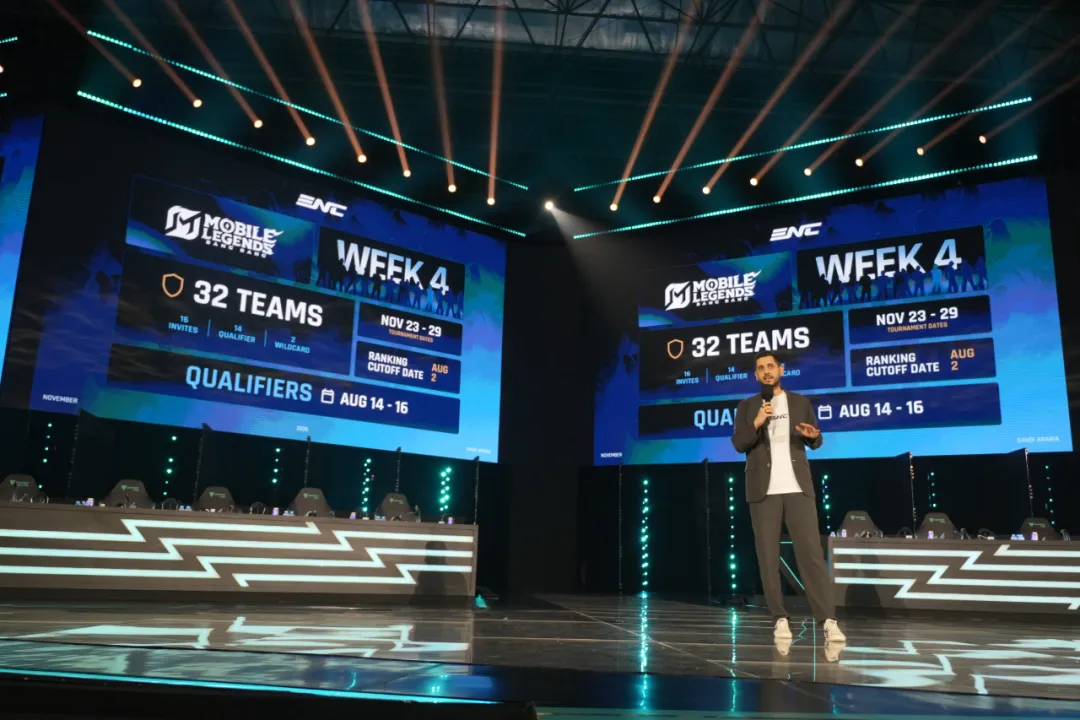
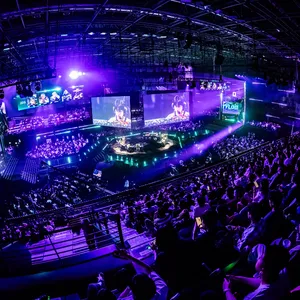
The M7 stage displays the expansion of the MLBB competition system.
Tiger Xu, MOONTON’s head of international events, said: “The successful conclusion of the M7 World Championship was a gathering for esports fans around the world. It also affirmed the core of the theme, ‘Let the world see us.’ As a shared language across cultures, esports is bringing the competitive spirit of different regions into closer conversation. With the five-region plan for 2026, MLBB Esports will push into Europe and add an Americas region. This is a key step in MOONTON Esports’ global strategy. We will keep connecting the regions, build a more complete global competition system, and explore new ways to take esports and culture abroad.”