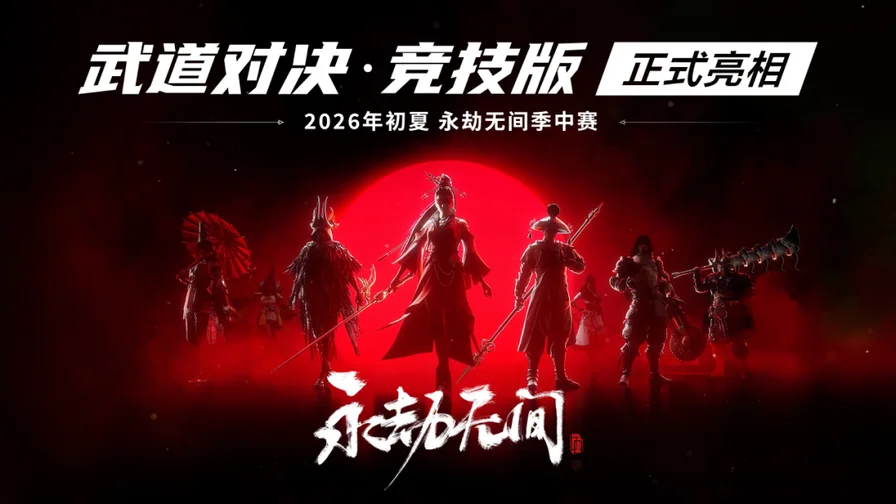
NARAKA: BLADEPOINT is reshaping its close-quarters combat for international competition with Martial Artist Duel · Competition, a format designed to be easier to follow on broadcast while preserving the game’s mechanical depth.
Developed by 24 Entertainment and published by NetEase Games, the martial-arts title is part of the esports programme for the 2026 Asian Games in Aichi-Nagoya. Hou Jue, chair of the game’s esports committee, said the conventional survival ruleset was difficult to adapt to the pacing and varied audience of a major multi-sport event. The existing one-on-one format, he added, did not fully meet the competitive or viewing requirements of international tournaments.
The revised mode has already been trialled in the NARAKA: BLADEPOINT Pro League. Organisers intend to introduce it to more international competitions and bring national teams into the same rules ecosystem. The Olympic Council of Asia subsequently used the English name Martial Artist Duel · Competition for the Asian Games qualifier held in Singapore in June 2026.
Update, August 14, 2026: This article now includes the June Asian Games qualifier results and the English terminology used by the Olympic Council of Asia.
Why It Matters
The format removes much of the resource-gathering and development phase associated with NARAKA’s survival mode. Every round begins with players at full Ultimate charge, putting advanced abilities, movement and aggression into play immediately.
Matches default to a best-of-three series, with best-of-five and best-of-seven configurations also available. Hero talents, skills, weapon assignments and playing order are locked once submitted. That makes lineup construction a competitive layer of its own: teams must decide where to deploy their strongest combinations and how to anticipate the opposing order before the first duel begins.
A late-round Lion’s Roar Manual creates another point of contest. If a fight runs long enough, the objective appears in the centre of the arena. The first side to capture it can trigger Lion’s Roar and stun the opponent for six seconds, breaking stalemates and forcing both players to contest space rather than wait indefinitely.
What Changed
Hou described NARAKA’s combat system as “cyber martial arts”: its weapons and techniques draw on Chinese martial traditions, while characters and cosmetics reference figures including Bruce Lee and wuxia heroes. He argued that the new ruleset can provide a more legible international showcase for those influences.
He is also confident about China’s medal prospects. NARAKA has an established domestic professional circuit and a pool of players and coaching staff developed through years of league competition. Hou believes that infrastructure, combined with Chinese competitors’ familiarity with the game’s martial-arts logic, gives the national team a strong foundation.
What to Watch
- Performance of the format at the Aichi-Nagoya medal event, including match length, broadcast clarity and audience response.
- Whether the Lion’s Roar objective and locked lineup order produce meaningful strategic variation under tournament pressure.
- Adoption of Martial Artist Duel · Competition in additional international events beyond the Asian Games qualifier.