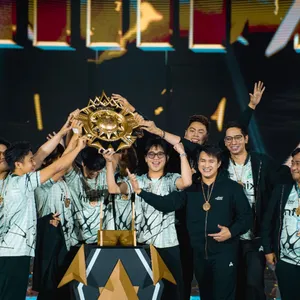
“I wish you happiness every day and good health.”
It is a message that will be placed in a “warmth package” and sent to children in less-developed regions. The people writing it are this year’s League of Legends Pro League (LPL) All-Star players.
At the beginning of December, the 2025 LPL All-Star Winter Festival took place in Shanghai. For many players, it was the annual year-end celebration of esports: red carpets, awards, memorable moments and laughter brought the season to a close. For the people on and behind the stage, however, this year’s All-Star event carried a deeper meaning. Young esports stars accepted awards in the spotlight, while also turning their influence into acts of kindness that could be touched.

An All-Star player writes a message for children.
For LPL viewers, these scenes are no longer unfamiliar. From caring about the wellbeing of children far away, to helping stray animals in cities and joining a chain of donations in charity livestreams, these small acts together form the central thread of LPL’s “esports for good” work. They have also become the most moving warmth beyond the 2025 competitive season.
When “Esports for Good” Becomes a Habit
Looking back at the LPL in recent years, one trend stands out: public-interest work is no longer a “special arrangement” reserved for particular dates. It is becoming an everyday practice.
Behind it are both long-term plans initiated by the league and the social roles that clubs and players have chosen to take on themselves. LPL Cares, the league’s public-interest sub-brand, connected many of the year’s actions. More importantly, an increasing number of esports people have been willing to enter the real world and form genuine connections with people who need help.
In the LPL Blue Action this spring, all 16 clubs and every player wore blue-ribbon badges. They used the arena and social platforms to call for greater attention to people with autism. LPL Cares also joined public-interest ambassadors and LPL players to hold a charity run for the autism community, sending a positive message to society.
In the summer, JDG players used a JD.com and Haier livestream around the June 18 shopping festival to call on fans to pay attention to women and children in rural areas. Together with Haier Air Conditioners and the Green Bud Public Welfare Foundation, they donated air conditioners to Fengjie County in Chongqing, Xiangtan and Changsha counties in Hunan, and Litang Town in Binyang County, Guangxi, bringing cooling and care to rural families.

LPL Cares and its partners support children in rural areas.
In autumn, during the 99 Public Welfare Festival, two rural primary schools supported by League of Legends and the LPL were named after IG and BLG. On match day, the logos of BLG Gaozhuoying Primary School and IG Zizhong County Experimental Primary School were replaced by children’s own drawings, calling on more Summoners to care about the healthy growth of rural children.
At the end of the year, when the lights came up on the All-Star Winter Festival stage, photos of players with adoptable cats from Shanghai Cat Island were projected onto the big screen as “official portraits.” The images gave a festival that had originally belonged only to esports an unexpectedly gentle backdrop, while spreading the message of “adopt, don’t shop” across the esports community.
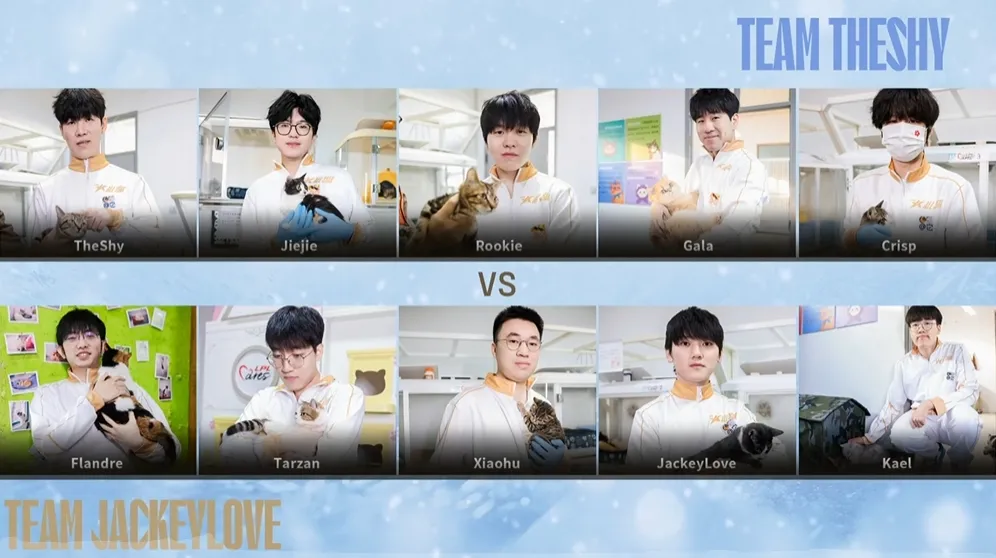
The All-Star public-interest campaign promoted adoption over purchase.
The charity match on stage made the idea of “esports for good” even more concrete. At this year’s All-Star charity match, LPL Cares, the One Foundation and all league clubs added a special rule. After the new hero Ayaheng revived five times and dealt 64,637 total damage, the league and brand partners added their contributions. The performance became a RMB 150,000 donation and more than 120,000 bottles of Bright Moutai Anmuxi x League of Legends Canyon Highlights yogurt, which will be sent to children in less-developed and disaster-affected regions.
When the numbers moved across the big screen and finally stopped, the applause was not only for the players on stage. It was also a salute crossing the stage and travelling to people far away.
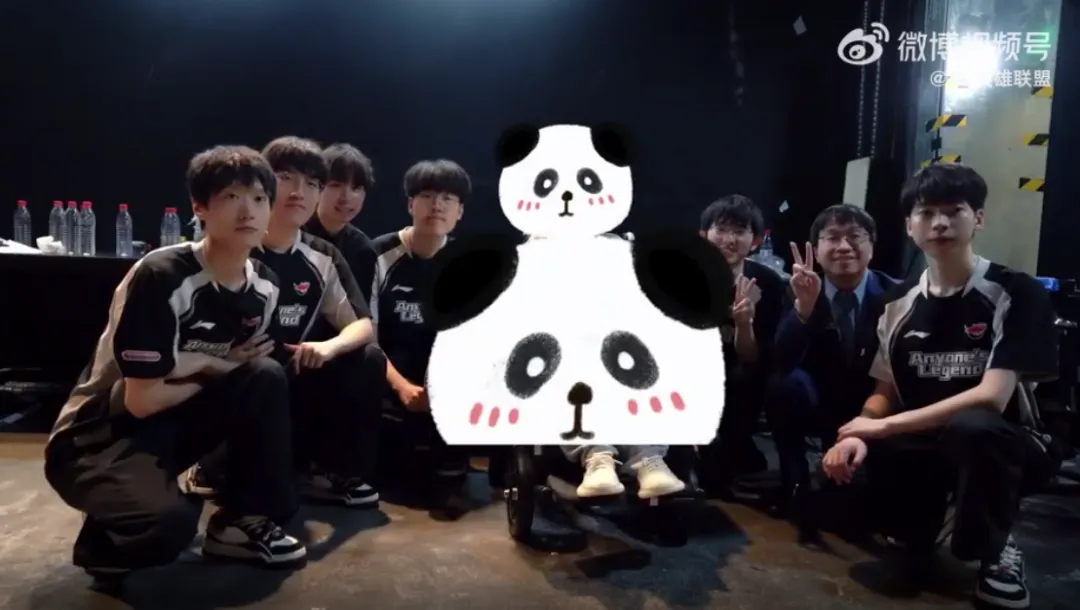
The charity match turned in-game performance into public-interest donations.
From Being Seen to Seeing Others
In the early development of esports, professional players were mostly young people standing at the center of the stage, “lit up” by the spotlight. They were watched, discussed and followed. Their task was simply to become stronger professionals.
As the industry has matured, more esports people have begun to move from being “people who are seen” to “people who see the world.” Players are starting to pay attention to groups beyond the arena: children in remote regions, people with rare diseases, rural education, disaster relief and even the survival of stray animals.
Public-interest projects are becoming a bridge for that change.
In June this year, a League of Legends Master-tier player with SMA, or spinal muscular atrophy, came to the arena and met players and coaches including Uzi, Flandre and Tabe. During the conversation, Flandre learned that the player had witnessed Snake’s famous “BO10.” He immediately connected CrystalBro, who had been part of that moment, on a live call and helped the fan complete an esports dream.
“I think the meaning of life should be measured not by its length, but by its width. Do what you want to do. It is fine to feel lost sometimes. Be the one-of-a-kind protagonist of your own life.” The fan also shared his perspective: “Even if there are regrets, even if there is failure, so what? They are all part of the perfect script of the film that is life.”
For many young players, experiences like this can even be a kind of education in life.
After entering a club’s academy system, many professional players build their daily lives around training bases and competition venues, with relatively limited contact with the wider society.
When they leave the virtual world and enter hospital schools, rural campuses and public-interest organizations to speak face-to-face with people from different backgrounds, they are not only offering help. They are also learning to understand the world again.
The experience creates two-way growth: society sees esports, and esports learns to see society.
More clubs and esports professionals are thinking about how to turn that growth into a mechanism rather than an occasional event. Through long-term public-interest programs, partnerships with charitable foundations and fan-led initiatives, they are gradually forming a more systematic and stable “esports for good” ecosystem.
Anyone’s Legend connects each match with long-term public-interest work through “Bring the Baby Home” charity cards. IG works with the New Sunshine Charity Foundation to visit children with leukemia in hospital schools, bringing hope and joy through drawing, games and companionship. TES connects its esports IP with environmental protection and animal welfare through ocean-protection and beagle charity projects.
The participation of clubs and players keeps these actions from stopping at one-off donations or publicity. Every charity livestream, visit to a hospital school and rural public-interest activity lets fans and communities feel the process of kindness being passed on. It also allows young players to grow through the experience, ultimately turning esports traffic into tangible social value.
Epilogue
The esports industry has never lacked traffic.
Match heat, player popularity and short-video distribution: every burst of discussion draws on the enormous energy of youth culture.
Now, more actors across the industry are actively directing that traffic toward public-interest work.
From the Winter Festival’s “warmth packages” to year-round initiatives, the warmth comes not only from the light on stage but also from the persistence of every action behind it. LPL players, clubs and partners are working together to turn competitive passion into real kindness.
In this ecosystem, every player is a carrier of kindness, and every club is an actor in social responsibility. The participation of viewers and fans keeps the effect growing and continuing. Esports is no longer only about wins and losses on stage. “Esports for good” is no longer a slogan; it has become a habit, a force that can be felt, joined and passed on.
When stray cats find homes, when children in hospital schools receive greetings from players and when esports lights up a heart that has lacked care, the light and warmth of esports truly cross the screen and the arena and enter everyday life.