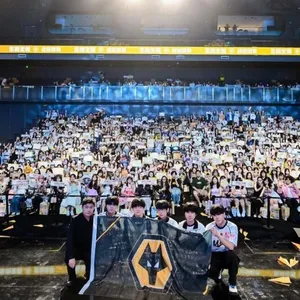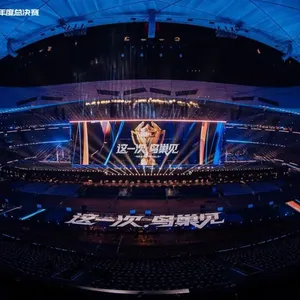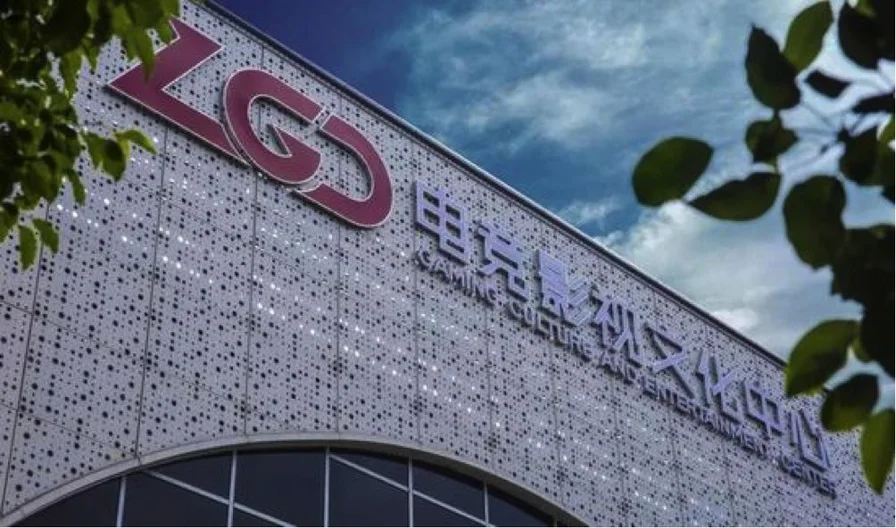
Yesterday, with less than 72 hours before the first home match in LPL history, teams across LGD’s esports and entertainment centre in Hangzhou were racing to test systems and coordinate the final details.
For a moment that could enter the history of esports, everyone was tense—from LGD’s senior club executives to the manager of its merchandise store. A small oversight could damage an event that had never been staged in this form before.
“In essence, it is still a competition, but its meaning and nature are completely different,” said Gu Sijia, a director with Tencent’s broadcast crew. After the Demacia Cup ended, she travelled immediately from Qingdao to Hangzhou to prepare the broadcast of the first official match.
Three hours waiting for a broadcast test
The broadcast crew did not take the first true LPL home match lightly. It brought in LGD’s youth team to test the live production.
That meant 21-year-old LGD youth player tts would experience the home venue before his senior teammates. He was excited to arrive at his own home, but the preparation took longer than expected. After waiting for more than three hours, the slim player grew bored, put on a Teemo hat and went out for a walk to see whether the training room LGD had prepared was ready.
tts first encountered League of Legends during Season 4. Still in high school in Shanggao, Jiangxi, he quickly showed his talent. By the time he graduated, he had reached the “Challenger” rank. At a friend’s invitation, he joined a professional team in Changsha. A month later, he transferred to LGD’s youth team and moved to Taicang, where its training base was located.
“The atmosphere has been very good since I joined. Before, I played in a very individual way; now I focus on the team,” tts said when discussing how LGD had changed him. “It gives you a more professional competitive platform, a place where you can improve.”
tts dreamed of becoming a top professional player, but that required long hours of practice. Life at the Taicang training base was highly “regular.” “We get up and eat at noon, train at 1 p.m., play a BO3 practice match at 2 p.m., play another BO3 at 7 p.m., finish work at midnight, and usually keep playing ranked games until 1 or 2 in the morning,” team leader Hong Chen explained.
Good training naturally brought strong results. Hong said tts was already good enough to reach the LPL stage, but LGD’s first team had two top laners, so the club kept him in the youth team to gain experience in the LDL.
The trip to Hangzhou nevertheless disrupted the team’s preparation for the LDL Spring season. LGD’s home venue could not yet accommodate every team in its accommodation and training facilities, so tts and his teammates had to stay in a hotel and look for internet cafés near the venue for practice.
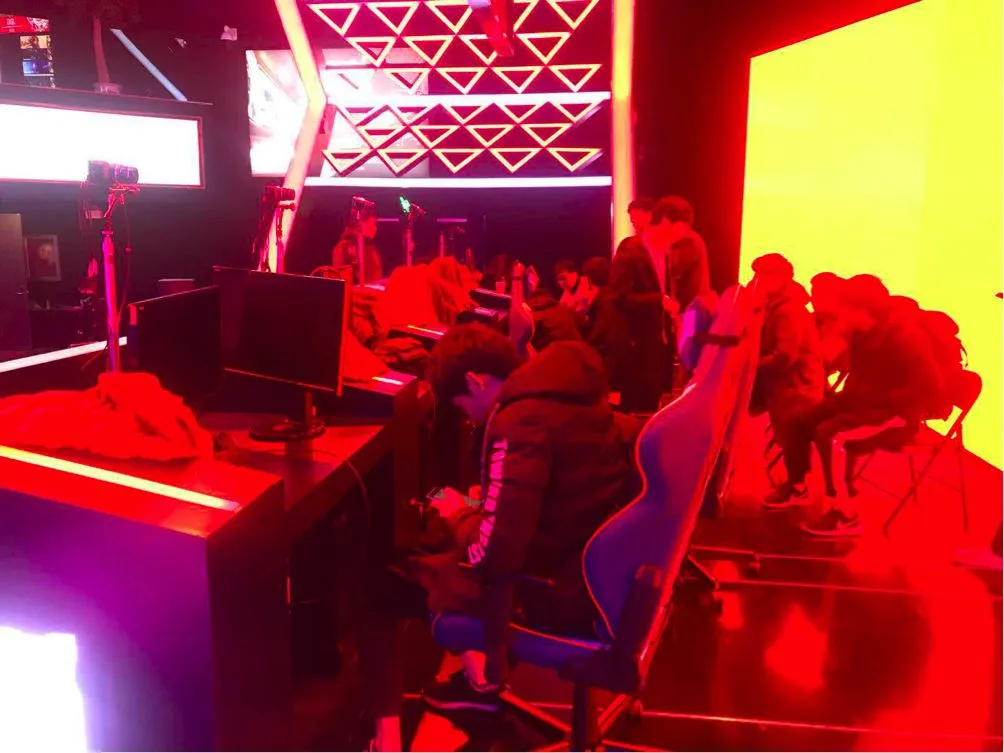
LGD’s Hangzhou home venue was due to host its first official match on January 17, so the club asked tts and his teammates to help with the tests. But the long wait was wearing down tts’s patience, and he decided to go to the cinema.
The broadcast crew had little time left
Gu Sijia arrived at LGD’s Hangzhou home venue before tts. While tts could go to a film to pass the time, the director’s schedule was so tight that she seemed to be trying to split every minute into eight.
Gu had been “called in at a critical moment” the previous year, when she was assigned the Hangzhou home broadcast. She had witnessed LGD’s venue develop from an unfinished shell into a working space, but small problems still appeared during the latest tests and preparations.
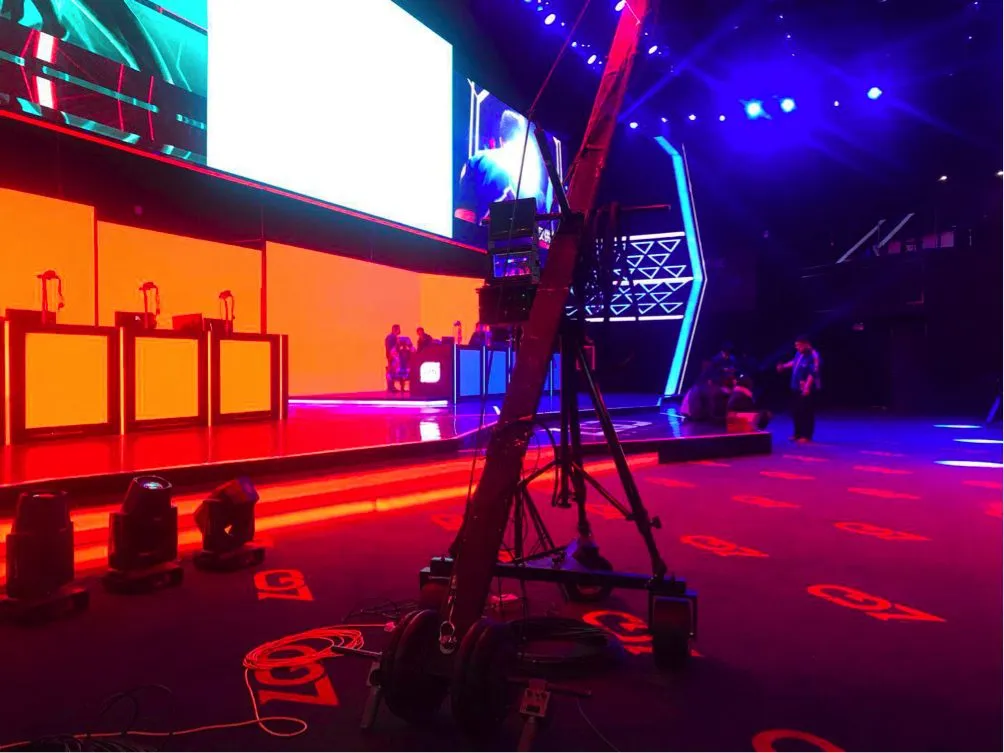
Because of the ceiling height, the team benches blocked the lower part of LGD’s large screen. This would seriously affect the live audience, especially during the draft, when spectators would not be able to see the entire pick-and-ban process. Experience from joining Tencent’s broadcast team in 2016 helped. Taking the venue’s layout into account, Gu moved the draft display to the upper screen and filled the blank space below with LPL footage, rescuing the audience experience.
Solving the screen problem did not mean everything was settled. The work connecting LGD, the suppliers and Tencent’s broadcast crew drastically reduced Gu’s rest time. For the past week, it had become normal for her not to know when she returned to the hotel. But live production has its own demands. Even with fatigue written across her face, she still had to run a full rehearsal linking every part of the broadcast.
In half an hour, Gu checked the full process with every staff member. tts also received a call from the team leader and returned from the cinema to take his seat for the rehearsal.
“Play it as if it were the official match,” Gu and the coach repeatedly told tts and his teammates. The players, most of them around 20, immediately went into competition mode. At Gu’s instruction, they began by connecting peripherals and adjusting their chairs. They then tested sound, stage power, lighting and the “time fracture” technology in sequence. That meant spending the next hours in the team seats. At least the test would include a BO3 practice match, which could partly make up for the training time they had lost.
One test was far from enough. They would repeat the process until the afternoon of January 16 to ensure the broadcast ran smoothly.
The busy merchandise-store manager
While Gu and tts were overwhelmed at the venue, TUTU, the LGD merchandise-store manager born in 1990, was also buried in small tasks. LGD mid laner COOL had left the club, so the posters still on the store’s walls had to be replaced. With LGD’s first home match on January 17, TUTU had little time to prepare.
This was not TUTU’s first sudden problem. Because this was the first “home” match in LPL history, every detail was a first, and a stream of small complications constantly tested everyone involved.
TUTU officially started the job on December 10 of the previous year. His first assignment was the LGD home-opening ceremony five days later, but the space he inherited was still an unfinished shell.
“My first task was to supervise the renovation. There was nothing in the store, just desolation and chaos,” he said. From the moment he started, TUTU was almost never resting. “I stayed up for two nights and slept only three hours across the two days.” In the early hours of the 15th, he was still putting every merchandise product on the shelves.
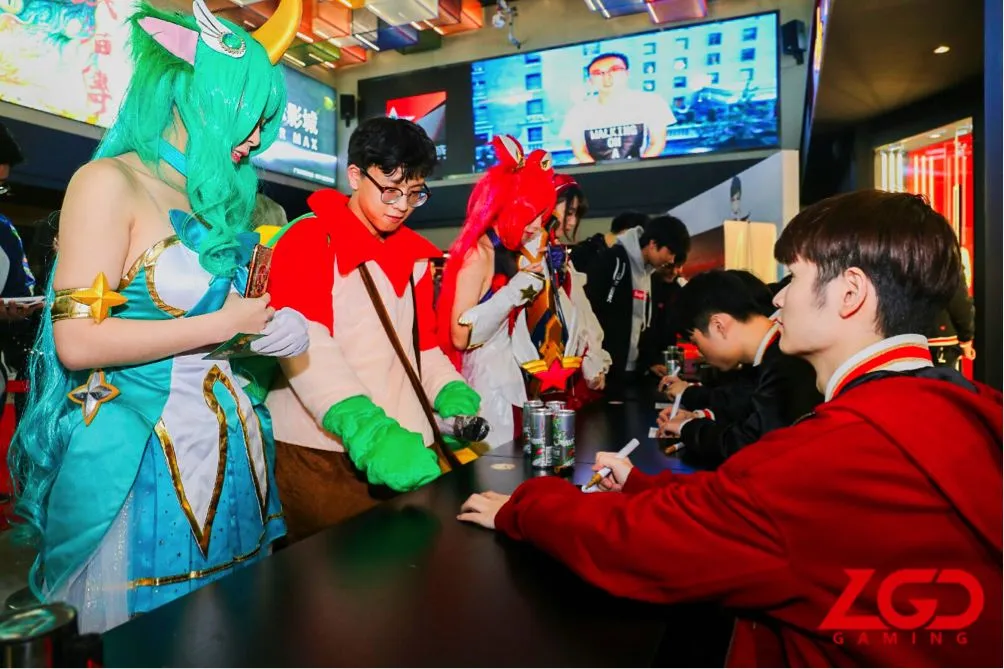
The store was on the fourth floor of a lighting market, where everyday footfall was not particularly high. It was therefore not very large, partly because of operating costs. But whenever LGD held an event, it became crowded far beyond its capacity. TUTU had to design specific crowd-control plans for each activity.
There was also a cinema next door. If too many people stayed in the area, the crowd could easily cause “a riot” across the entire fourth floor. “You don’t need to think too much about it. For LGD fans, this merchandise is a kind of faith. There will definitely be a huge crowd,” TUTU said. Merchandise had a special meaning for LGD. During its most difficult period, CEO Pan Jie had relied on monthly income from the club’s Taobao store to keep the whole team running. This time, establishing the Hangzhou home also gave LGD’s merchandise a chance to move into a physical store.
“Fortunately, nothing went wrong.” Having experienced the devoted crowds after the team won the S5 title, TUTU felt he had survived the first test. “It really was packed. Fans queued to enter, and there were too many people. We were also organising a signing session with the LGD players, and the place was completely blocked. Later, we let fans in 30 at a time, which brought the crowd under control.”
As LGD’s home matches approached, handling scenes like this would become part of TUTU’s daily life. The final 72 hours were only the beginning.