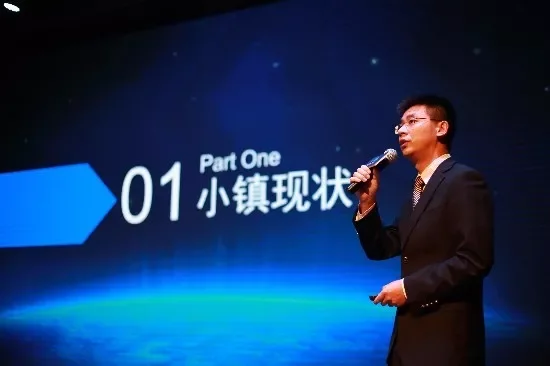
For a long time, Wang Yongjian was one of the “old guard” inside the system, treating esports like a dangerous storm. Over seven years, the deputy director of the Taicang Science and Education New City Administrative Committee took part directly in the city’s esports transformation and became one of the people holding up its industry. “I have to understand esports as an industry before I can know what hurts clubs and what they need,” he said.
Some Taicang taxi drivers still described esports as “playing games.” Wang remained convinced that time would bring wider recognition and that the sector’s prospects were boundless. At the same time, he resisted putting the city’s esports town under an esports-only “tightening spell”: “We have two plans.”
Opportunity in a “loss-making” investment
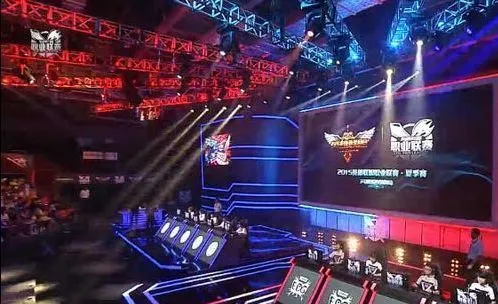
Many people still remember the days when the League of Legends Pro League (LPL) played in Taicang. Official commentator Miller and former professional player Kid have both said that their time there was the happiest period of their lives and where they felt their most original love for esports.
The LPL was not the first esports event organized by PLU, but it was the competition that turned the company around. In 2011, after television coverage of Chinese esports was barred by the broadcast regulator, the industry entered a downturn. PLU, already six years old, faced a severe mismatch between income and spending and could not afford monthly rent of RMB 30,000 in Wuxi. The Taicang government offered PLU unusually favorable terms.
First, the government provided free office space. Although PLU had only seven or eight employees, it arranged accommodation for them at a university to lower their living costs. It also built a five-metre broadcast studio on campus. “By today’s standards it was a very basic studio, but at the time it was a place that could make money for PLU,” Wang recalled.
Most important, Taicang invested RMB 1 million in PLU and shared the risk. The two sides agreed that after two years the government would exit if the company had developed well; if it had not, the government would leave without a return. Ready-to-use facilities, living support and a 10% equity stake made the offer difficult to refuse. PLU became the first esports company to move to Taicang.
Its arrival encouraged more esports businesses to use Taicang as a starting point. Wang, who had focused on science and technology, had to learn the industry instead of treating gaming and esports as the same thing.
The government later withdrew its investment. “I still remember that when we exited, we returned RMB 1.18 million. We roughly calculated it using bank interest, although PLU’s valuation was already quite high,” Wang said with a laugh. “If we hadn’t sold our 10% stake, we would have made a lot.”
After the government exited at its original price, PLU sold shares to investors including Tencent at a higher market price before being acquired outright by Suning. The article put PLU’s market valuation at US$500 million at the time. “The Taicang government and esports companies have always helped one another,” Wang said. What looked like a loss-making investment to the government brought the city more opportunities in esports.
The first LPL season, organized by PLU, opened in 2013 in what the article described as a “small factory” in Taicang. For many esports workers, it became the starting point of a dream, and a marker of a new spring for Chinese esports.
An “esports ambassador”
As the LPL grew and its teams expanded, it moved from Taicang to Shanghai in 2014, with clubs following. The Zhujiang Creative Center grew into an “esports universe center,” and Shanghai’s scale and international reach displaced Taicang as the industry’s focal point.
That was the choice of the era. Chinese esports was growing quickly, and the smaller city could no longer provide all the conditions the industry needed. Shanghai became a battleground for leading companies and capital, while more major events moved there. Its place in China’s esports industry seemed unassailable.
Wang had moved from esports novice to “esports ambassador,” but he could only watch as competitions and clubs left for Shanghai. “Was Taicang really going to be abandoned by esports?” he wondered. Because he did not want that outcome, he studied the sector more closely and promoted it, hoping to find another path for Taicang. “Only then could I understand the clubs’ pain points,” he said.
His research suggested that the opportunities released by Shanghai’s growth were drawing leading companies and capital into the city, while also raising operating costs for esports businesses and clubs. As costs in the esports center climbed, nearby Taicang might act as a “satellite city” that could absorb some of those resources. Wang compared the idea to the shift between urbanization and counter-urbanization.
He had attended The International, the Dota 2 world championship, and was struck by the energized fans, the event infrastructure and the broadcast technology. “I really felt that we could do this too.” The experience stayed with him. After returning, he read esports news and watched matches every day. He could name teams competing in Dota 2 and League of Legends and knew their results and current situations.
Wang also shared his thoughts about esports events and the industry on social media. Day after day, year after year, people still replied to his posts: “Isn’t this just playing games?” All he could do was explain it again and again, often feeling powerless.
The “Shanghai-ring esports circle”
After Taicang lost the LPL, the city found another opening as Shanghai’s esports sector expanded: the CrossFire Pro League (CFPL) came to Taicang. Wang saw a new opportunity. “For a relatively niche esports title like CrossFire, holding a league in Shanghai costs too much. Taicang became the obvious choice,” he said. As Shanghai’s esports industry became saturated, Taicang—about half an hour from Shanghai Hongqiao and an hour and a half from Pudong—returned to view.
With Shanghai at the center and nearby cities arranged around it, a “Shanghai-ring esports circle” began to take shape. Taicang’s location and esports atmosphere made it an attractive option for many esports businesses, events and clubs. The government had also supported the sector from the start.
A 2017 report released by Penguin Intelligence with Tencent Esports said the global esports market was growing quickly. It estimated China’s esports audience at 170 million in 2016 and forecast 220 million for 2017. As the market grew, local governments saw commercial potential in esports towns as a way to support other industries. Taicang in Jiangsu, Mengzhou in Henan and Zhong County in Chongqing each planned investments exceeding RMB 2 billion, according to the article.
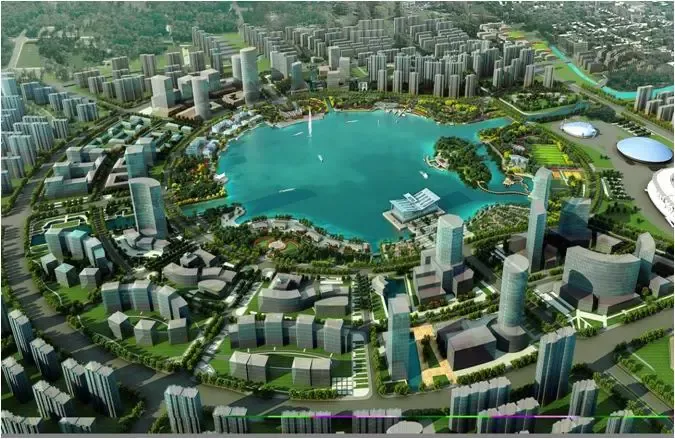
Taicang began developing the Tianjing Lake Esports Town in 2016. It brought in TiDu Technology, LGD Gaming, Qingjiu Esports Club and other esports businesses and clubs.
Beyond tax breaks and talent apartments
Rent relief and talent apartments had become standard features of esports towns. Wang said Taicang also offered tax reductions and additional rewards for clubs. “For an esports company whose tax contribution exceeds RMB 1 million, the local tax portion is fully waived,” he said. The city could also recognize club owners as cultural-industry leading or key talent. A leading-talent designation came with RMB 1 million in prize money and a further RMB 300,000 housing subsidy, according to Wang.
With the esports town established, Wang’s work went beyond promotion. He traveled to meet industry figures and attract projects. At a China Sports and Leisure Characteristic Town development forum, he said, two hours of meetings produced cooperation intentions with two projects. One was a professional league for Battle of Balls, a game owned by Giant Network.
“Around 150 projects move to Taicang in a year. There are about 300 actual working days after holidays, which means I have to complete the registration of one project every two days,” Wang said. He was so busy that, during his conversation with Esports Ecology, he habitually glanced at his watch.
As clubs and esports businesses moved into the town, housing prices near the Science and Education New City rose to levels similar to those in central Taicang.
Wang said that increase was not caused by the esports town. “We won’t put ourselves in a straitjacket. We have never said that the Taicang esports town exists for esports alone.”

From outside, the town in Taicang’s Science and Education New City looked more like a large business incubator. Its environment and office interiors did not appear to have been built exclusively for esports. But on the wall of a central building, bright green characters spelled out “Taicang Tianjing Lake Esports Town.” “Esports is certainly one feature of our park, concentrated in the central area, while other industries are spread around it,” Wang said.