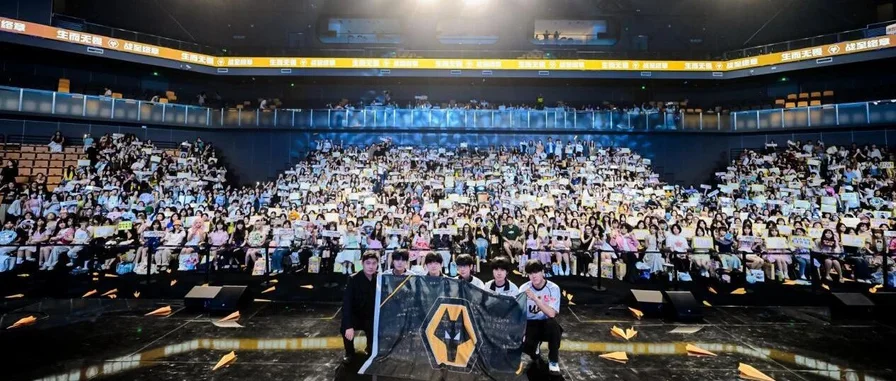
On March 14, 2026, the Wolves Performance Center hosted its first match. That day, 1,657 spectators entered the venue, and Chongqing Wolves beat Shenzhen DYG 3-2 to claim its first win at the new home.
Six months later, when Duan Xiaoyu, the person responsible for Wolves’ home venue, looks back on that day, he first thinks not of the final score but of a moment in the stands before the match had begun.
Inside the venue, the lights were gradually going dark. On the big screen, a spaceship was slowly taking off. It was an opening film that Chongqing Wolves had prepared specifically for its new home.
Standing at the side of the stage, Duan was not watching only the screen. He was also watching the audience in the stands.
“When the film started and I saw most of the audience holding up their phones to record it, I felt that we had really begun.” Six months later, Duan still remembers the moment clearly.
For an ordinary spectator, it was simply a KPL spring-season regular-season match. For Duan and the people who had watched the venue change from drawings into a construction site and then from a construction site into a home arena, however, it was a day they had waited a long time for. A place prepared for almost two years had finally welcomed its audience for the first time.
The 1,657 spectators who arrived on March 14 did not become a one-off burst of excitement.
During the trial period, the Wolves Performance Center hosted three KPL Honor of Kings home matches and sold 4,507 tickets in total; the fastest match sold out in only 45 seconds. After the formal opening, five consecutive public sales of 1,700 tickets each sold out within one minute. By the summer season, Chongqing Wolves’ average home attendance had remained above 90%.
Across the matches, the Wolves Performance Center had received more than 30,000 ticketed spectators and more than 50,000 visitors in total since March.
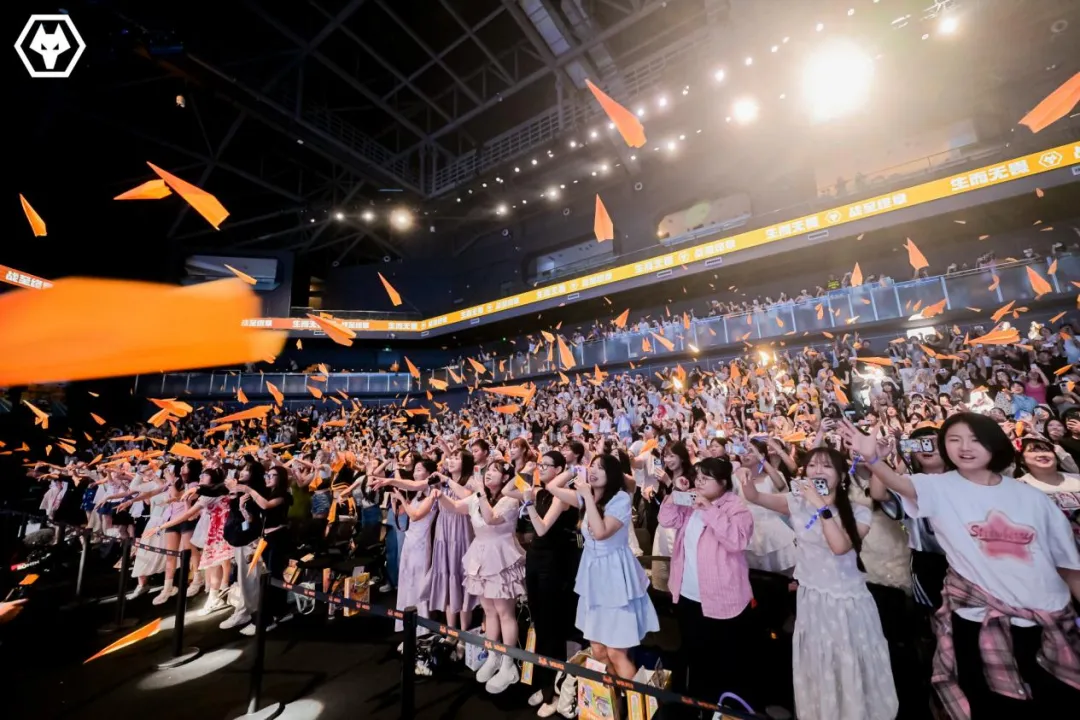
Chongqing Wolves fans celebrate during a home match.
But among all the numbers about sell-outs, ticket revenue and exposure, Duan and the operations team care more about another pair of figures: 51% and 76%.
The first is the share of ticket buyers from outside the area; the second is the share of people aged 18 to 35.
This means that the Wolves Performance Center is attracting more than local spectators who live nearby. More and more people are crossing a distance to get there. Some come from central Chongqing, while others travel from surrounding cities specifically to Bishan. The people driving this movement are, notably, young.
For these spectators, watching a match is not simply a matter of buying a ticket, entering the venue, watching the game and leaving. More than the result, they care about participation and the experience along the way: planning a trip with friends, arriving early to check in, collecting support items, sitting in the stands and cheering with thousands of people for a team fight, then arranging the photos into a nine-grid post to look back on the journey in their social feed.
For a match, it is often these details inside and outside the arena that truly make spectators return.
“We are not selling seats; we are selling five hours.”
In Duan’s view and that of the operations team, the “match-going experience” has already been extended beyond the game. For a young person travelling from out of town, the experience begins the moment they arrive in Chongqing and head to Bishan.
That is why Wolves puts considerable effort into areas that may appear to have little to do with the match itself.
Visitors from out of town can first check in at the Wolves-themed store at Jiefangbei. Official shuttle routes take fans to the home venue from Jiefangbei and Bishan Station on Metro Line 1. After every match, the venue also arranges return buses from Yuquan Lake to Jiefangbei, making it easier for visitors to leave and reducing safety concerns after the nighttime crowd disperses.
Once they arrive at Yuquan Lake, if the match has not yet begun, spectators can collect support items outside the venue, take part in stamp-rally activities and join fan events.
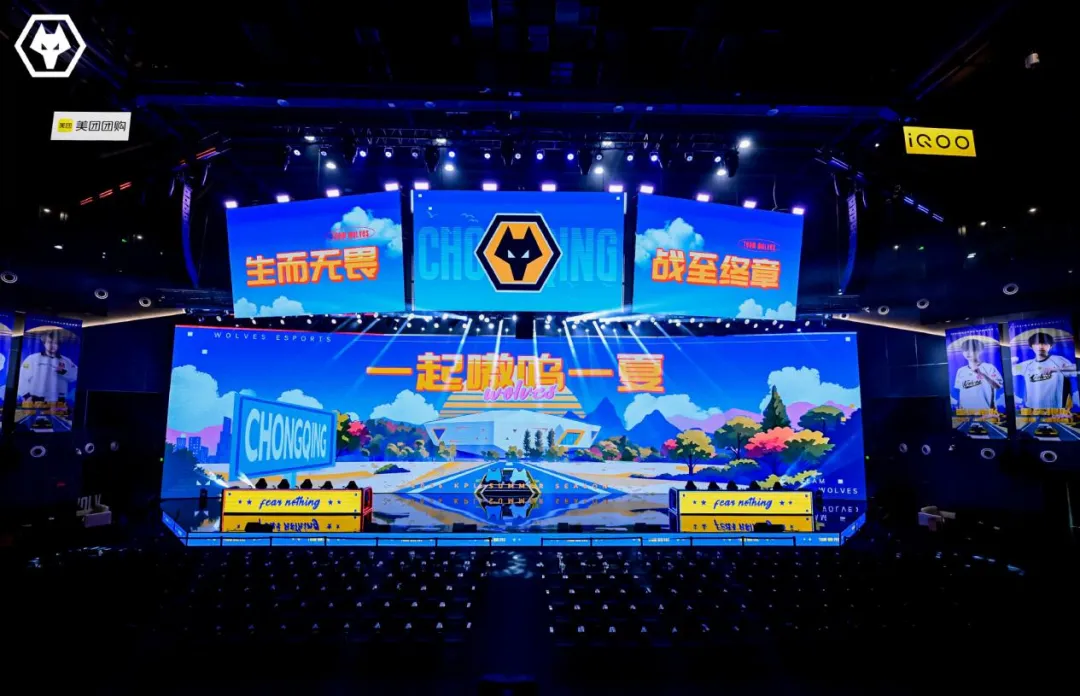
The home experience begins before spectators enter the venue.
Beyond these designed experiences, some audience needs were discovered across repeated match days and gradually addressed.
Many KPL fans have a habit of meeting players as they arrive and leave. To catch a glimpse of players entering the venue, they come to the entrance one or two hours early. When Chongqing reached its hottest period, Duan and the team began thinking about questions that seemed unrelated to esports: where fans could find shade, when water should be distributed and how to make people more comfortable while waiting outside for hours.
After six months, these are often the things spectators truly remember—things that never appear on the scoreboard.
One spectator recorded her first visit. On the way into the venue, an unfamiliar young girl in front of her handed her Qingqing support merchandise. At the venue, she found the “Little Wolf Bread” delicious. Everyone received official support items, including a small fan and mosquito-repellent stickers featuring animated versions of the starting five. The host was energetic and wonderfully over-the-top, and before the match had even started, the official Wolves photographer was already inside taking pictures for spectators.
She wrote about many details. In the end, she left only four words: “I will go again.”
A volunteer who worked at the Wolves Performance Center for an entire season rotated through almost every role, spending most of her time checking tickets before matches. What she remembers most was the first family of four she encountered while checking tickets.
The parents had brought their younger son and daughter to watch the match. Standing at the entrance, the volunteer tied wristbands onto each of the four people one by one. Looking back on the moment, she said she felt “a real sense of achievement and happiness.”
The reason was simple. “Because all four of them came to watch the match. The atmosphere was really good; they seemed so happy.”
People sitting in the stands remember another kind of story. Whenever Wolves wins at home, someone in the venue leads the crowd in shouting: “Born fearless, fight to the final chapter.”
The crowd joins in the Wolves chant.
One 32-year-old fan has followed Honor of Kings for eight years and Chongqing Wolves for 1,382 days. To him, the chant after every win is not merely support after a victory; it is “a happy moment that players and fans celebrate together.”
For visitors from out of town, there are even more memories to take home.
On social platforms, one person wrote that “the atmosphere at the Bishan venue is so intense.” Another said, “I knew Bishan had beautiful scenery, but I didn’t know it also had such a passionate arena.” Someone else was already making plans: “Next time I will go to watch the match in person, and also eat Laifeng fish and Bishan rabbit.”
These things are difficult to fit into a traditional venue-operations report, but they are the real reasons spectators return.
Each season, the venue redesigns its stage production, UI visuals and offline theme. For spectators who return repeatedly, the home also offers a mechanism similar to an attendance award. This summer season’s full-attendance gift was a collectible fridge magnet featuring player images.
Duan has his own view of these gifts: “The gift itself is not actually that important. What matters most is that it creates a closer connection between the home, this season, this group of players and the spectators who have actually been here.”
Turning a Match Into a Reason to Make the Journey
Before the Wolves Performance Center opened, the team’s biggest concern was still the location of the home.
Bishan is not in Chongqing’s central districts. The distance from Jiefangbei and Guanyinqiao to Yuquan Lake is real. Even though Chongqing Wolves had built a local audience over the previous few years, the team still could not be certain that fans would be willing to travel farther to watch a match at a completely new venue.
But that distance was also what gave Bishan another possibility.
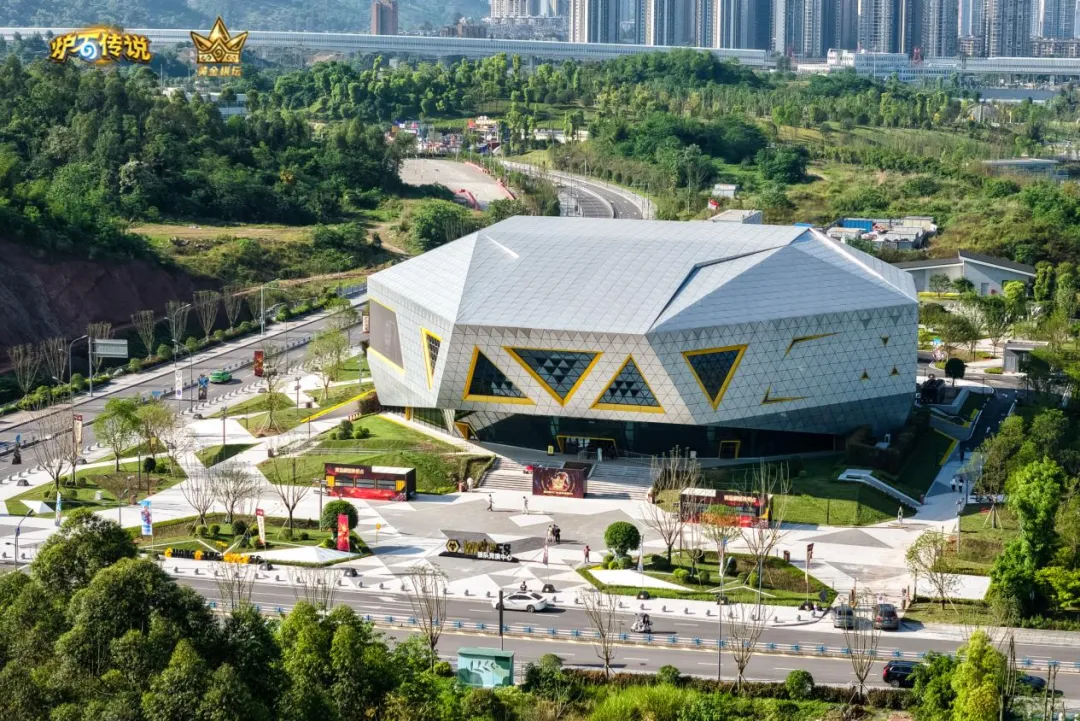
The Wolves Performance Center sits outside Chongqing’s central districts.
When Duan first came here, what impressed him most was not that it was far away, but that it was new.
“The roads are very wide, there are many parks, the landscaping is good and the air is fresh,” Duan said. In his view, Bishan’s newness has a certain fit with esports: both are young, both are still looking for their own urban expression and both can more easily attract the attention of young people.
More practically, Bishan is not far from Chongqing University Town. A large number of young students live nearby. For Wolves, this means not only potential spectators but also a local population that overlaps strongly with esports.
Of course, beyond the character of the city, there were more practical reasons for choosing Bishan.
Duan said that Wolves’ decision could not have happened without support from the local government. “They gave us a great deal of confidence and made us feel that this was suitable for long-term development.”
That support was not limited to financial support.
In an earlier conversation with Wolves Esports general manager Teng Feifei, she mentioned one detail: to support the club and venue’s launch and operations, Bishan created a work group of more than 60 people. The day before the trial opening, the team noticed smoke around the venue. The information was posted to the group, staff soon arrived to handle it, and they then sent photos of the extinguished smoke back to the group.
For a club preparing to put down long-term roots, that response speed may be more concrete—and more reassuring—than many broad plans.
Before the Performance Center was actually completed, Wolves had already spent a year testing what esports could bring to Bishan.
In 2024, Chongqing Wolves used the Bishan Culture and Art Center as a temporary home. Over two years, it hosted more than 40 KPL spring- and summer-season home matches, as well as more than 100 other events, including the Honor of Kings Challenger Cup, the QQ Speed S League Finals and the Need for Speed National Champion Competition. It sold 80,000 tickets, recorded average attendance above 90%, received 100,000 visitors and generated nearly 300,000 visits to surrounding areas. Visitors from outside the city accounted for 60% of the audience, and the venue directly and indirectly drove more than RMB 50 million in nearby consumption. It also ranked first on Weibo’s national theatre popularity list, fifth on Weibo’s national ACG hot-search list and first on Maoyan’s Chongqing comprehensive performance list.
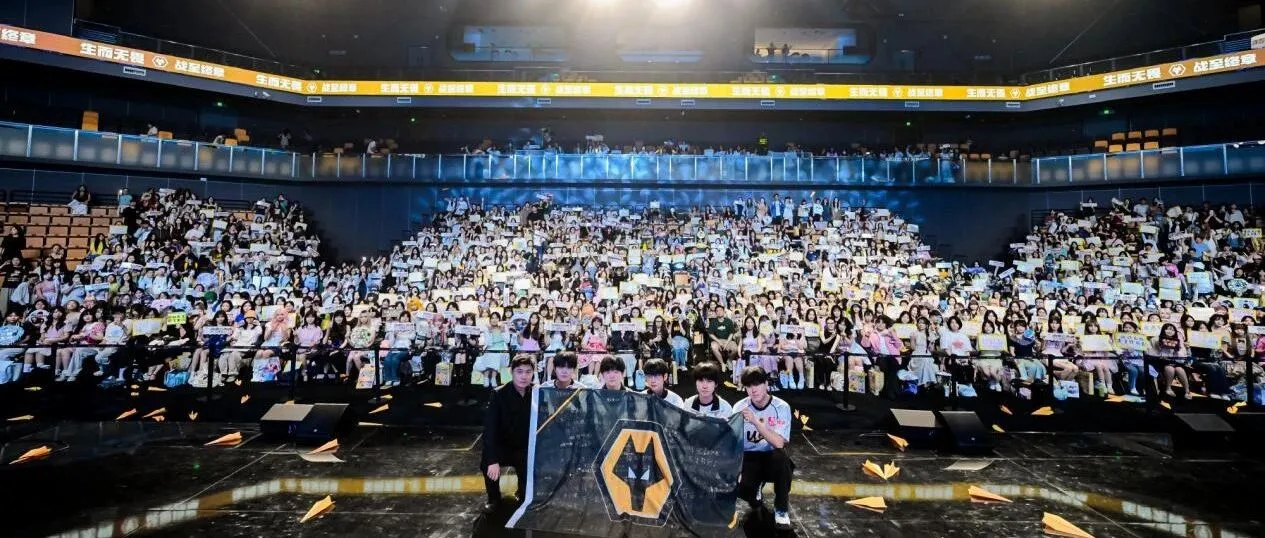
Wolves’ home space in Bishan.
If 2024-25 was the period in which Wolves tested whether esports could bring people to Bishan, then after the new venue began operating in 2026, the home and Bishan began trying to answer another question: once these people arrive, what else can they leave behind?
As a result, an esports ticket began extending beyond the venue.
Bishan District included esports in its “Summer in Bishan” cultural-tourism programme. With an esports ticket stub, spectators can receive offers at Dream World Water Park, restaurants, accommodation and hot springs. “Play in the water during the day and watch a match at night” can become one day’s itinerary. Local activities such as the Yuquan Lake dragon-boat race, the Chongqing BA city basketball league and the countryside harvest season have also begun to complement esports events in the calendar.
The distinctive point is that Bishan did not build an entirely new tourism landscape for esports. It used one event ticket to reconnect the water park, restaurants, hot springs, night tours and existing city activities.
A few hours of watching a match therefore have the potential to become a full day, or even a weekend.
Beyond KPL: What Else Can a Performance Center Hold?
Bringing people to Bishan is something a match can accomplish. For a venue, however, the more practical question is what can happen when there is no KPL match.
That question was considered from the beginning of the Wolves Performance Center’s design.
“What we want to do in the future is definitely not just run an esports venue,” Duan said. “That is why this place was called the Wolves Performance Center from the beginning, rather than the Wolves Esports Center.”
The words “performance center” leave more room for the venue to grow.
The stage, competition desks and seats on the first floor are all modular and can be dismantled and moved as a whole. After an esports match ends, the original competition area can release roughly 1,000 square metres of open floor for performances, exhibitions, brand launches and other settings.
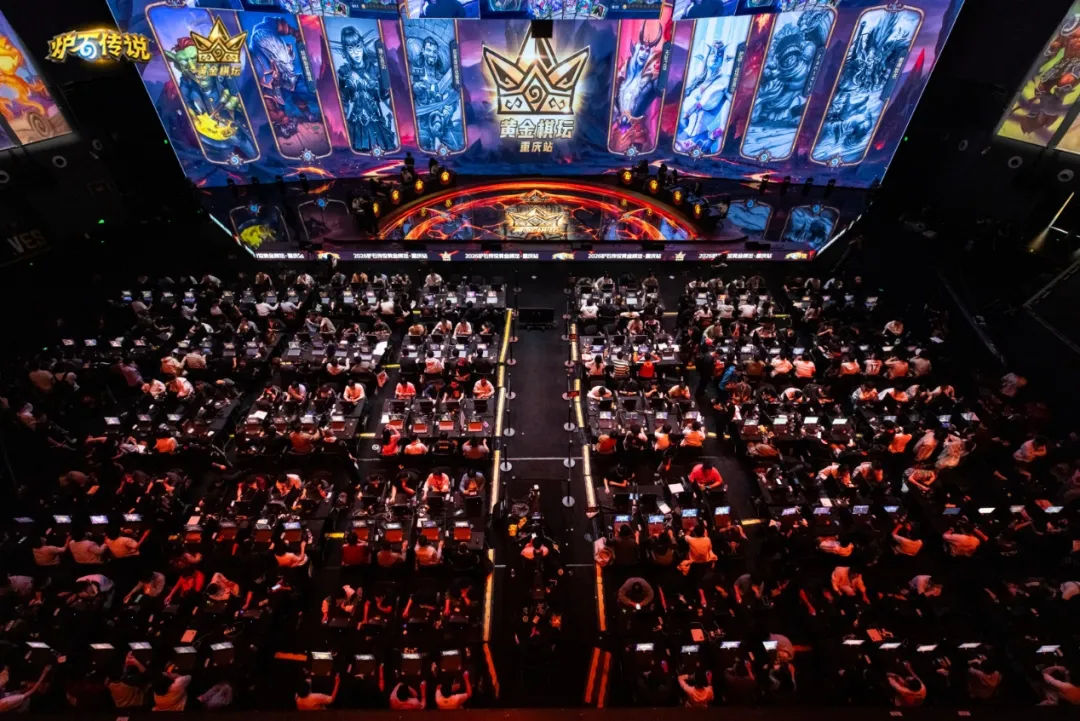
Hearthstone’s Golden Chess event brought a different competitive community to the venue.
Over the past six months, this idea has gradually begun to become reality.
In April, the Chongqing stop of Hearthstone’s Golden Chess event came to the venue. There were 512 competitor places, and over two days players progressed from the round of 256 to the final. Compared with KPL, a card event has fewer moments of explosive cheering. There were more than 100 computers, more players, longer match times and a more community-oriented audience. For the venue, the challenge changed from a sudden audiovisual peak to supporting long periods of stable operation and many dispersed interaction spaces.
A month later, QQ Speed brought another group of people into the same venue.
KPL spectators stand together for a team fight, while QQ Speed spectators applaud a beautiful corner. When different games enter the venue, even its character changes.
This is also something the team has understood more clearly after six months of operations: there is no single “esports venue” template that can be copied across every game.
Different games have different audiences. Different audiences, in turn, leave the venue with different ways of being used.
That is why Duan is open-minded about the future. “We are essentially operating with an open-for-business logic. Professional competitions can come here, as can grassroots competitions, streamer tournaments, community tournaments, large-scale viewing events and even community activities. All of them can become part of the calendar.”
The venue can be reset around different stage and audience configurations.
Beyond esports, he also specifically mentioned music.
In the team’s view, esports and music already address two highly overlapping groups of young users. Someone shouting for a KPL match here today may be willing to make the journey to Bishan again tomorrow for a favourite band.
The roughly 2,000-person Performance Center also has its own advantages. It is larger than an ordinary live house and more flexible than a 10,000-seat stadium, with a certain fit for concerts, anime events, brand launches and industry forums.
But filling an entire year’s calendar with these activities is not as easy as it sounds.
The first constraint is the rhythm of the professional league itself. The KPL spring season is concentrated between March and May, and the summer season between June and August, leaving a natural break between them. For a venue built around a professional club’s home schedule, activities cannot be spread evenly across 365 days.
For a new venue that has operated for only a few months, the important thing is also not simply to “take on a few more events.”
Duan said that when event organizers choose a venue, they look at details beyond the number of seats: what has taken place there, how full it was, whether on-site execution was stable and whether any incidents occurred. A new venue cannot have that credibility on its opening day. It can only build it through one real event after another.
From this perspective, the focus of the Wolves Performance Center over the past six months has not been to fill the calendar as quickly as possible, but first to prove what it can host.
From KPL home matches to the Chongqing stop of Hearthstone’s Golden Chess event, the QQ Speed Elite Team Competition and brand launches, the venue has already run MOBA, racing, card-game and other formats. These events may not yet be enough to fill a year’s calendar, but they are gradually completing the track record that the new venue needs most.
The next time a new tournament IP, a concert or a brand considers coming to Bishan, the 45-second sell-out, the more-than-90% summer-season attendance, the 51% share of out-of-town fans and the types of events the venue has actually hosted will be more persuasive than a venue brochure.
Wolves’ path for the next stage is also becoming clear.
KPL will remain the venue’s most stable foundation. On that basis, the Performance Center will continue to introduce more esports categories and gradually extend into concerts, anime events, industry forums and brand launches. Under its next-stage plan, once fully operational, the venue hopes to host close to 100 sporting and entertainment events each year and attract more than 500,000 visitors. Outside the venue, esports education and training, MCN and short video, creative merchandise and esports hotels are also gradually being incorporated into the offline ecosystem.
Epilogue
As the conversation neared its end, we asked Duan a simpler question: why must an esports club have its own home?
Duan did not begin with revenue. Instead, he talked about football and basketball.
“For players, an esports home is actually the same as traditional sports. Basketball players become familiar with the floor they step on every day; football players become familiar with the grass at their home stadium. It is the same for esports players.”
When a team no longer has to travel constantly between venues in different cities, the players’ condition naturally improves. They gradually become familiar with the temperature, the height of the seats and every staff member on site. When facing a critical match, they will naturally be less nervous because the surroundings are no longer unfamiliar.
These small differences are difficult to show directly in a match score, but together they form the most basic part of what traditional sports call home advantage.
A permanent home also accumulates fan memories.
But compared with players, a home may have an even more important meaning for fans.
Wolves has experience operating a traditional sports club. In football, a stadium can exist for decades or even centuries. Players change, matches end and one generation of fans gradually leaves the stands, but someone will always continue walking into the same stadium.
The seats, corridors, grass and stands eventually carry more than any one match. Duan hopes that an esports home can ultimately have the same meaning.
“We hope to have an offline gathering place that can carry fans’ memories and hold their emotions,” he said. “Over time, the Wolves home might become a spiritual totem in fans’ hearts.”
It sounds like a distant goal for a Wolves Performance Center that has operated for less than half a year. But emotional connections are not built on the day a venue is completed.
They can only be left behind little by little over time.
Today, an 18- or 20-year-old student comes to Bishan.
They may sit on a bus for a long time, wait outside the venue for hours to see the players, collect support items for a favourite player before the match, buy a “Little Wolf Bread” and then cheer for a team fight alongside complete strangers in the stands.
Several years later, they may have moved through many stages of life, entered the workforce and begun a new chapter.
But perhaps then they will return to Yuquan Lake and walk into the Wolves Performance Center again for a concert or a new match.
If, at that moment, they can still remember which player they loved when they were young, and the night when they shouted with thousands of people and called out together, “Born fearless, fight to the final chapter,”
then the building will have left behind more than the scores of a few KPL matches.
Home memories accumulate over time.
That may be what truly distinguishes a home from an ordinary competition venue.