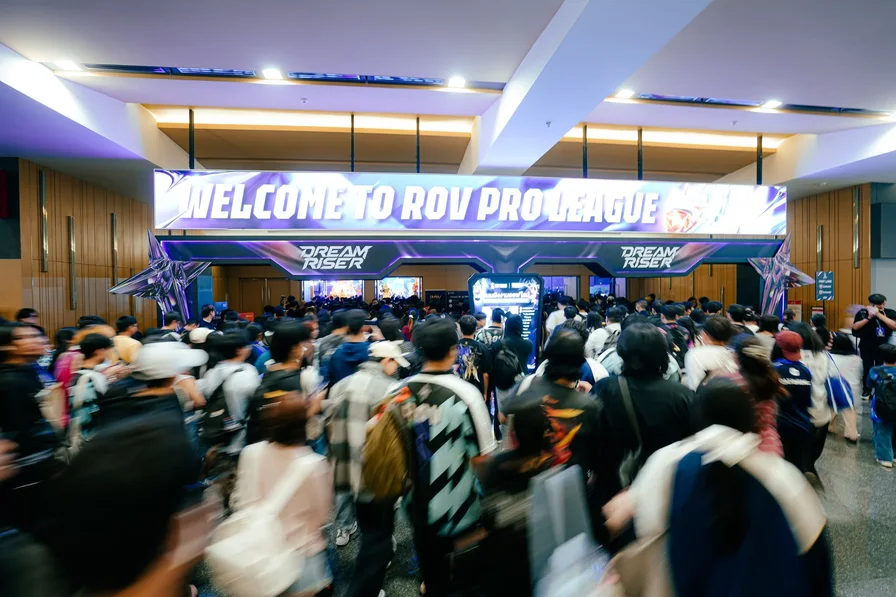
Arena of Valor, known in Thailand as RoV, is a mobile multiplayer online battle arena that has been part of Thailand’s gaming scene since 2016. In January 2026, Garena said the game had more than 10 million monthly players in Thailand and more than 70 million cumulative downloads.[1]
Esports helped the game take hold. In 2017, Monori Bacon won the international Throne of Glory tournament in Vietnam, taking a first-place prize of VND 700 million (USD 27.3k), or roughly THB 1 million (USD 29.9k) at the time.[2]

Domestic league competition began with the RoV Major League in 2017. The first RoV Pro League season had a THB 5 million (USD 149k) prize pool; Season 2, held in 2018, raised that to THB 6 million (USD 179k) and guaranteed contracted players a minimum monthly income of THB 50,000 (USD 1.49k) for the contract period.[3]
By 2026, the league had reached its 18th season, with two seasons held each year. Its growth has brought renewed scrutiny after a series of professional players received severe sanctions over gambling and match-fixing.[4]
The wider gambling context is also significant. A nationwide survey conducted in 2023 by Chulalongkorn University’s Centre for Gambling Studies found that more than three million people aged 15 to 25 had gambled online, according to a report presented by ThaiHealth in January 2024. That is historical survey data, not a count for 2026.[5]
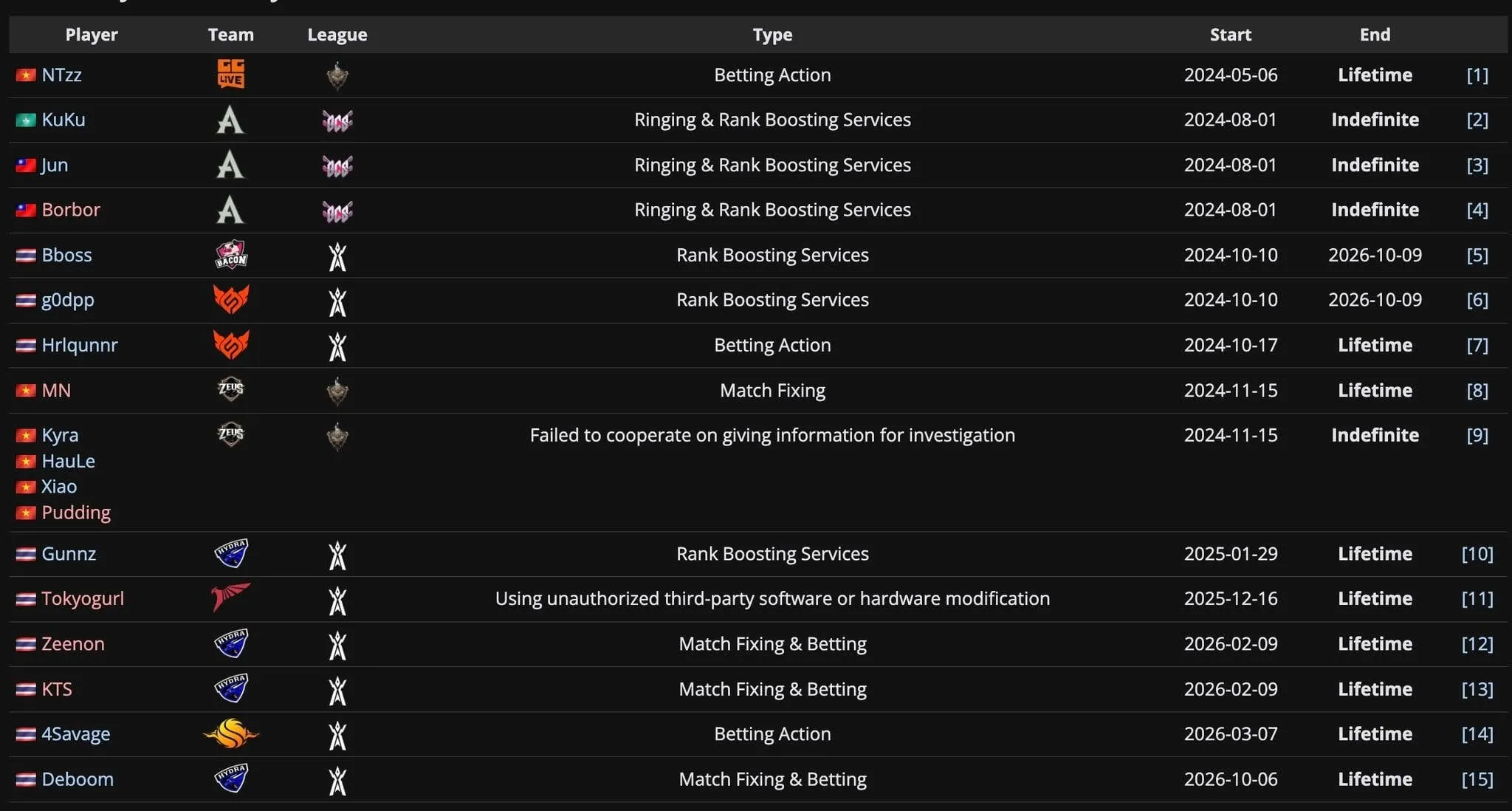
The lifetime bans span several kinds of misconduct. Hrlqunnr was permanently banned in 2024 for gambling; 4Savage received a lifetime ban in March 2026 for a gambling violation.[6][7]
Tokyogurl was separately banned for life after an unauthorized-software case at the women’s RoV competition during the 2025 SEA Games. The case involved the use of unauthorized software and interference with competition equipment.[8]
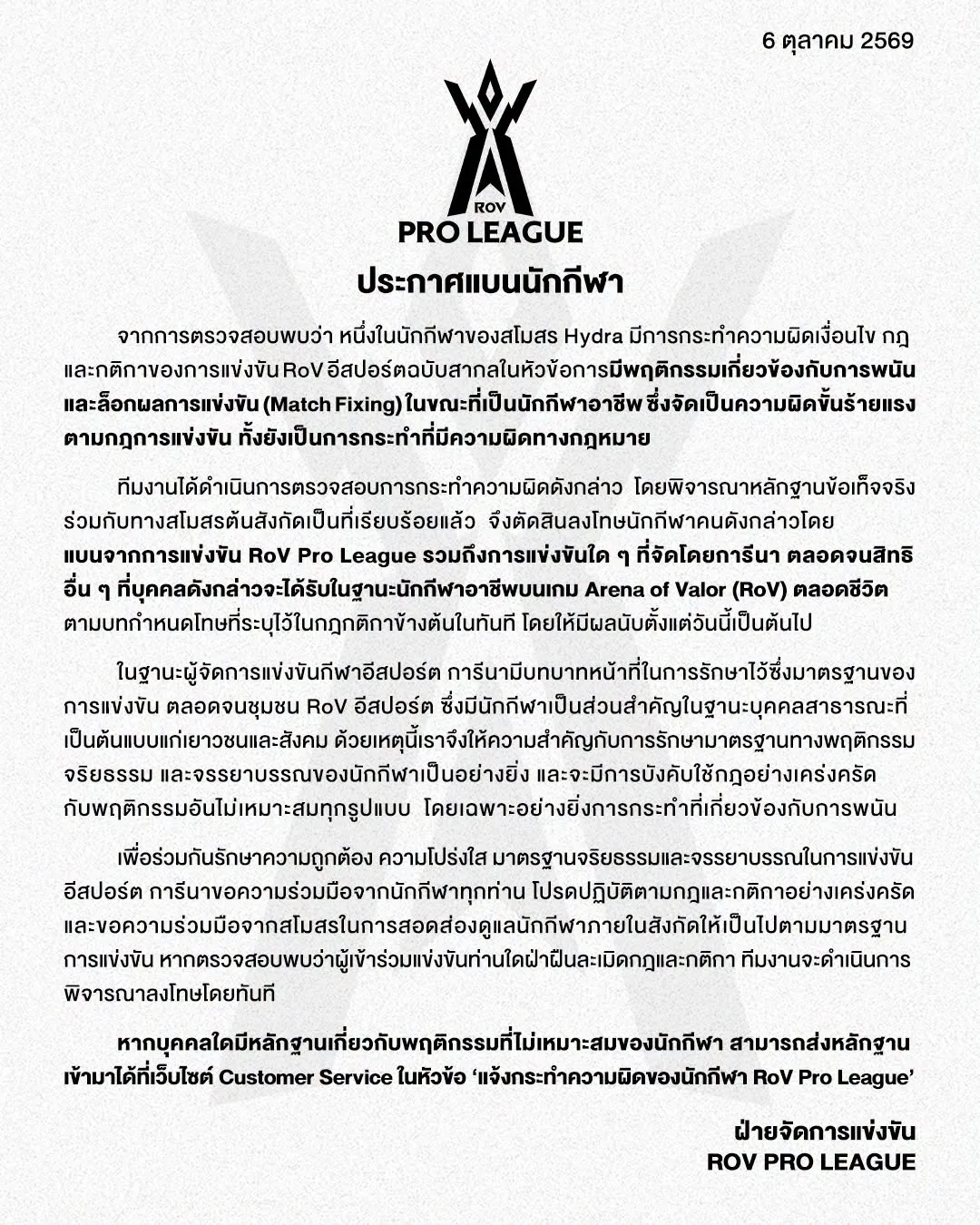
Three more players were banned in 2026 in cases tied to gambling and match-fixing: Zeenon, KTS and WONDERWALL, formerly known as Deboom. All had played for Hydra Esports.[9][10]
After the cases involving Zeenon and KTS, Hydra said it began investigating results, gameplay patterns and other conduct that raised concerns. The club said its inquiry found evidence that players had bet on their own team to lose and deliberately played to lose. It terminated their contracts and reported the findings to the league organizers.[9]
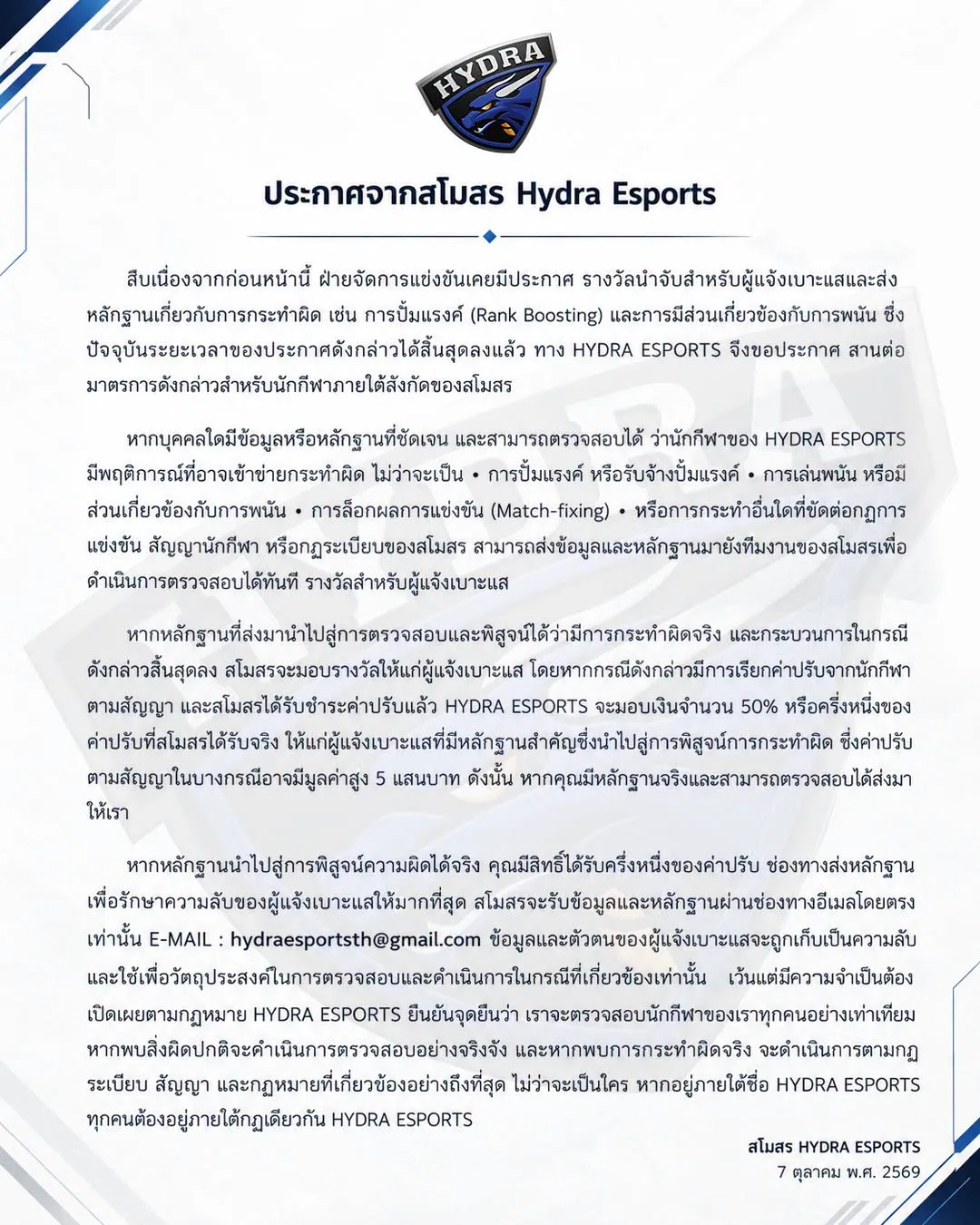
Hydra said it would investigate every player on equal terms, examine credible concerns and act under its rules and contracts when it found evidence of misconduct. The club also said it would pass information to organizers or other relevant authorities and consider legal action where applicable.[9]
The club said it would not protect or conceal wrongdoing, adding that fair competition and responsibility to the club’s name had to come before any individual.[9]
The league committee urged players and clubs to follow its rules and said it would consider immediate sanctions for violations. It also directed members of the public to submit evidence of misconduct through customer service.[10]
The match-fixing allegations described in the Zeenon and KTS case involved betting on a team to lose by a specified score, then intentionally making mistakes when the match could still be won. This is the method described in that case, not a finding about every player in the league.[9]
The cases also raise a broader question: could financial insecurity increase gambling risks for some players? Public information does not establish that every sanctioned player faced financial problems or that money problems directly caused match-fixing.
Garena’s 2018 announcement of a THB 50,000 minimum monthly income applied to contracted players for that season’s contract period. It does not show that every player in today’s league receives the same pay.[3]
For clubs with limited resources, player costs can be substantial while prize money and results remain uncertain. The original article questions whether some players may earn less than the historical benchmark. Public information does not establish that this is a league-wide condition.
Even without evidence that gambling directly caused every case, the presence of betting around competition raises questions about whether expenses, debt or unstable income could expose some players to greater risk.
When gambling reaches competition, the damage can extend beyond the players involved. Teams, fellow professionals, sponsors and the league’s credibility can all be affected.
As the RoV Pro League enters its 18th season, the challenge is not only to detect and punish misconduct but also to prevent players from being drawn into gambling and match-fixing.[4]
A lifetime ban may be the final sanction. The harder question is what a player encountered before reaching that point.
Currency note: Dollar equivalents are rounded PTG estimates using Oct. 9, 2026 rates (Export-Import Bank of Thailand: USD 1 ≈ THB 33.48; State Bank of Vietnam: USD 1 ≈ VND 25,629). Historical amounts use these rates for scale, rather than historical exchange rates.[11][12]