Malaysia is planning to introduce a social media ban for users aged 16 and below starting 1 January 2026. This move has raised major concerns across different sectors, parents, educators, digital safety advocates and, naturally, the gaming and esports community might ask:
“Will this affect the esports industry in any meaningful way?”
After digging into available data, audience analytics and market insights, the short answer is this:
The Malaysian gaming and esports market is unlikely to experience a significant overall decline, but there will be nuanced ripple effects especially around youth engagement, talent discovery and content accessibility.
The Malaysian gaming and esports market is unlikely to experience a significant overall decline, but there will be nuanced ripple effects especially around youth engagement, talent discovery and content accessibility.
Let’s break it down.
1. The Data Problem: No Clear Statistics for Gamers Under 16
There is no official dataset that separates Malaysian gamers by the age of 16 and below. Most industry research starts at 18 years old, including the referenced Start.io esports-gamer dataset. To work around this gap, I looked at two sources:
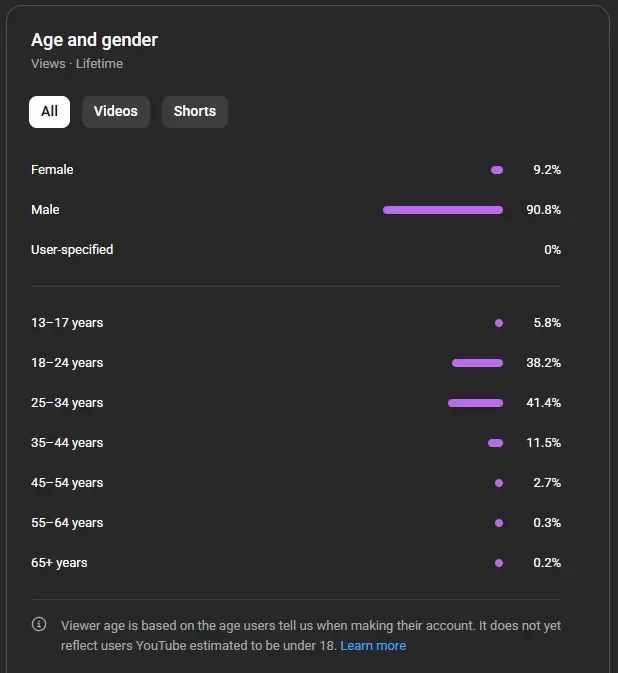
A. My Own YouTube Analytics (Lifetime)
From my channel’s audience demographics:
- 5.8% of viewers are aged 13–17.
But this dataset is:
- Global, not Malaysia-specific.
- Self-reported by users.
- Limited because YouTube does not accurately track users under 18.
B. Start.io Esports Gamer Data (Malaysia)
This dataset shows:
- 18–24 years: 64.9%.
- 25–34 years: 32.2%.
Combined, that’s 97.1% of Malaysian esports gamers above 18. While this dataset excludes anyone aged 17 and below, it does suggest something important:
The core esports audience in Malaysia is overwhelmingly 18–34. Youth under 16 do not make up a major portion of the esports market, at least not yet.
This forms the basis of our first hypothesis.
Hypothesis 1: Esports Engagement Will Not Be Significantly Impacted
If the majority of esports engagement comes from audiences aged 18 and above, then:
- Livestream viewership
- Tournament broadcast numbers
- Esports content consumption
- Esports marketing and sponsorship reach
…are unlikely to drop in any meaningful way. Even if a small segment (13–16 year olds) becomes restricted, they do not represent a large enough share of the current market to cause an industry-level dip.
But Here’s a Nuance:
The real concern is not current engagement, it’s future audience pipelines. A generation raised with limited access to esports social-media content might enter the ecosystem later or with lower cultural exposure. That won’t crash the industry, but it may change future participation patterns.
Hypothesis 2: The Ban Will Not Block New Esports Players From Emerging
A common misconception is that youths discover esports only through social media. In reality:
- Games do not require social-media login (email logins are still the norm, especially for competitive titles).
- Kids can still play games they already own.
- Most esports games are not tied to social platforms to function.
- Skill growth comes from gameplay itself, not just content consumption.
So young aspiring players can still:
- Train.
- Compete casually.
- Join amateur tournaments.
- Learn mechanics through in-game tutorials.
However, This Is Where the Grey Area Comes In: Tutorials, Pros, Esports Education
Many young gamers improve through:
- YouTube guides.
- Livestream VODs.
- TikTok clips.
- Tournament highlights.
- Pro-player analysis breakdowns.
So the real question becomes:
Will YouTube Be Considered “Social Media”?
This is critical because:
- YouTube is the most-used platform in Malaysia, even above Facebook and Instagram.
- Esports broadcasts, tutorials and long-form content largely live on YouTube.
If YouTube is exempted, the impact becomes minimal. If YouTube is included in the ban, the educational pathway for young esports enthusiasts becomes restricted. This is one of the biggest “unknown variables” that will shape the real impact of the policy.
Hypothesis 3: Talent Discovery May Slow Down, but Only at the Youngest Levels
Malaysia’s esports scene does have young prodigies. Social media plays a role in:
- Talent visibility.
- Scouting.
- Community connections.
- Finding friends to form teams.
- Sharing gameplay clips.
If under-16 players cannot participate in these social spaces, then:
- The informal pathway into esports becomes slower.
- Peer networks (friends recruiting friends) shrink.
- Discovery of passionate young players becomes harder.
- New young creators may struggle to build a digital presence early.
But Does This Kill Talent Development?
No, it simply shifts. Young players may now rely more on:
- School esports clubs.
- Offline communities.
- Parent-guided entry.
- Internal game matchmaking.
- Esports academies and youth programs.
This could actually professionalize early-stage talent development, moving it away from unregulated online spaces.
Additional Impacts
1. Youth Safety May Increase
Less exposure to:
- Online grooming.
- Cyberbullying.
- Gambling content.
- Toxic communities.
This may cause parents to become more supportive of gaming as a safe hobby.
2. Gaming Time Might Increase
If kids cannot scroll TikTok or Instagram:
- Screen time may shift back to games.
- Especially offline or non-socially-networked games.
Ironically, the ban may increase gaming frequency.
3. Traditional Media and Schools May Become Esports Gateways
With youth removed from social platforms, esports organisers might pivot to:
- Schools.
- Community centres.
- Educational institutions.
This could open opportunities for structured, healthier esports education.
Conclusion: The Esports Industry Will Largely Be Fine, but With Subtle Long-Term Shifts
After analysing market data, audience trends and platform usage patterns, here’s the clearest synthesis:
- Short-term: No significant drop in esports engagement, viewership or revenue.
- Medium-term: Slight slowdown in youth discovery and early talent pathways.
- Long-term: The industry will adapt, possibly becoming more structured and safer.
The biggest variable remains:
Will YouTube Be Classified as “Social Media”?
This decision alone will determine whether the ban is a small inconvenience or a major structural shift for under-16 esports learning. Regardless, Malaysia’s esports ecosystem is resilient. Its core audience and player base are overwhelmingly 18–34, the age group unaffected by the ban. So while policy changes may alter the pathways, they are unlikely to threaten the industry itself.