
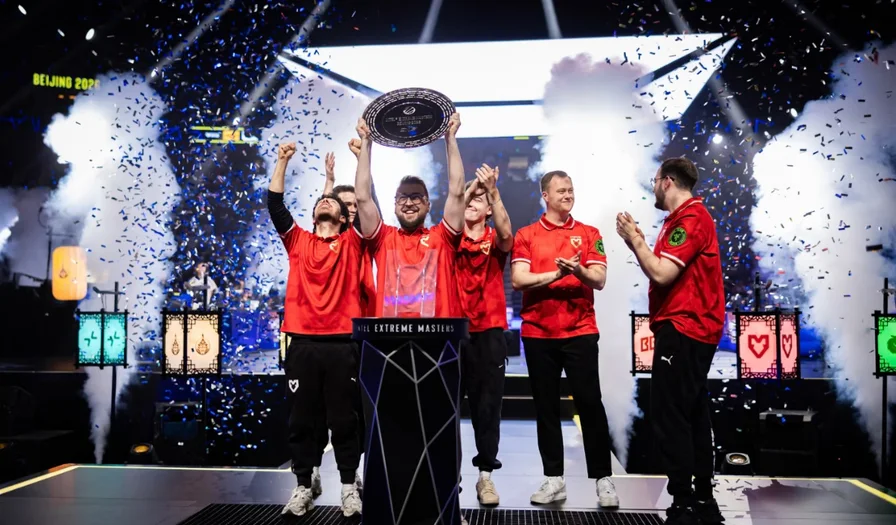
On November 8, the 2026 Intel Extreme Masters (IEM) Beijing event concluded at Bloomage Biotech·Biohyalux ECM Arena in Beijing. MOUZ beat The MongolZ 3–0 in the final to win the title. MOUZ player xertioN received the event’s Most Valuable Player (MVP) award. The event was guided by the China Audio-Video and Digital Publishing Association, the Beijing Sports Federation and the Beijing Esports Industry Development Association, and jointly hosted by ESL FACEIT Group and Hero Esports.[2]
Official event data show that IEM Beijing 2026 ran from November 2 to 8, bringing together 16 top teams from around the world for a total prize pool of USD 1.25 million. The event drew a strong market response after tickets went on sale, and its key indicators exceeded expectations: attendance across the six match days reached 59,000, up substantially from the 35,000 at the 2025 Chengdu event; ticket revenue exceeded its target by 157%; overall sell-through for the playoffs from November 6 to 8 was 89% (with daily capacity of 14,500), while attendance on the November 8 final day reached a peak of 96%; the group-stage days from November 2 to 4 averaged about 4,000 spectators a day; and the accompanying player signing event sold 1,157 tickets, a 72% sell-through rate.[2]
This was IEM’s return to Beijing after seven years.
IEM, or Intel Extreme Masters, was launched in 2006 by Intel and ESL. It is one of the world’s longest-running professional esports series. Over the years, it has become an important international competition brand for titles including Counter-Strike, with events held in multiple countries and regions.
IEM’s connection with Beijing began in 2019. To mark IEM’s tenth anniversary in China, ESL held the Beijing event of Season 14 in Haidian from November 7 to 10 that year. It was the first time IEM was staged as a standalone event in China. Eight of the world’s top Counter-Strike teams competed at Beijing University Students’ Gymnasium of Capital University of Physical Education and Sports for a total prize pool of USD 250,000.[3]
Seven years later, IEM returned to Beijing. Compared with 2019, this edition expanded to 16 teams and a total prize pool of USD 1.25 million, while the game moved from Counter-Strike to Counter-Strike 2 (CS2). From event scale to live production and audience participation, the return brought a number of changes.
Why IEM Chose Beijing Again After Seven Years
IEM’s return to Beijing was not a last-minute decision.
In May this year, Michael van Driel, EFG vice president, told Beijing Youth Daily that Beijing had remained one of EFG’s focus cities since 2019. The choice of Beijing was partly due to Bloomage Biotech·Biohyalux ECM Arena’s hardware and technical capacity to host a large international event, and partly to the coordination and support provided during preparations by the Beijing Esports Industry Development Association.
The association’s secretary-general, Zhang Yuhao, said at the time that the association began discussions with IEM’s organizer, ESL, in the second half of 2025. The two sides held several rounds of talks and venue visits, and surveyed districts to establish communication channels between the event and relevant authorities.
From initial discussions and venue inspections to the event’s delivery, the process involved the organizer, an industry association, the venue and related support teams. For an international event such as IEM, a venue must meet audience-capacity requirements and also support stage construction, lighting and sound, network services, broadcast production and event operations.
Bloomage Biotech·Biohyalux ECM Arena was ultimately selected to host this edition. The venue hosted basketball at the 2008 Beijing Olympics and was also used for events connected with the Beijing Winter Olympics. As a “Double Olympic” venue, it has experience hosting major international sporting events and established venue operations and audience services.
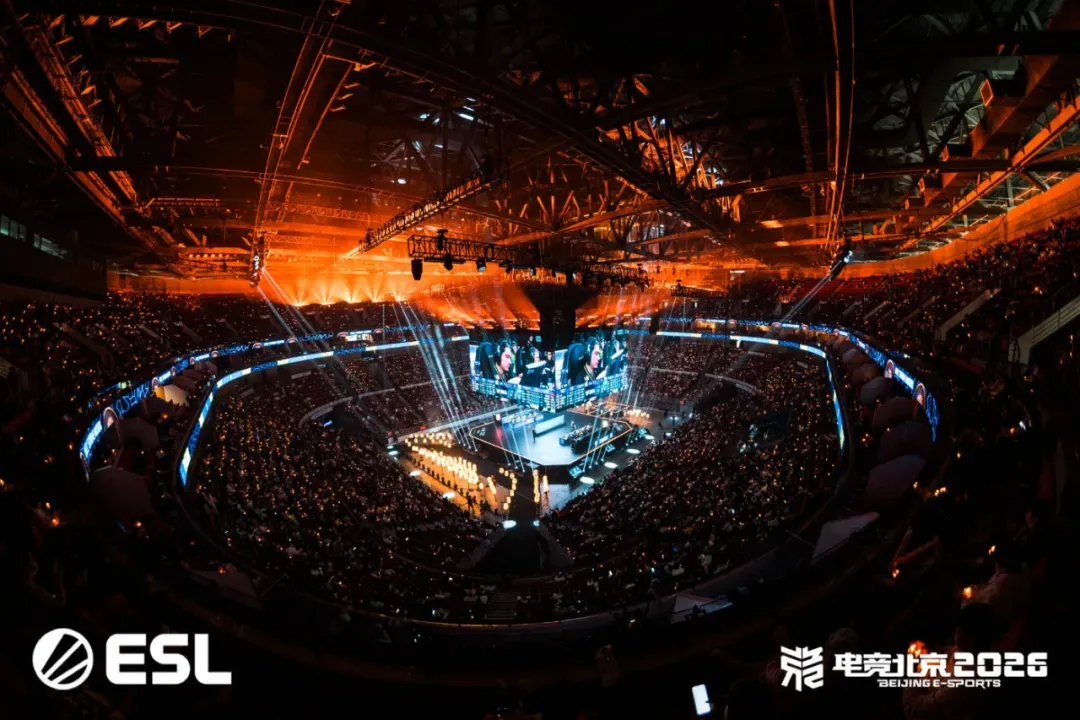
Zhang Yuhao previously said that the advantages of a “Double Olympic” venue lie not only in its facilities and audience capacity, but also in the operational experience it has built through major events. These conditions provide a foundation for esports events and a space for them to present the host city’s image.
IEM Beijing used a 360-degree wraparound stage. It was the first time since IEM Rio Major 2022 that IEM had used this format. Zhang Yuhao said the event was using a four-sided stage in China for the first time, with the aim of giving spectators a more immersive viewing experience.
Marc Winther, EFG’s Counter-Strike 2 esports director, had also said that EFG hoped to improve the event experience through IEM Beijing 2026 and work with the Beijing Esports Industry Development Association to create more opportunities for spectators and partners.
The planning that began in May ultimately took shape at the November event. Venue capacity, event production and local coordination together formed the foundation for bringing this international competition to Beijing.
Lanterns on Stage, Beijing Accents in the Stands
In recent years, global live esports events went through a period of adjustment brought on by the pandemic. As international events gradually returned, China’s Counter-Strike scene also became more active again. In 2024, IEM Chengdu was held and the Shanghai Major came to the city, bringing top international Counter-Strike competitions back into view for Chinese audiences. Since then, the number of international Counter-Strike events hosted in China has grown, with Chengdu, Shanghai and Guangzhou among the host cities.
IEM’s return to Beijing brought the international competition to a northern Chinese city once again. The competition and rules were consistent with other stops on the circuit, but the live presentation had features of its own in Beijing.
One of the most eye-catching details on entering the venue was the lanterns on stage. Lanterns printed with the participating teams’ logos stood on vertical supports on both sides of the players’ entrance area. Lantern decorations were also placed along both sides of the T-shaped platform extending from the center stage toward the audience, echoing CS2’s visual identities for the attacking and defending sides. When the teams switched sides, the lantern colors changed as well.
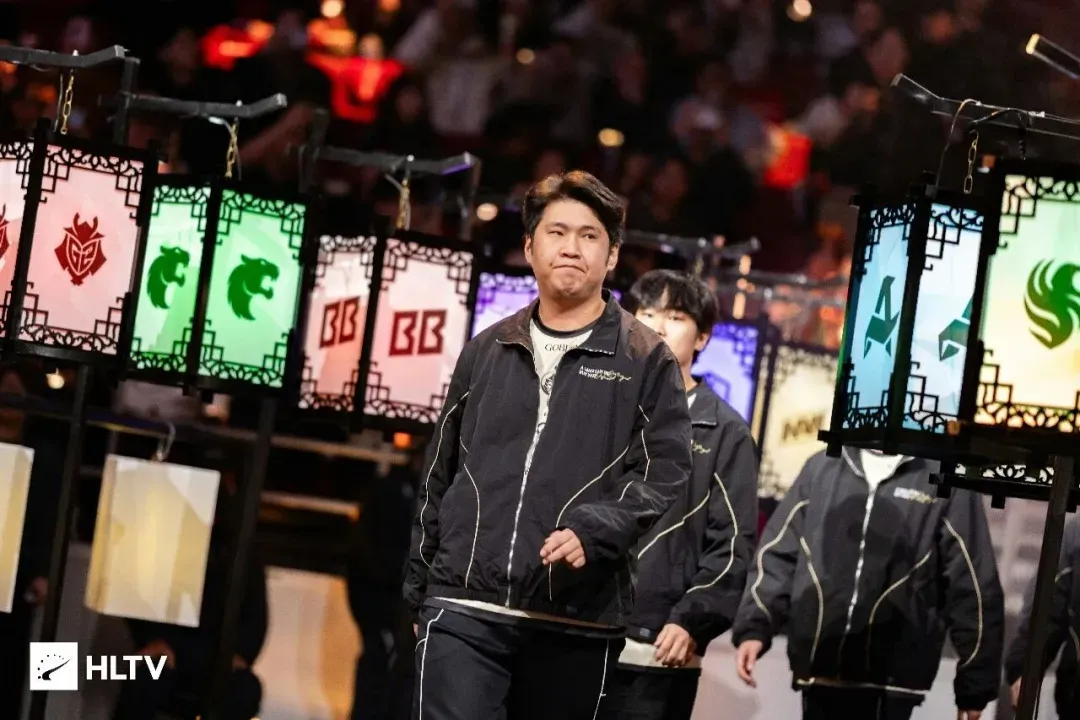
Vertical lantern stands at two opposite corners of the stage displayed the logos of the finalists, MOUZ and The MongolZ. When the broadcast camera turned to the coaches, the lanterns and team logos appeared in the frame too. Traditional lanterns and a modern esports stage shared the same shot, directly connecting local cultural elements with the match.
If the lanterns on stage showed how the event incorporated elements of Beijing culture, the sounds from the audience gave it a more vivid local character.
During the matches, Beijing speech, with its distinctive rhotic endings, could be heard from the stands. Several spectators who had arrived in separate groups gradually gathered to talk before the matches, discussing players’ performances from the previous day. Their conversations about tactics, player form and results gave the esports venue something of the feel of familiar city life.
The way the audience took part once play began also stood out. Compared with the fan-cheering atmosphere at some esports events, spectators at IEM Beijing showed a strong sense of supporting the teams on stage. Collective shouts during matches and reactions after pivotal rounds gave the venue an atmosphere closer to traditional sports.
After the final, the crowd shouted “MOUZ! MOUZ!” as the team walked to the T-shaped platform to receive its championship medals. When The MongolZ came up to receive the runner-up medals, spectators chanted the team’s name in unison as well. Celebration for the champions and respect for the runners-up were both present at the medal ceremony.
At an international esports event, spectators are not only watching the competition; they also help create its atmosphere. The ways audiences in different cities express themselves and interact on site give the same event a different character from place to place.
From Stage Design to Spectator Services, the Live Experience Matters
IEM Beijing also made specific arrangements for the venue and spectator services.
The arena had upper, middle and lower seating tiers, while the stage was open on all four sides to reduce obstructed sightlines as much as possible. The large screens inside the venue displayed the action clearly, allowing spectators farther back to keep up with the match.
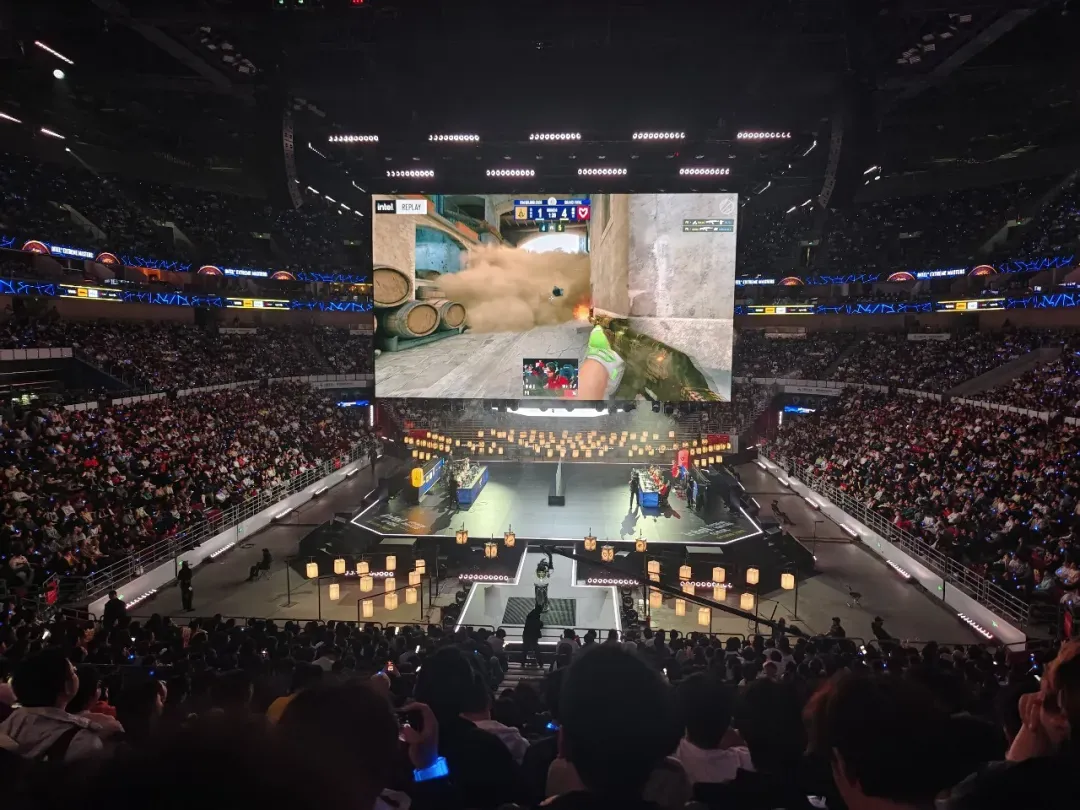
The final day featured two matches: a best-of-three third-place match and a best-of-five final. Ticket holders could leave and re-enter the venue multiple times. Spectators could go out for a meal or a rest and then return to continue watching.
These details may seem simple, but they matter to the operation of a live event. The whole spectator journey—from entry and watching to taking a break and interacting—shapes the on-site experience.
Notably, the event opened its doors to in-person spectators on all six match days. Audiences did not have to wait until the playoffs and final to enter the arena; they could take part from the group stage. This extended the live experience across the full competition instead of concentrating it only around the crowning of a champion.
Online broadcasts can reach a wider audience, while attending in person offers the atmosphere, player interactions and community exchanges of the venue. For an international event such as IEM, getting people to come to the arena and giving them more ways to participate beyond the matches have become important parts of event operations.
The event’s cumulative on-site attendance of 59,000 and online peak audience of more than 720,000 reflect IEM Beijing’s reach and live impact from different angles.[2]
MOUZ Wins Every Map; xertioN Values Team Growth More
Beyond the lively atmosphere, the competition itself was another major focus of IEM Beijing.
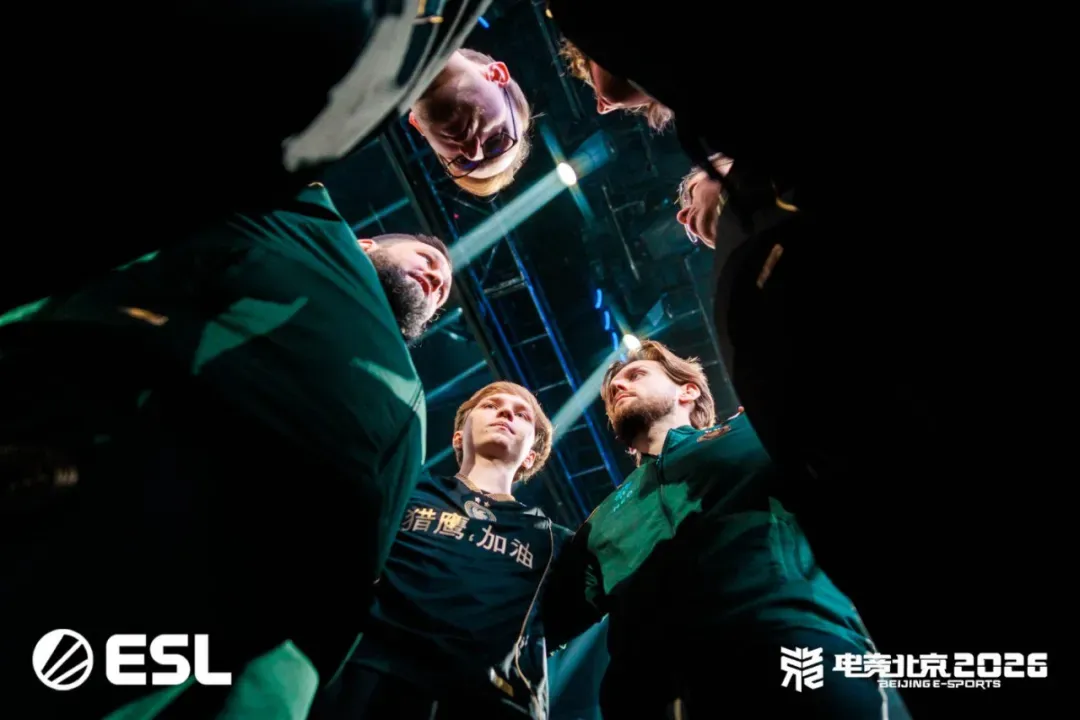
After the 16 teams competed through the group stage and playoffs, MOUZ and The MongolZ reached the final. MOUZ went undefeated in the group stage and advanced directly to the semifinals, where it beat BetBoom Team 2–0 to reach the final. The MongolZ beat FURIA 2–1 in the group stage, then defeated Natus Vincere 2–0 in the semifinal to reach an IEM final for the first time in the team’s history.
MOUZ continued its strong form in the final. On the first map, Mirage, MOUZ took a 13–5 win. On the second, Dust2, it extended the lead with a 13–6 victory. On the third, Inferno, MOUZ closed out the match 13–4, defeating The MongolZ 3–0. MOUZ lifted the trophy without dropping a map throughout the event.[2]
For MOUZ, the win meant more than another IEM trophy: it was the team’s first ESL Pro Tour (EPT) title since 2024. A month earlier, MOUZ had finished runner-up at ESL Pro League Season 24. The Beijing title also gave the team its first qualifying championship on the road to the USD 1 million ESL Grand Slam Season VII prize.
After the event, xertioN, named its MVP, said in an interview that he was proudest of the team’s overall performance.
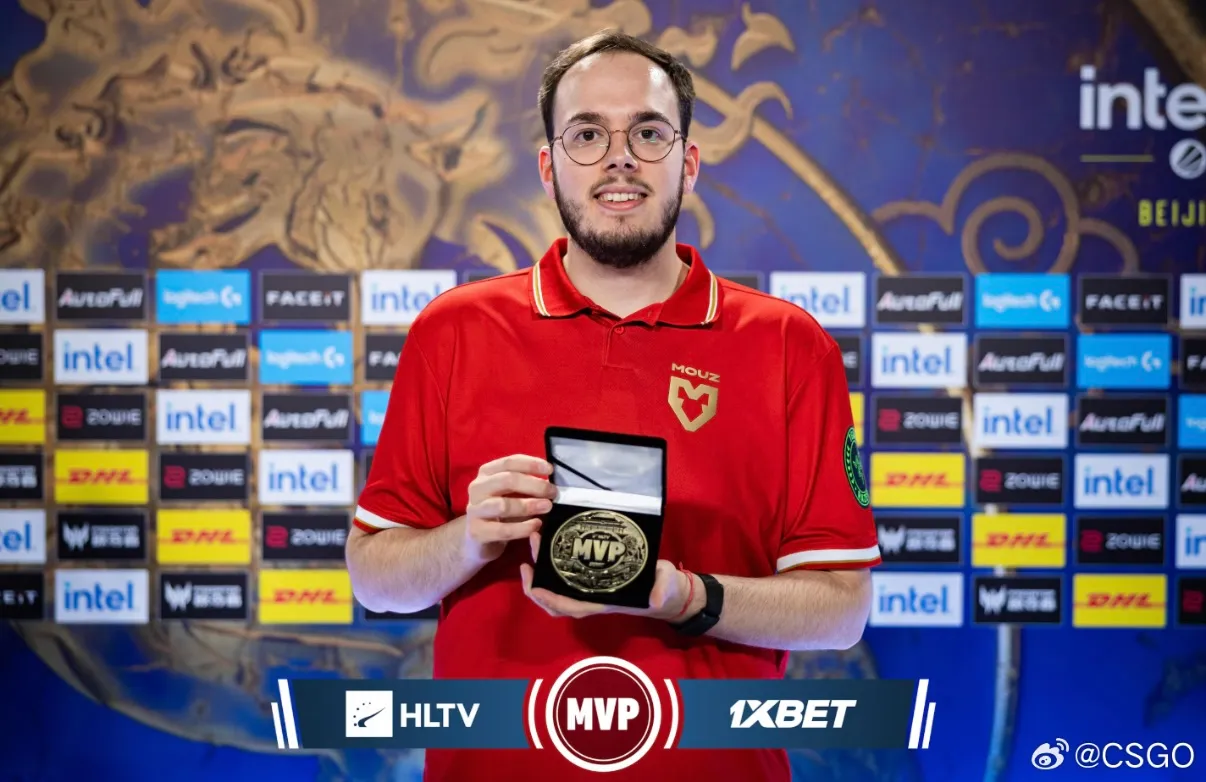
“I’m incredibly proud of the boys. We didn’t lose a single map throughout the event, but even before the final, some people were already downplaying this result, saying it might be the lowest-caliber IEM ever. I don’t think so. I think whoever you face, it’s hard to win. We just beat the opponents in front of us, and I’m very happy with the whole team’s performance.”
Asked about finally receiving an MVP award, xertioN was relatively calm. He said individual honors were not his most important goal at the moment.
“If I weren’t the in-game leader, I might be happier about getting MVP, but MVP isn’t my main goal. I want to lead by example and make the whole team better; this medal is just the icing on the cake.”
His words also reflected how his role in the team had changed. xertioN added that he did not want to be an in-game leader who only called out information and relied on teammates to bail him out; he wanted to help the team in more ways.
“I don’t want to be an IGL who only calls things out and depends on my teammates to bail me out. I want to help the team in more ways. Things are going smoothly so far with the plan of having me take over as IGL and bringing in two young players.”
From an individual MVP to team building, xertioN’s answers gave the trophy another layer of meaning. For a professional player, individual honors can reflect competitive performance over a period of time. In a team game, taking on new responsibilities and helping the team build more consistent competitiveness are also part of a player’s growth.
A Beijing Return as Part of the City’s International Esports Push
Hosting IEM Beijing was also an important exercise in building the “Esports Beijing” brand.
In recent years, Beijing has continued to develop its esports industry, gradually building experience across events, venue resources, industry policy and local clubs. IEM brought an internationally influential esports event to Beijing and gave the local esports industry a more direct opportunity to connect with the international event-operations system.
Zhang Yuhao previously said that IEM’s participation would further strengthen the international dimension of “Beijing Esports”, helping the brand remain rooted locally while gaining a stronger global profile. The association hoped to make IEM Beijing a core annual event IP for “Beijing Esports” and establish it as a lasting city esports calling card.
Michael van Driel also expressed EFG’s willingness to work further with Beijing. He said the cooperation reflected a long-term vision for ESL and Beijing to build a world-class event together, while creating opportunities to continue expanding the event and strengthen IEM Beijing’s international influence.
For Beijing, hosting an international esports event involves more than bringing in a competition. It also requires coordination among venue resources, event organization, city culture and local industry. On-site attendance and online attention during the event are visible results; whether the event creates more opportunities for local businesses, industry professionals and esports communities will take longer to assess.
From its first standalone Beijing edition in 2019 to its return in 2026, IEM’s connection with Beijing has continued in a new form. This edition left behind MOUZ’s championship trophy and 59,000 on-site attendances, while bringing Beijing’s venues, event-support capabilities and local audience back into the view of international esports.
After the competition ended, the lights in the arena gradually went out. But whether an international event can have a lasting impact on a city ultimately depends on what accumulates beyond the matches: whether local audiences continue to follow the scene, whether industry resources gather further, and whether the city can build a stable capacity to host events.
For Beijing, IEM’s return was the delivery of an international event and a new practical example of how “Esports Beijing” can connect with international event resources and present the city’s character.