Population
128.59m
Permanent residents at the end of 2025; up 790,000 year on year.[1]

Market
Guangdong is a subnational games and esports market in southern China with 128.59 million permanent residents and a 2025 GDP of RMB 14.58 trillion. Provincial policy positions Guangzhou and Shenzhen as twin esports cores and promotes a connected network of supporting cities.
A sourced operational overview, not legal advice. Requirements should be rechecked before launch.
Topic
Provincial esports policy
Current position
In May 2025, Guangdong released an 18-measure esports policy package focused on industry coordination and deeper Greater Bay Area collaboration.[2]
Commercial implication
Regional plans should account for provincial priorities while checking how each host city implements event, facility, and business support.
Topic
Game development and exports
Current position
A separate 2025 online-game policy emphasizes original projects and technical innovation, and identifies Guangzhou and Shenzhen as the province's twin game-industry cores.[3]
Commercial implication
Developers and publishers should distinguish game-policy programs from esports-event support and verify each program's eligibility requirements.
Topic
Municipal implementation
Current position
Guangzhou issued an 18-measure local games-and-esports package covering development, operations, exports, events, clubs, venues, industry parks, and talent.[4]
Commercial implication
Municipal incentives are location- and program-specific; applicants should confirm the current rules and review process before relying on them.
In Guangdong, Chaozhou is one of the locations that carried the province’s esports circuit into local markets. It hosted a regional stage of the 2026 Guangdong Esports Super League.
In Guangdong, Dongguan’s electronics base creates a potential connection to esports hardware. PTG’s policy analysis places the city among the complementary nodes outside the Guangzhou–Shenzhen core.
In Guangdong, Foshan combines a regional competition stop with the province’s city-experience model. PTG’s policy analysis points to manufacturing, tourism and physical event programming as local assets.
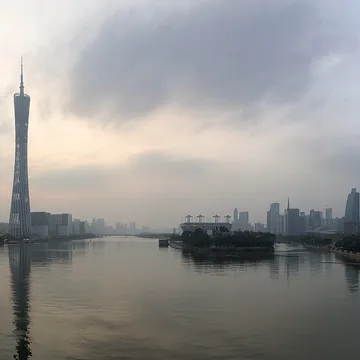
Guangzhou is a major city in Guangdong whose esports profile combines a large urban economy, municipal games-and-esports support, international event hosting, and an emerging local competitive base.
In Guangdong, Meizhou is a regional competition market with a local team identity in PTG’s coverage. The city hosted a stage of the 2026 Guangdong Esports Super League.
In Guangdong, Qingyuan appears as a hometown identity in PTG’s coverage of the provincial esports league. A local team described its aim to keep top placements in the city.
In Guangdong, a team representing Shaoguan competed in the province’s regional esports tour. The league connects local teams with a province-wide points race.
In Guangdong, Shenzhen is one of the province’s esports-policy core cities and a documented host of major finals. PTG’s reporting connects its technology and digital-economy base with the province’s event and games-export strategy.
In Guangdong, Yunfu is one of the regional-stage hosts in the province’s esports competition network. It hosted a stage of the 2026 Guangdong Esports Super League.
In Guangdong, Zhaoqing extends the province’s esports competition circuit beyond its core hubs. It hosted a regional stage of the 2026 Guangdong Esports Super League.
In Guangdong, Zhuhai contributes competition hosting and a cross-border role through Hengqin. PTG’s reporting identifies cross-border events and esports training among the city’s development directions.
Work with Press The Game
Looking for media reach, industry insight or the right esports partner? Bring us your brief—we’ll help move it forward.
Related coverage

Andrew “Sir Cloud” Cheong applies the 1-3-1 framework to esports’ economic challenge, weighing optimization, consolidation and community-led business models before recommending stronger direct relationships with fans.
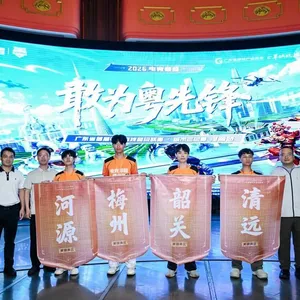
One year after Guangdong's games and esports policy package, coordination, city identity, event consumption and talent programs are beginning to connect the industry chain.